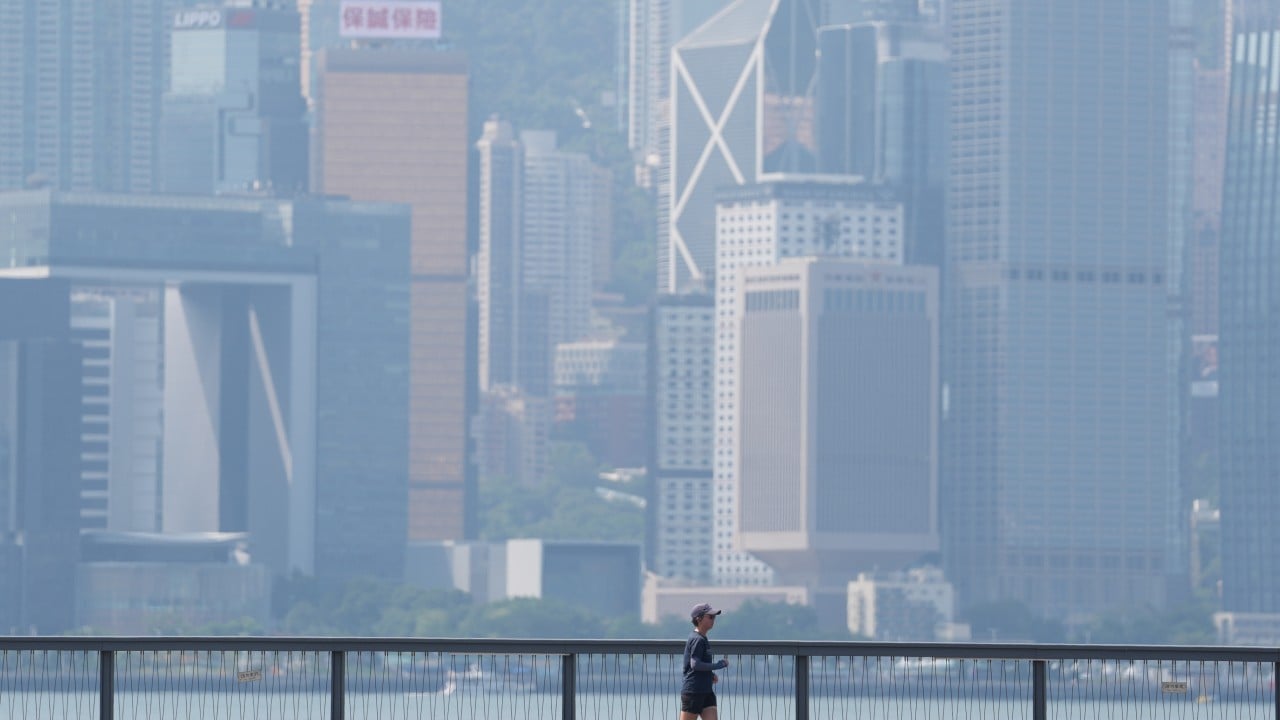
Victoria Harbour is supposed to glitter. Even on overcast mornings, there is usually a stubborn silver edge along the water where ferries cut white lines toward Tsim Sha Tsui, and the towering glass slabs of Central catch whatever light manages to slip past the clouds.
Not today. Today the skyline looks like a pencil sketch someone smudged with a damp thumb. Discover more on a similar subject: this related article.
I have stood on the Mid-Levels escalator on days like this, watching sweat prickle at the back of my neck even in mild autumn air while a thin, metallic scrape settled into the back of my throat. It is a strange sensation—not quite a cough, not quite pain, just a quiet warning that the air has weight to it. When pollution spikes to serious levels in Hong Kong, the city does not shut down with sirens. It dims. Neon signs look muted. Distant hills dissolve into flat slate. And quietly, urgently, health advisories tell the elderly to stay indoors.
Stay indoors. Additional reporting by National Institutes of Health highlights comparable perspectives on this issue.
It sounds simple on a government bulletin. Two words, neat and tidy. Yet for thousands of older residents living in cramped walk-ups in Sham Shui Po, public housing towers in Kwun Tong, or quiet flats in Sai Wan, "staying indoors" is rarely a serene retreat into air-conditioned stillness. Often, it means closing windows against a warm, stagnant breeze, listening to the hum of a ceiling fan that only stirs the same heavy air around the room, and feeling the walls slowly close in.
Consider a hypothetical character to see how this plays out in daily life: let us call her Mrs. Chan, seventy-eight, living alone on the sixth floor of an older building with windows facing a busy arterial road. Mrs. Chan is not an abstraction in a public health report. She is someone who has spent sixty years knowing the sound of her neighborhood—the clatter of mahjong tiles from a lower floor, the morning call of a congee vendor, the steady thrum of buses climbing the slope. When an air pollution spike hits serious levels, her doctor's advice and the public health warnings converge on one directive: keep out of the bad air.
But what happens when the bad air is already seeping through the window frames, or when staying inside means cutting off the small routines that keep loneliness at bay?
The Invisible Weight in Every Breath
Air pollution has a cruel trick at its core: the most dangerous parts are too small to see. When officials warn of serious pollution levels in Hong Kong, they are generally pointing to elevated concentrations of fine particulate matter—known as PM2.5, particles with a diameter of 2.5 micrometres or less—alongside gases like nitrogen dioxide and ozone.
To put that scale in plain terms, a single human hair is roughly 50 to 70 micrometres wide. Twenty or thirty PM2.5 particles could sit side by side across the width of one strand of hair. Because they are so microscopic, your nose and throat—the body's built-in bouncers—cannot reliably catch them. Instead, they slip straight past the upper airways, dive deep into the lungs, and in many cases cross into the bloodstream.
I used to think of air quality strictly as a lung issue, something that made runners wheeze or triggered asthma attacks. That was too narrow. Over years of reading public health studies and watching family members navigate chronic conditions, I have come to see dirty air as a whole-body stressor. Once fine particles enter circulation, they trigger low-grade inflammation and strain the cardiovascular system. The heart has to work harder; blood vessels stiffen slightly; clotting risks can nudge upward.
Now imagine you are seventy-eight. Your heart has already beaten billions of times. Your lungs no longer have the elastic bounce of your twenties. Maybe you take daily pills for high blood pressure or mild heart failure. Maybe your immune system reacts a little slower than it used to.
A serious pollution spike does not hit a seventy-eight-year-old body the way it hits a twenty-five-year-old body. It stacks pressure on top of existing pressure. A slight tightness in the chest might be dismissed as indigestion or age. Extra fatigue might look like poor sleep. By the time someone realizes the air is part of the problem, the body has already been fighting a quiet battle for hours or days.
Here is a metaphor that helps make sense of the cumulative strain: think of your cardiovascular and respiratory systems as an old stone bridge built to handle steady, ordinary traffic. Every day, cars cross—normal wear and tear. A pollution spike is like sending dozens of heavy trucks across that bridge at once, hour after hour, while the wind blows salt spray against the pillars. The bridge might not collapse on day one. Yet the vibration is real, and any weak joint feels it first.
Why does Hong Kong get hit by these spikes in the first place? Geography and urban density conspire here. Surrounded by hills and water, sitting on the edge of the broader Pearl River Delta region, the city is shaped like a bowl in many spots. Tall buildings create street canyons that trap exhaust and trap heat. When regional wind patterns shift—especially during autumn and winter transitions when winds weaken or blow from certain directions—pollutants generated locally by vehicles, marine vessels, and power generation can mingle with regional haze and linger instead of dispersing.
Sometimes the sky looks clear-ish at noon, yet the air quality index climbs steadily by late afternoon as traffic builds and sunlight cooks precursor gases into ozone. It is deceptive. Blue sky does not always mean clean air, and grey haze does not always tell the whole story either. Relying on your eyes alone is a gamble.
Why "Stay Indoors" Is Harder Than It Sounds
Public health agencies issue "stay indoors" guidance for a solid, logical reason: reducing outdoor exposure during peak pollution lowers the dose of harmful particles and gases entering your body, especially for high-risk groups like the elderly, children, and people with heart or lung disease.
Still, there is a gap between a policy line on a screen and real life inside a small apartment.
Let's return to our hypothetical Mrs. Chan on a muggy autumn afternoon. The official advisory says older adults should reduce prolonged or heavy outdoor exertion and stay indoors as much as possible. She nods at the television. She is not planning to run a marathon anyway. Her usual routine is a slow twenty-minute walk to the wet market or the park bench near the bus stop, followed by picking up groceries or chatting with neighbors.
If she stays inside all day, a few things happen immediately.
First, indoor air is not a magical forcefield. Unless an apartment has tight seals and a capable air purifier running with a proper HEPA filter, outdoor pollutants find their way in through tiny gaps around doors, window tracks, and exhaust vents. Cooking fumes—especially stir-frying with oil on high heat—can also spike indoor particulate levels if the kitchen lacks strong ventilation. You can close the balcony door and still breathe compromised air if the room is stuffy and unfiltered.
Second, temperature and comfort enter the picture. Hong Kong's weather in late autumn or early winter can swing from warm and humid to brisk, or feel sticky inside an unventilated flat. Keeping windows shut to block outside air can make a small space feel warm or stagnant, pushing people to turn on fans or air conditioners—which is helpful for cooling, though standard air conditioners mostly recirculate room air rather than filtering out ultrafine particles unless equipped with specialized filters.
Third—and this is the part statistics rarely capture—there is the emotional cost of isolation. Growing older in a fast, vertical city can already feel lonely when adult children work long hours or live across town. A morning walk to buy fruit or sit under banyan trees is more than exercise. It is proof that you still belong to the world outside your front door. When pollution forces you inside day after day, the apartment can start to feel less like a sanctuary and more like a waiting room.
I remember visiting an older relative during a stretch of heavy haze years ago. The windows were shut tight. The television murmured in Cantonese in the corner. Nothing dramatic happened that afternoon, yet the mood in the room felt heavy, almost resigned, as if everyone was holding their breath until the wind changed. That memory stays with me because it shows how environmental stress settles into mood as much as into lungs.
And what if an older person must go out? Maybe there is a medical appointment that cannot be rescheduled, or no one else to buy medication or dinner. Telling someone to stay indoors without giving practical ways to lower risk on necessary trips leaves them feeling either guilty for stepping outside or anxious every time they open the door.
Practical Ways to Protect Yourself—and Those You Love
When air pollution reaches serious levels, panic does not help, and denial hurts. What helps is calm, practical adjustment—treating bad-air days the way you treat heavy rainstorms, by changing how you move through the day rather than pretending the weather is fine.
If you or an older family member are navigating a serious pollution spike in Hong Kong, several steps make a meaningful difference:
- Check real-time air quality indices, not just the view outside: Look up official hourly air quality updates and health index readings rather than guessing by sky color or smell. Levels can shift over a few hours as winds pick up or drop.
- Time errands for cleaner windows when possible: If a trip outside is unavoidable, see if readings are lower earlier in the day or after a breeze clears stagnant air, and keep outdoor stretches brief and unhurried. Avoid brisk walks right alongside heavy traffic lanes during rush hour.
- Manage indoor air thoughtfully: Keep windows closed on the side facing heavy traffic or haze when outdoor levels spike, run a portable air purifier with a true HEPA filter in the main living or sleeping area if you have one, and use kitchen exhaust fans while cooking.
- Watch for subtle symptoms early: In older adults, pay close attention to unusual shortness of breath, chest discomfort, dizziness, palpitations, or a persistent cough or scratchy throat. Do not brush off new or worsening symptoms just because the person is elderly. Check in on older neighbors or relatives by phone or a quick visit—a five-minute call can catch trouble early and ease isolation.
One honest confession: even when you know all the right precautions, it can still feel frustrating and uncertain. Sometimes you cannot afford a high-end air purifier for every room. Sometimes a doctor's appointment falls right at peak afternoon haze. Sometimes an older parent simply refuses to stay cooped up and insists on stepping out for fresh air, even when the air is anything but fresh.
Navigating that tension takes patience, not lectures. Instead of scolding an older relative for going downstairs, it often works better to walk with them briefly during a quieter hour, bring water, choose a route away from bus idling zones, and check how they feel afterward.
The Larger Picture Behind the Advisory
Every time health authorities urge the elderly to stay indoors during a pollution spike, we are seeing the downstream effect of choices made across decades—how cities are built, how goods are shipped, how electricity is generated, how cars move through narrow streets, and how regional emissions drift across borders.
Individual precautions are essential shields, especially for vulnerable people right now. Yet a city cannot ask its oldest citizens to retreat behind closed doors forever every time the wind drops. Clean air is not a luxury perk for healthy twenty-somethings; it is basic infrastructure, as fundamental as clean tap water or safe sidewalks.
The good news is that air quality is not a fixed law of nature like gravity. Over the years, Hong Kong and the surrounding region have pushed through regulations on marine fuels, vehicle emissions, and power plants that proved policy and technology can bend pollution curves downward when there is sustained political will. Progress rarely moves in a straight line—spikes still happen, and stubborn pollutants remain—but the trajectory is not locked in stone.
Still, today's spike belongs to the people living in it right now. It belongs to the older adult sitting by a closed window, listening to the city hum outside, waiting for the air to clear so the neighborhood feels open again.
A ferry horn sounds faintly through the grey out on the water—low, hollow, almost muffled by the haze. Somewhere along the shore, a light flickers on against the afternoon dim, steady and small, holding its ground until the wind turns.