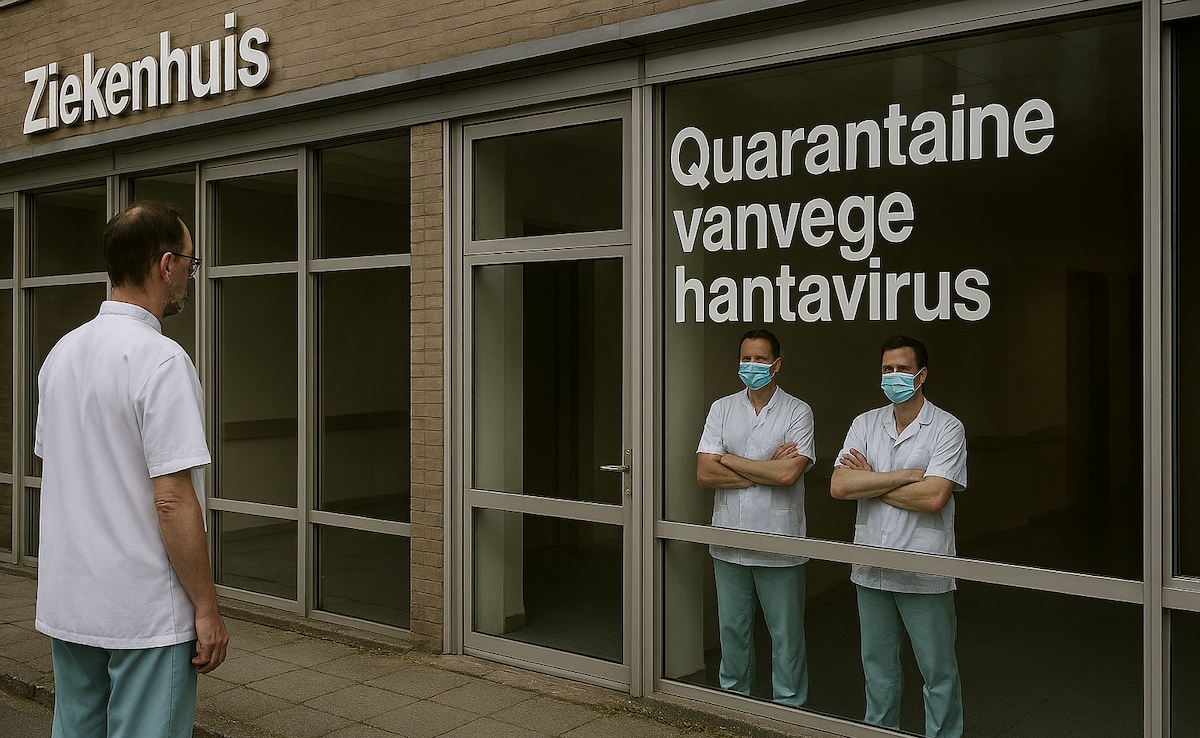
Twelve healthcare workers are sitting in a Dutch hospital quarantine because someone saw a headline and lost their mind.
The media loves a "mystery virus" narrative. It triggers the post-2020 collective trauma and drives clicks through the roof. But if you actually look at the biology of Hantavirus, this mass isolation isn't a medical necessity. It’s theater. It is a performative display of "safety" that ignores the fundamental mechanics of how these pathogens work.
We are treating a rodent-borne virus like it’s the next airborne respiratory plague. It isn't. By treating every localized exposure like a global existential threat, we aren't protecting the public; we are eroding the very foundation of evidence-based triage.
The Myth of Human-to-Human Transmission
The core premise of the "precautionary quarantine" for healthcare workers is that they might spread the virus to others. This assumes Hantavirus is a social climber. It isn't.
Outside of the Andes virus strain found in parts of South America, there is virtually zero evidence that Hantavirus spreads from person to person. The strains typically found in Europe and North America—like Puumala or Sin Nombre—are evolutionary dead ends once they hit a human host.
You get Hantavirus by breathing in dried droppings, urine, or saliva from infected rodents. It is a "spillover" event. To catch it from a coworker, you’d essentially need to replicate the exact conditions of a dusty, rodent-infested barn inside a sterile hospital ward.
Locking up twelve nurses and doctors because they treated a patient is like quarantining a mechanic because he fixed a car that had a bee nest in the engine. You aren't "containing" the bee; the bee is already gone.
Why "Precaution" is a Dangerous Medical Lie
Hospital administrators love the word "precaution." It sounds responsible. It sounds like they are "prioritizing safety."
In reality, unnecessary quarantines carry a massive, uncounted cost.
- Resource Depletion: You just pulled a dozen trained professionals off the line during a global staffing crisis.
- Psychological Burnout: You are telling your staff that despite their PPE, they are walking biohazards.
- Public Paranoia: When the public sees "12 Workers Quarantined," they don't read the fine print about "precaution." They hear "The virus is spreading."
I’ve seen health systems burn through millions of dollars in "abundance of caution" protocols that have no basis in virology. We saw this with Ebola scares in 2014, where people were being monitored for walking past someone who had once been to West Africa. It’s not medicine; it’s a PR strategy designed to avoid a lawsuit.
The Biology of the "Old World" Strains
The Dutch case likely involves the Puumala virus, carried by bank voles. If you’re going to be an alarmist, at least get your strains right.
Puumala causes Nephropathia Epidemica. It’s a mild form of Hemorrhagic Fever with Renal Syndrome (HFRS). While it’s not a walk in the park—you’ll deal with fever, headache, and kidney issues—the mortality rate is typically less than 0.1%. Compare that to the Hantavirus Pulmonary Syndrome (HPS) strains in the US, which can hit 35-40%.
By treating a low-risk, non-communicable strain with high-level isolation protocols, we are crying wolf. When a truly novel, highly transmissible respiratory pathogen actually shows up, the public will have already tuned out the "breaking news" banners.
How We Actually Fix Triage
If we want to be serious about biosafety, we need to stop reacting to the name of a virus and start reacting to its mode of transmission.
- Strict Strain Identification: Before a single person is isolated, the specific strain must be confirmed. If it isn't Andes virus, the "human-to-human" risk is effectively nil.
- Environmental Assessment over Personal Isolation: The focus should be on where the patient came from, not who they talked to. Where are the rodents? Where is the dust? That is the source of the infection.
- Honest Risk Communication: Tell the public the truth. "Twelve workers were exposed to a non-transmissible virus, and they are back at work because science says they aren't a threat."
The current Dutch strategy is the path of least resistance. It’s easier to lock people in a room than it is to explain to a nervous public why they don't need to be afraid.
The Institutional Cowardice of Modern Healthcare
We have entered an era where "doing something"—no matter how illogical—is preferred over doing nothing. This is the "Action Bias" in clinical settings. If a hospital doesn't quarantine those workers and one of them happens to get a common cold the next week, the media will crucify the administration for "negligence."
So, they choose the theater. They choose the quarantine. They choose to perpetuate the myth that Hantavirus is a shadow lurking in the hallways.
Stop looking at the nurses. Look at the data. Hantavirus is a tragedy for the individual infected by a rodent, but it is not a threat to the person standing next to them.
The quarantine in the Netherlands isn't a victory for public health. It’s a surrender to the optics of fear. If we can't trust our medical institutions to distinguish between an environmental spillover and a communicable outbreak, then we are in far more trouble than any rodent could ever cause.
Burn the spreadsheets, stop the performative isolation, and put the doctors back to work.


