The headlines scream about surrender. Pundits foam at the mouth, waving union jacks and old maps, calling the decision to hand sovereignty of the Chagos Islands over to Mauritius a humiliating capitulation on the global stage. They tell you it is the death rattle of British global influence, a cowardly retreat dressed up in the bloodless language of international law.
They are entirely wrong.
What is happening in Whitehall and Port Louis is not a retreat. It is a masterclass in modern imperial hygiene.
For decades, foreign policy analysts have treated geopolitics like a game of Risk. If you hold the territory on the board, you win. If you cede the parchment title to a bunch of atolls in the middle of the Indian Ocean, you lose. This is a child's understanding of power. Modern statecraft does not care about flags planted in sand. It cares about runways, radar arrays, denial of access, and legal insulation.
Let us dismantle the lazy consensus piece by piece.
The Legal Trap Nobody Wants To Talk About
To understand why the UK is cutting this deal with Mauritius, you have to look past the political theater and examine the rotting legal foundation the Foreign Office was standing on.
For years, Britain’s occupation of the British Indian Ocean Territory was a legal disaster waiting to detonate. In 2019, the International Court of Justice delivered an advisory opinion that left zero ambiguity: the UK's detachment of the Chagos Archipelago in 1965, prior to Mauritian independence, was an illegal carve-out that violated international law on decolonization. Shortly after, the United Nations General Assembly voted overwhelmingly to demand the return of the islands. Even the International Tribunal for the Law of the Sea ruled against London's claims.
The lazy narrative claims Britain caved to pressure out of moral weakness. The reality is far colder and more transactional. Britain was facing a total rout in international courts. Every passing year brought new resolutions, mounting diplomatic isolation, and the looming humiliation of being branded a persistent violator of international maritime law by its own closest allies.
When you are playing a losing hand in a rigged court, you do not double down and lose the entire casino. You negotiate a settlement that preserves your actual interests while dumping the liability onto someone else's balance sheet.
Sovereignty is cheap when you keep the keys to the engine room.
The Diego Garcia Illusion
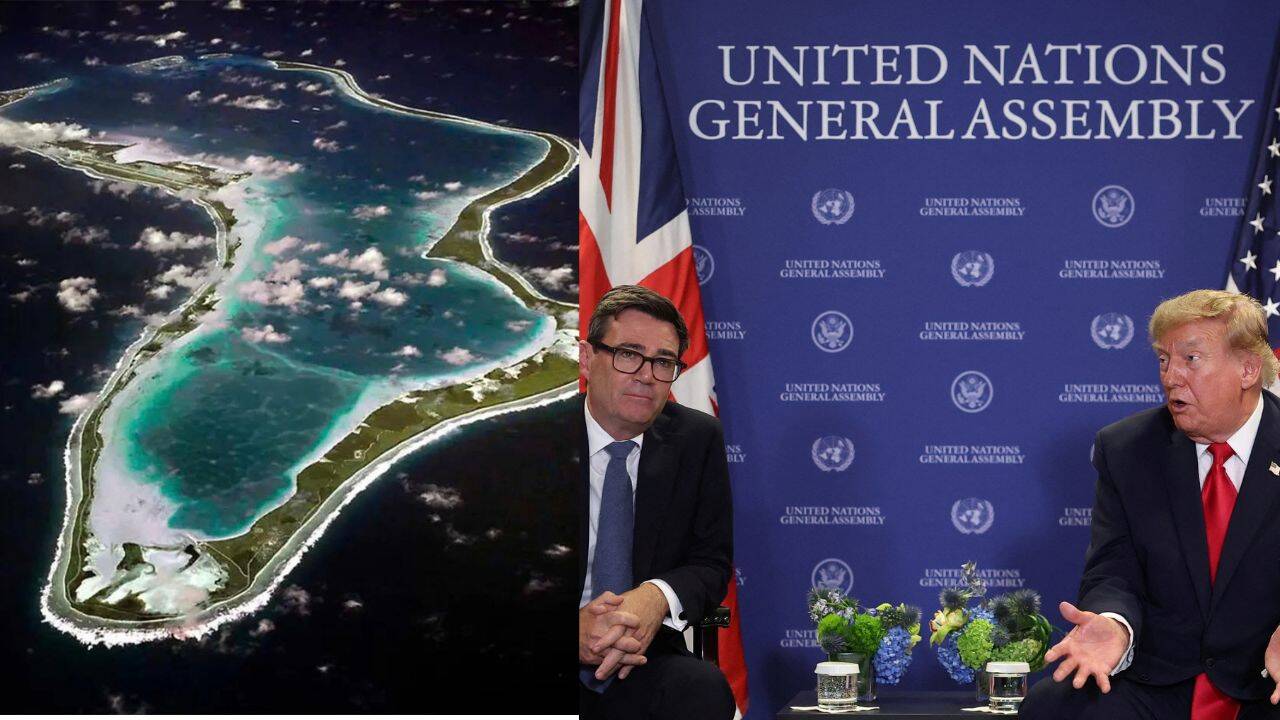
Let us address the centerpiece of the panic: Diego Garcia.
The armchair strategists love to hyperventilate about the joint UK-US military base on Diego Garcia. They ask how Washington and London could possibly surrender the atoll given its critical importance for power projection in the Middle East and Asia.
Here is the secret nobody in the mainstream media wants to admit: Diego Garcia is not going anywhere.
Under the terms of the arrangement, the vital military base is secured under a ninety-nine-year lease. B-2 bombers, long-range surveillance assets, and naval support facilities will continue to operate exactly as they did before any treaty was signed. The Americans get what they wanted all along: absolute, uninterrupted operational continuity without the toxic political baggage of an illegal colonial occupation.
Imagine a scenario where a landlord rents out a high-security bunker on a disputed plot of land. The courts rule that the deed belongs to the neighbor. Does the landlord pack up his tanks and leave? No. He signs a ironclad ninety-nine-year lease with the new legal owner, guarantees his rent, and continues firing his weapons from the courtyard.
That is what is happening here. The UK is trading a worthless piece of paper—a contested sovereignty claim that cost millions in legal defense and diplomatic capital—for guaranteed operational security that satisfies the Pentagon and the White House. The US position has not changed because the strategic reality of the base has not changed by a single inch of concrete.
The Cost Of Empty Pride
Critics of the deal love to romanticize the status quo. They argue that holding the line demonstrates resolve. But resolve without utility is just stubborn stupidity.
I have watched corporate executives and state actors alike blow millions chasing sunk costs simply because they were too proud to admit the original strategy was flawed. The UK's continued refusal to hand over the Chagos Islands was becoming a strategic liability. It alienated African nations whose votes London desperately needs in multilateral bodies. It handed moral high ground to strategic rivals who weaponized British hypocrisy regarding international law at every turn.
By cutting a deal with Mauritius, London neutralizes a decades-old grievance. It pulls the rug out from under hostile propaganda. It transforms a hostile adversary in regional diplomatic forums into a compliant partner bound by treaty obligations.
And what about the Chagossian people, who were displaced during the Cold War to make way for the military base? That is the tragedy of this entire affair, and it is precisely why the conventional framing is so dishonest. Both London and Port Louis have historically treated the displaced islanders as pawns. The Mauritian government’s primary motivation in reclaiming sovereignty has never been pure humanitarian restitution; it has been about extending its exclusive economic zone, securing fishing rights, and cementing its regional prestige.
When politicians shed crocodile tears over self-determination while ignoring the actual human cost borne by the families torn from their homes, you are watching pure theater. Strip away the rhetoric, and you find two states bargaining over territory while the original inhabitants are left to fight for scraps in foreign courts.
The Realpolitik Playbook
Let us look at how great powers actually survive in the twenty-first century. They shed dead weight.
Empire is no longer about coloring maps pink. It is about network control. A modern state does not need to own a rock in the ocean to project power across it, provided it has treaty rights, basing agreements, and intelligence-sharing protocols locked down.
The Chagos deal represents the evolution of British foreign policy from nostalgic Victorian posturing to cold, hard calculation. The Foreign Office realized that holding nominal sovereignty over a handful of islands while absorbing endless legal defeats was a terrible trade-off. Swapping that nominal title for a century of secure military access and restored international standing is the best deal Whitehall has struck in a generation.
The pundits screaming about weakness do not understand power because they mistake symbols for substance. They want a flag; the strategists want a runway.
Let the purists cry about lost glory. Real power does not need to own the land to run the show. The Chagos handover is not the end of British influence. It is proof that someone in the system finally learned how to cut losses, secure the objective, and leave the legal liabilities to the other guy.