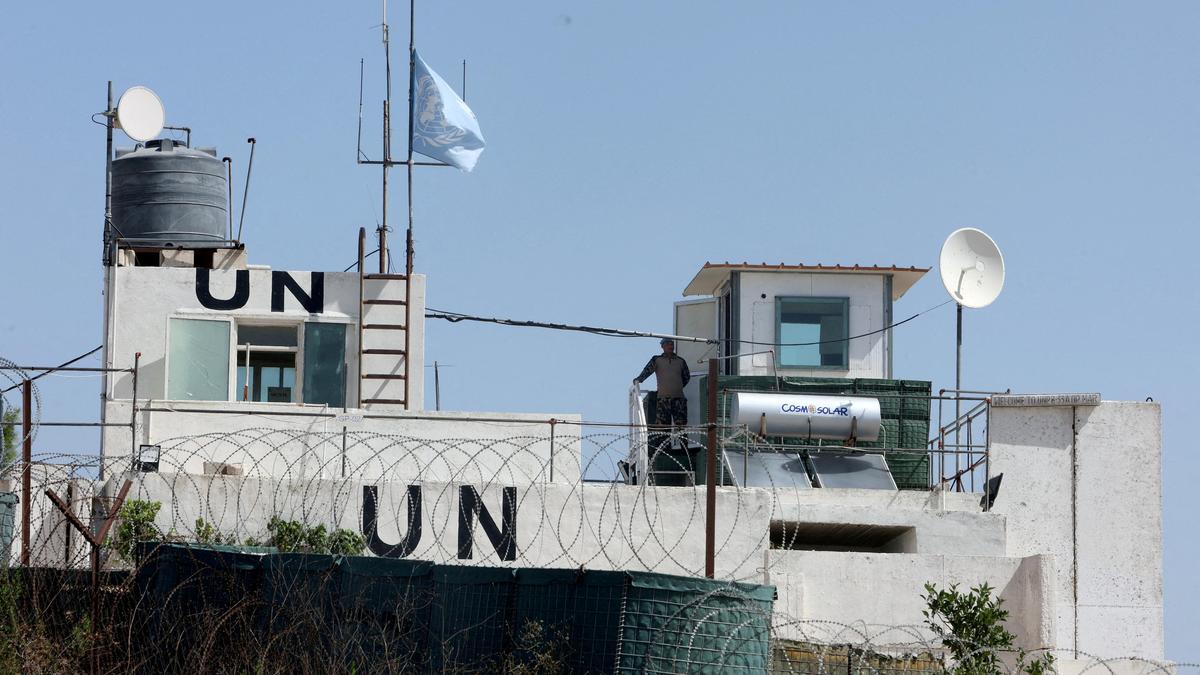
The blue helmets of the United Nations aren't supposed to be targets. That's the basic rule of international peacekeeping. But that rule is fraying fast in Southern Lebanon. Recently, early evidence suggests Israeli tank fire struck a UNIFIL base, leaving several Ghanaian peacekeepers wounded. This isn't just a stray shell or a one-off accident. It's part of a terrifying pattern where the lines between combatants and neutral observers are vanishing.
If you're following the escalation between Israel and Hezbollah, you know the border is a tinderbox. But the specific targeting—or "collateral" hitting—of UN positions raises the stakes for every country with boots on the ground. We're talking about a direct hit on a position clearly marked with the UN's iconic blue and white. It sends a message, intentional or not, that nowhere is truly safe. Meanwhile, you can explore other developments here: The Cold Truth About Russias Crumbling Power Grid.
Why the Strike on Ghanaian Peacekeepers Changes the Narrative
For months, the friction between the Israel Defense Forces (IDF) and the United Nations Interim Force in Lebanon (UNIFIL) has been building. This specific incident involving the Ghanaian contingent is a breaking point. Ghana has been a backbone of UNIFIL for decades. Their soldiers are experienced. They know the terrain. When their base gets hit by tank rounds, it’s a signal that the deconfliction mechanisms—the "red phones" meant to prevent these disasters—are failing.
Israel’s military often points to Hezbollah’s tactic of operating near UN posts. It's a messy reality. Hezbollah uses the landscape to their advantage, sometimes literally in the shadow of UN towers. But the IDF has some of the most sophisticated targeting tech on the planet. A tank crew knows exactly what they're looking at through their thermals. A UN bunker doesn't look like a rocket launcher. To see the complete picture, check out the recent analysis by Al Jazeera.
The injuries to the Ghanaian peacekeepers weren't just scrapes. We’re talking about hits to a permanent structure. When heavy armor engages a fixed, known diplomatic position, the "fog of war" excuse starts to feel thin. It forces us to ask if the goal is to pressure UNIFIL to evacuate the border entirely.
The Impossible Mission of UNIFIL in 2026
UNIFIL's mandate comes from Resolution 1701. It’s supposed to keep the area south of the Litani River free of weapons and armed personnel except for the Lebanese army and the UN. Let's be real. That hasn't happened. Hezbollah is there. Israel is there. The UN is stuck in the middle, holding a clipboard in a gunfight.
Critics of the UN say they’ve been useless at stopping Hezbollah from digging tunnels or stockpiling missiles. There's some truth there. Peacekeepers aren't a combat force; they can't kick down doors without a specific, often impossible, level of authorization. But their presence is the only thing providing a "witness" to the carnage. If they leave, the last shred of international oversight goes with them.
The IDF has repeatedly told the UN to move north for their own safety. The UN has refused. They argue that moving would mean abandoning their mission and giving up the ground to whoever shoots the loudest. It's a standoff of wills, and the Ghanaian soldiers are the ones paying the price in blood.
The Human Cost of Diplomacy Under Fire
Think about the position of a Ghanaian soldier in Sector West. You’re thousands of miles from home, wearing a blue beret that’s supposed to be a shield. Suddenly, the wall of your barracks explodes because a Merkava tank 2 kilometers away pulled the trigger.
- Peacekeepers are increasingly confined to bunkers.
- Supply lines for food and water are getting cut by active fighting.
- Medical evacuations are becoming high-risk missions.
This isn't just about politics; it’s about the safety of people who signed up to maintain a peace that no longer exists. When these soldiers get hurt, it causes a diplomatic nightmare. Ghana, a major contributor to global peacekeeping, now has to weigh the lives of its citizens against its commitment to the UN.
Breaking Down the IDF Strategy Near the Blue Line
Israel’s objective is clear. They want to push Hezbollah back so their citizens can return to northern towns. To do that, they’re clearing the brush, the tunnels, and the villages. The UN bases are sitting right on top of the real estate the IDF wants to "sanitize."
By striking near—or directly at—these bases, the IDF creates an environment where staying becomes untenable. It’s a "soft" eviction through hard power. They claim they aren't targeting the UN, but when tank shells consistently land on towers and perimeter walls, the statistical probability of "accidents" starts to look like a policy.
International law is pretty blunt here. Deliberate attacks on peacekeepers are war crimes. Proving "intent" is the hard part. The IDF will likely blame "active exchanges of fire" or "errant rounds." But for the countries sending troops—Italy, France, Ghana, Ireland—the explanations are starting to ring hollow.
What Happens When the Blue Berets Leave
If the UN finally decides the risk is too high and pulls out, the buffer zone is gone. Total war takes its place. Without UNIFIL, there’s no one to mediate the small stuff—like a farmer crossing a fence or a stray goat—that often spirals into a skirmish.
We’re seeing a shift where international organizations are no longer viewed as off-limits. We saw it in Gaza with UNRWA, and now we’re seeing it in Lebanon with UNIFIL. It’s a move toward a "total war" footing where any entity that isn't an ally is treated as a potential obstacle or a shield for the enemy.
The Ghanaian government has expressed "grave concern," which is diplomatic speak for being absolutely furious. They aren't the only ones. The European nations with troops in the path of the IDF advance are also signaling that their patience is gone.
The Reality on the Ground in Southern Lebanon
The terrain in the south is rugged. It’s full of limestone ridges and deep wadis. It’s perfect for guerrilla warfare and a nightmare for tanks. The IDF is trying to navigate this while Hezbollah uses every inch of cover.
When a tank commander is under pressure, drawing fire from a hillside, they react. If that hillside also happens to house a UN observation post, the commander has a choice. In recent weeks, it seems the choice has increasingly been to fire first and answer the UN’s complaints later.
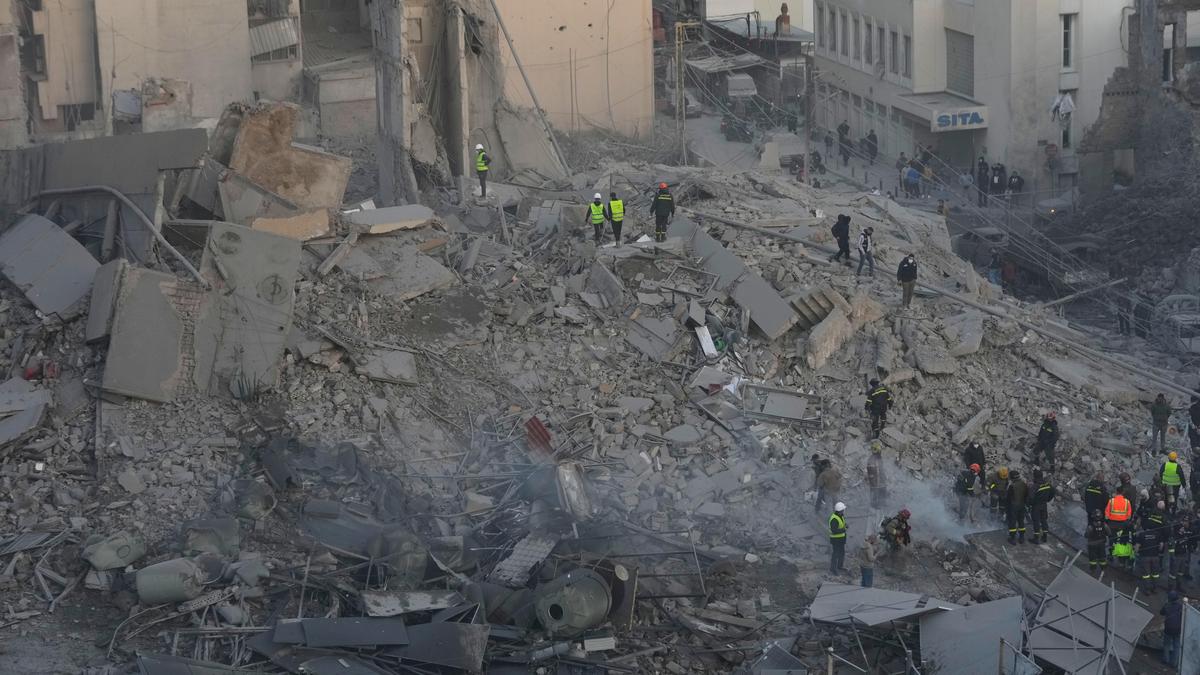
This specific hit on the Ghanaians wasn't a small-arms rattle. Tank fire is devastating. It levels concrete. The fact that we aren't talking about dozens of deaths is a miracle of luck and reinforced bunkers. But you can't run a peacekeeping mission from the bottom of a hole forever.
Immediate Steps for Regional Stability
The international community needs to stop sending "strongly worded" letters and start demanding actual deconfliction maps that both sides respect. If the IDF says they aren't targeting the UN, they need to prove it by establishing clear no-fire zones around every known UNIFIL coordinate.
Likewise, the UN needs to be more than a spectator. If they can't fulfill the mandate of Resolution 1701, the mission needs a total overhaul. Keeping soldiers in the line of fire just to maintain a "presence" is becoming an ethical disaster for the UN leadership in New York.
For now, the focus is on the wounded. The Ghanaian peacekeepers are being treated, but the psychological wound to the mission is deeper. When the people meant to stop the war become the victims of it, the path to a ceasefire becomes almost impossible to find.
Watch the diplomatic fallout from Accra and Dublin. If these countries start talking about withdrawal, the border will truly become a lawless zone. The blue helmet is losing its power as a symbol of protection, and that's a loss for everyone involved.
Keep an eye on the official UNIFIL reports over the next 48 hours. They usually release more granular data about the caliber of the rounds and the exact trajectory once their internal investigators finish the sweep. That data will tell us if this was a mistake or a message.