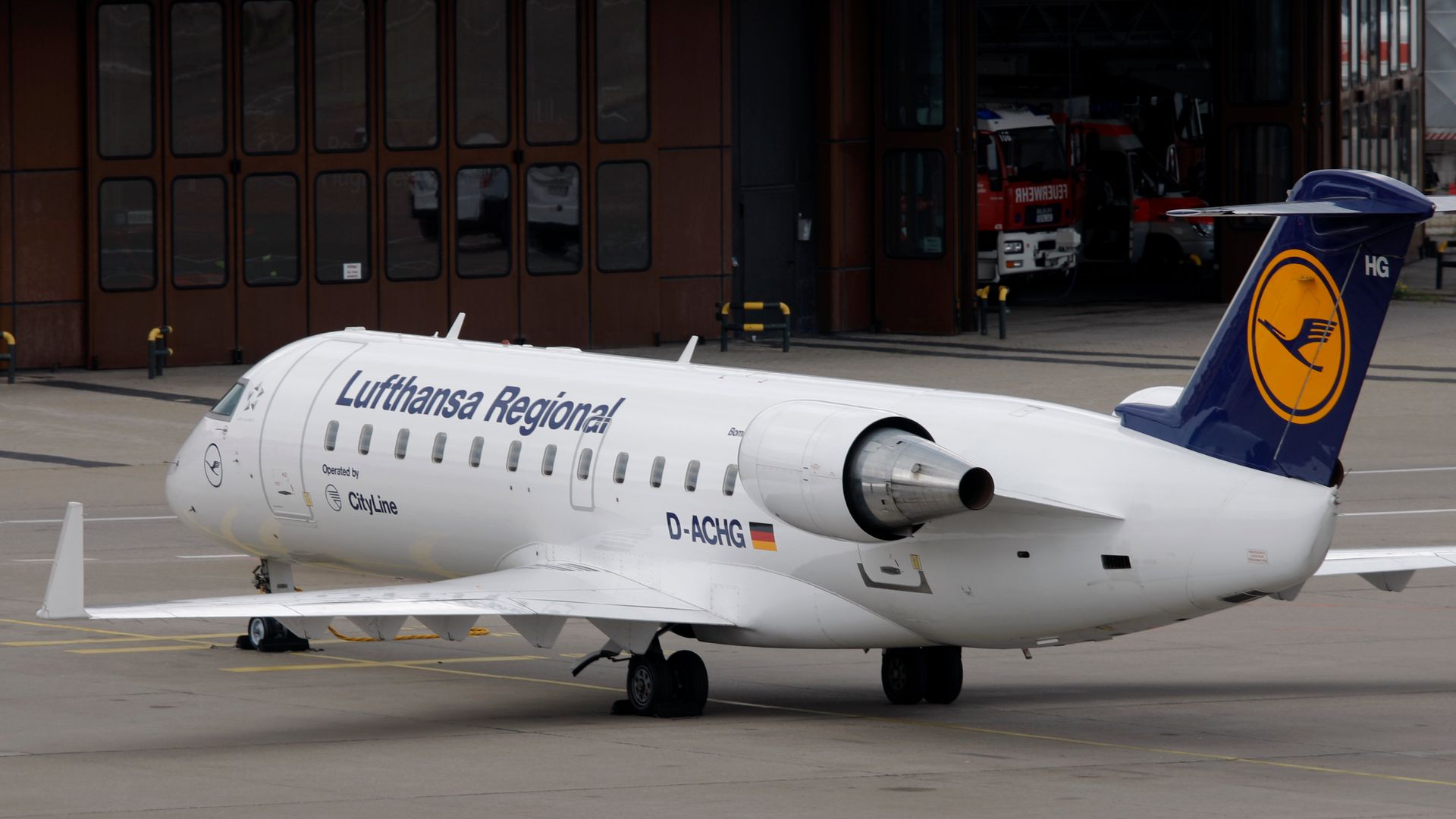
The boarding gate at Frankfurt Airport is usually a cathedral of efficiency. There is a specific rhythm to it: the rhythmic thwack of passports hitting scanners, the polite hum of the air conditioning, and the distant, metallic whine of turbines warming up on the tarmac. It is a sound that signifies the world is working as intended. But lately, that rhythm has been replaced by a heavy, expectant silence.
Somewhere in a sleek boardroom overlooking the Rhine, a group of executives just erased twenty thousand summer vacations with a single stroke of a pen.
Lufthansa, the blue-and-yellow titan of European skies, recently announced it would slash its flight schedule by roughly 20,000 departures. On paper, it is a calculated business move, a necessary trimming of the sails to survive a storm. In reality, it is a tectonic shift in how we move across the planet. To understand why a global powerhouse would suddenly decide to stay on the ground, you have to look past the spreadsheets and into the volatile chemistry of the fuel tanks and the exhausted eyes of the crew.
The Chemistry of a Crisis
Everything in aviation eventually boils down to the price of a single drop of kerosene.
Imagine a marathon runner who suddenly finds that the price of water has increased tenfold mid-race. They don't just slow down; they start calculating exactly which miles are worth running and which ones will lead to total collapse. This is the math currently haunting the aviation industry. Jet fuel costs haven't just risen; they have mutated.
The geopolitical tremors caused by the conflict in Ukraine sent oil markets into a fever dream. For an airline like Lufthansa, which operates a fleet of hundreds of aircraft, fuel isn't just an expense. It is the lifeblood. When the cost of filling a long-haul Boeing 747-8 jumps by hundreds of thousands of dollars in a matter of months, the very concept of "profit" becomes a ghost.
But the fuel is only half the story. There is a human exhaustion that no amount of money can instantly fix. During the pandemic, the aviation industry didn't just hibernate; it withered. Pilots took early retirement. Ground crews found jobs in logistics warehouses where the hours were better and the stress was lower. Security staff moved on. Now, as the world tries to surge back into the clouds, the skeletal remains of the industry are snapping under the pressure.
The Invisible Stakeholders
Consider a hypothetical traveler named Elena. She isn’t a statistic on a Lufthansa report. She is a freelance architect who hasn't seen her parents in three years. Her flight from Munich to Lisbon was one of the 20,000.
For Elena, the "cancellation of flights due to operational constraints" isn't a headline. It is a frantic Tuesday morning spent on hold for four hours, listening to distorted Vivaldi while her heart sinks. It is the realization that the wedding she was supposed to attend, the contract she was meant to sign, and the embrace she had been visualizing for a thousand days are all dissolving into a digital notification: Flight Status: Cancelled.
This is the hidden cost of a grounded fleet. It is the cumulative weight of missed moments.
The airline isn't cutting these flights because they want to disappoint Elena. They are cutting them because the alternative is worse: a total systemic collapse. It is a tactical retreat. By removing 20,000 flights from the board, Lufthansa is trying to protect the integrity of the flights that remain. They are clearing the "traffic jam" before it happens, hoping that by flying less, they can actually fly better.
A System Out of Breath
The bottleneck isn't just at the gates. It’s in the sky itself.
Air traffic control centers are understaffed and overworked. The European airspace is a complex, invisible web of corridors, and right now, many of those corridors are congested or closed due to the war to the east. When you combine limited paths with expensive fuel and a shortage of people to direct the planes, the system begins to gasp for air.
Lufthansa’s decision is an admission of vulnerability. It is a giant saying, "We cannot do this."
There is a certain honesty in that, even if it feels like a betrayal to the passengers left stranded. In previous decades, an airline might have tried to "power through," resulting in thousands of people sleeping on airport floors and luggage mountains piling up in terminals like modern art installations made of polyester and heartbreak. By preemptively slashing the schedule, the airline is attempting to engineer a controlled descent rather than a crash.
The New Map of the World
We are entering an era where the casual ease of flight—the "hop over to Berlin for lunch" mentality—is being interrogated by reality.
For years, we lived in a bubble of cheap energy and surplus labor. We treated the miracle of pressurized tubes hurtling through the stratosphere at 500 miles per hour as if it were a mundane right, like turning on a tap. That bubble has popped. The rising cost of jet fuel acts as a gravity well, pulling us back toward the earth, forcing us to ask if every journey is truly necessary.
Lufthansa is the first major domino to fall so publicly this season, but it won't be the last. The "soaring costs" mentioned in the financial briefs are actually a fundamental recalibration of what it costs to defy physics.
As the sun sets over the tarmac in Frankfurt, rows of white-and-blue aircraft sit idle. Their engines are covered, their cockpits dark. They look like sleeping whales, grounded by a sea that has grown too expensive and too turbulent to navigate. For the executives, it’s a strategy for fiscal survival. For the pilots, it’s a forced rest. And for the travelers like Elena, it’s a reminder that the world has suddenly become much, much larger than it used to be.
The silence at the gate isn't just a lack of noise. It is the sound of a world slowing down, one canceled boarding pass at a time.