Cardamom. That is the first thing you notice at a Jordanian funeral, long before the tears or the quiet murmurs of condolence. It hangs heavy in the air, thick and bitter-sweet, rising from brass pots of Arabic coffee poured into tiny, handleless cups. You drink it without sugar, letting the bitterness sit on your tongue as a physical acknowledgment of loss. You shake hands. You murmur Allah yerhamo—may God have mercy on him—and you believe, with the bone-deep certainty of a centuries-old social contract, that inside the mourning tent, you are untouchable.
Until the gunfire starts.
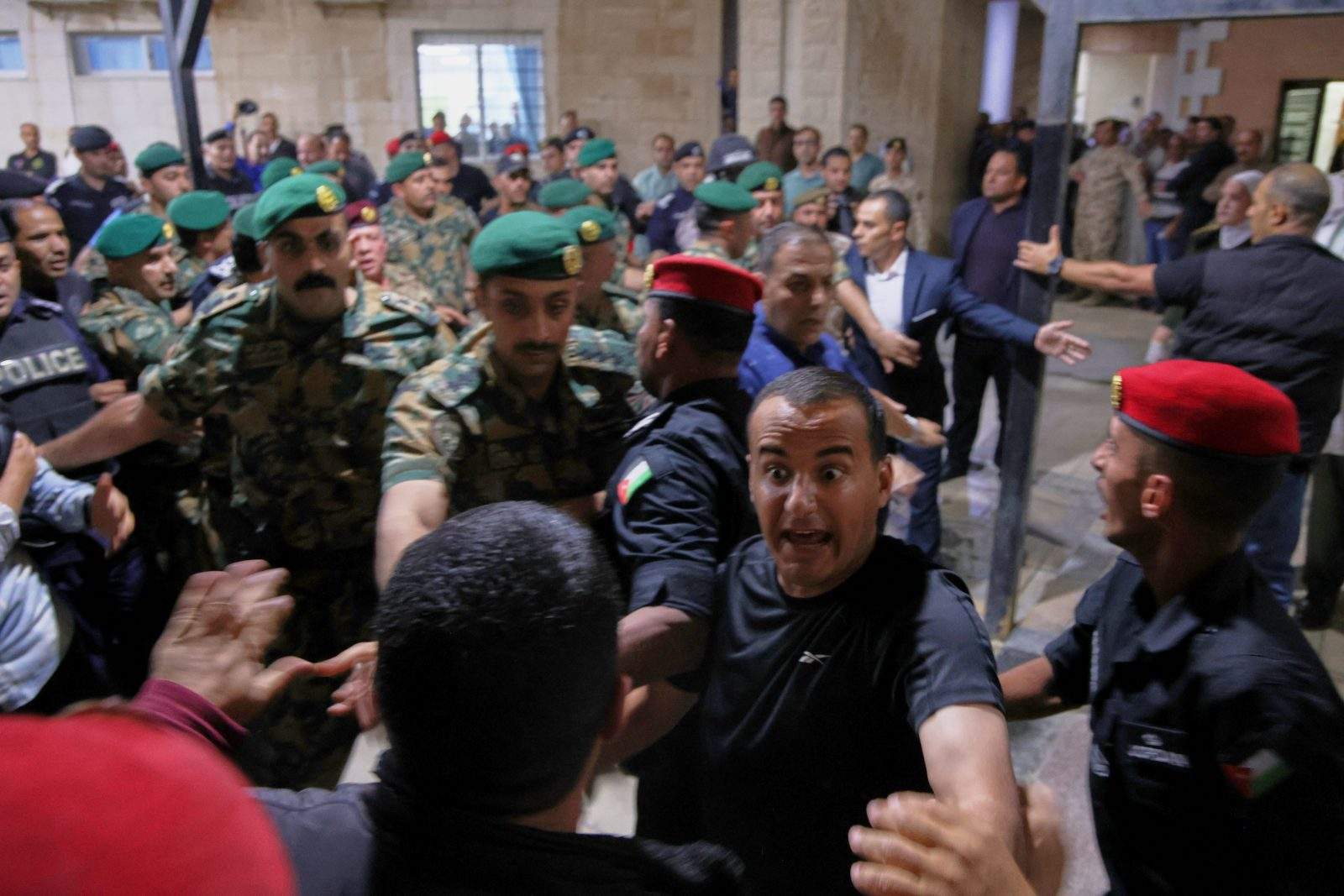
Seven people dead. Forty wounded. Those are the numbers that scrolled across the breaking news tickers after gunmen opened fire on a funeral gathering in Jordan. In the sterile language of wire reports, it is a tragedy reduced to arithmetic, a brief flash of violence in a region the outside world often lazily views through a lens of perpetual conflict. You read the headline, you feel a momentary pang of sympathy, and you scroll down to the weather.
But if you stop at the numbers, you miss the real crime. You miss the invisible architecture of safety that collapsed the moment those triggers were pulled.
The Architecture of a Broken Truce
To understand what happened when bullets tore through that crowd of mourners, you have to understand what a funeral actually represents in Jordan. It is not merely a private family affair; it is a civic institution, a temporary sanctuary governed by unwritten laws older than the modern state itself.
Consider a hypothetical mourner—let’s call him Tariq—standing near the edge of the gathering that afternoon. Tariq isn't there because he is a political activist or a participant in a tribal feud. He is there because his neighbor’s cousin passed away, and in Amman, in Irbid, in Zarqa, showing up is how you weave yourself into the community. He is wearing his best dark jacket. His phone is on silent. His hands are empty, save for a small paper cup of coffee. In his mind, this space is sacred. Even bitter rivals, men who might cross the street to avoid each other in the market, will sit side by side in a bayt al-aza—the house of condolence—bound by a mutual, unspoken truce. Grief demands respect. Death levels the playing field.
Now, picture the sound that shatters that truce.
It does not sound like the movies. Real gunfire in an enclosed or semi-enclosed crowd is a sharp, deafening crack that vibrates in your teeth before your brain even registers danger. For the first half-second, nobody moves. Confusion paralyzes the crowd because the mind refuses to accept the violation. Fireworks? Tariq might think, clutching his cooling coffee. A car backfiring?
Then the screaming starts, and the sanctuary turns into a trap.
When gunmen open fire on a funeral in Jordan, they aren't just attacking individuals; they are taking a sledgehammer to the tribal and social glue that keeps the country stable. Jordan has long prided itself on being an oasis of calm in a turbulent neighborhood. While borders to the north and west have burned over the last two decades, Jordanians have relied on a delicate balance of state security and deep-rooted tribal customs to keep the peace. A funeral is the ultimate expression of that peace. Attacking it is like poisoning a well in the middle of a desert. It tells every citizen that the old rules no longer apply, that no threshold is sacred, and that even your sorrow can be weaponized against you.
Why Violence Finds the Gathering
People looking in from the outside often ask the same blunt question when a headline like this surfaces: Why a funeral? It seems cowardly, almost nonsensical, to target people who are already broken by grief.
The answer lies in the cold, brutal logic of revenge and intimidation. In Jordan, as in many societies where kinship networks carry immense weight, disputes rarely stay neatly contained between two individuals. A disagreement over land, a business deal gone sour, or an escalating cycle of retaliatory violence—known locally as tha'r or blood feuds—can draw in entire extended families.
Think of a blood feud like a dry forest floor in August. A single spark—an insult, a reckless driver, a stray bullet at a wedding—can sit smoldering beneath the surface for months or even years. Authorities step in. Tribal elders negotiate a atwa, a formal truce mediated over coffee and solemn promises, meant to cool tempers and allow justice to take its course. Most of the time, it works. The fire dies down.
Sometimes, though, someone decides the truce is an insult. Someone wants to send a message that cannot be ignored, and to send a message, you need an audience.
A funeral guarantees a crowd. It guarantees that the leaders, the elders, the brothers, and the sons of a rival family will be standing in one predictable location, unarmed and distracted by their loss. From a purely tactical standpoint, it is a soft target. From a moral standpoint, it is an abomination. By choosing that moment to strike, the perpetrators maximize the shockwaves. They turn a ritual of closure into an open wound that will take generations to heal.
The Ripple Effect of Forty Wounded
Wire reports love the dead because the dead are final. Seven lives ended. Seven families shattered. Seven new funerals that will now have to be held under the shadow of armed guards and nervous glances toward the street.
Yet, if you want to measure the true cost of this shooting, look at the forty wounded.
Forty people who walked into that gathering thinking about the deceased, and walked out—or were carried out—with torn muscle, shattered bone, and permanent trauma. In a country where extended families function as the primary economic safety net, forty wounded isn't just a medical crisis; it is an economic earthquake.
Imagine a forty-year-old mason among those forty. A bullet shatters his femur. He survives, so he becomes a statistic in the "wounded" column, a footnote beneath the seven fatalities. Nobody writes a follow-up story six months later when he still cannot climb scaffolding, when his savings have evaporated into physical therapy bills, or when his teenage son has to drop out of university to work a counter job to keep the lights on. Nobody reports on the quiet terror of his wife every time she hears a loud bang outside their apartment window.
This is the invisible math of gun violence. For every life extinguished in a matter of seconds, dozens of other lives are quietly derailed for decades. The trauma radiates outward like ripples in dark water, touching hospital nurses working double shifts in overwhelmed emergency rooms, police officers tasked with preventing the inevitable retaliatory strike, and children who will grow up associating the smell of cardamom not with comfort and community, but with blood on the pavement.
The Invisible Proliferation
We have to be honest about how we got here, even when the truth is uncomfortable. It is easy to blame a few rogue gunmen, to call them monsters and lock them away, and pretend the problem is solved. It isn't. You cannot have a shooting that leaves nearly fifty casualties without a steady, accessible supply of high-powered weapons.
For years, the celebratory firing of guns at weddings and graduations—a dangerous practice Jordanians themselves have fiercely debated and campaigned against—served as a symptom of a much deeper issue. Weapons have flowed across porous borders destabilized by regional wars, slipping into the hands of criminal networks, smugglers, and ordinary citizens who feel they need an insurance policy in an uncertain world.
Ownership becomes a self-fulfilling prophecy. When one household buys a rifle for "protection," the neighbor feels compelled to buy two. Soon, a minor traffic collision or a heated argument over a boundary wall isn't settled with shouting and a subsequent cup of tea; it is settled with caliber and magazine capacity.
State security forces in Jordan work relentlessly to curb this tide. Raids happen weekly. Arrests are made. Whenever an incident of this scale occurs, the response from Amman is swift, heavy, and uncompromising, because the monarchy and the security apparatus understand that if the state loses its monopoly on violence, the entire social contract unravels.
Still, laws and raids can only do so much when fear is doing the marketing. As long as people believe that the state cannot protect them—or that honor requires a violent response—the triggers will keep getting pulled.
Rebuilding the Sanctuary
So where does a community go after the ambulances leave and the chalk outlines are washed away?
If you have never lived through a moment where your own neighborhood suddenly feels foreign and dangerous, it is easy to offer platitudes about resilience. Resilience is a word outsiders use so they don't have to sit with the discomfort of someone else's pain. The truth is messier. The truth is that in the days following an attack like this, fear settles into the marrow of a city. People cancel gatherings. Mothers call their sons twice as often to check where they are. Trust, which takes years to build, evaporates in the span of a single magazine clip.
Yet, if you look closely at how Jordanians respond when the unthinkable happens, you see the counter-force at work.
You see it in the lines outside blood donation centers that form within hours of the first news alert, stretching down the block as strangers roll up their sleeves for victims they have never met. You see it in the tribal elders who step into the breach immediately, putting their own reputations and safety on the line to demand restraint, insisting that blood cannot be washed away with more blood. You see it in the sheer stubbornness of ordinary people who refuse to let thugs dictate how they live, how they love, and how they bury their dead.
Healing does not happen through a press release from the Interior Ministry. It happens when the community collectively decides that the sanctuary is worth defending—not with more bullets, but with a fierce, uncompromising demand for accountability. It happens when the perpetrators are brought before a court of law, stripped of any romanticized notions of tribal honor, and treated for what they are: criminals who violated the most basic laws of human decency.
Think back to Tariq, our hypothetical mourner, standing at the edge of that crowd.
Days later, the physical bruises have begun to fade, though the ringing in his ears lingers when the house gets too quiet at night. Eventually, another neighbor will pass away. Another tent will be pitched against the curb. Another pot of bitter coffee will be set over the flame.
Tariq will stand at his front door, his hand resting on the latch, feeling the cold weight of hesitation. He will remember the sound of the shots, the chaos, the crimson staining the dust. Every instinct for self-preservation will tell him to stay inside, to lock the door, to grieve in the safety of isolation.
Then he will straighten his jacket, step out onto the street, and walk toward the scent of cardamom.