Smoke still clings to the batik shirts in the back alleys of Jakarta long after the market stalls close. I remember standing outside a state-owned textile depot a few years back, watching a ledger book get slammed shut with enough force to kick up a small cloud of dust. That sound stayed with me. It was the sound of money moving from nowhere to nowhere, tracked by clerks who had retired in spirit a decade prior, keeping score in a game where the scoreboard had been unplugged.
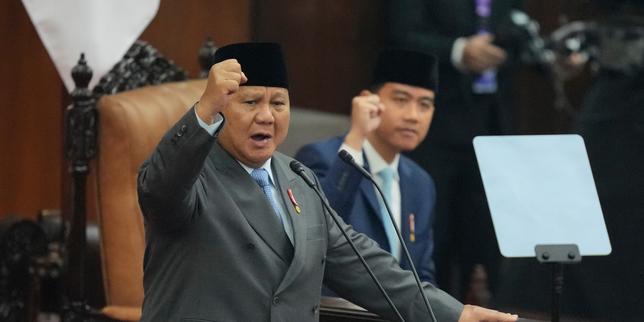
Indonesia is attempting something massive. It sounds clinical on paper: a presidential decree targeting over seven hundred state-owned enterprises for closure, merger, or complete overhaul. Prabowo Subianto calls it the most sweeping restructuring effort the modern world has ever seen.
Bureaucrats call it a nightmare.
The people who actually wake up at four in the morning to sweep the cement floors outside state fertilizer offices call it an earthquake.
To understand why this matters, you have to look past the spreadsheets. You have to look at the anatomy of a bloated state apparatus. For decades, these companies were not just businesses. They were monuments to political ambition. Every port, every rubber plantation, every cement mixer, and every regional airline carried the invisible weight of bureaucratic patronage. They were designed to employ people, not to make sense.
Consider a hypothetical clerk named Bapak Hendra. For twenty-eight years, Hendra sat at a metal desk inside a sprawling logistics parastatal in Surabaya. His job was to stamp manifests for shipping containers that frequently did not exist, carrying goods that had already been spoiled by monsoon humidity. He did not hate his job. He drank sweet black coffee from a glass tumbler, exchanged gossip about neighborhood badminton matches, and collected a modest stipend that kept his grandchildren in school.
To an efficiency expert in a sleek glass tower, Hendra is a line item. He is waste. He is friction.
To his community, Hendra is the gravity that keeps three generations anchored in a modest brick home.
When you announce that seven hundred and fifty companies are going to the chopping block, you are not just trimming fat from a balance sheet. You are pulling the rug out from under millions of invisible Hendras.
Yet the alternative is slow, grinding suffocation.
Indonesia is a demographic powerhouse straddling thousands of islands, trying to sprint into the upper tiers of the global economy while dragging an anchor made of rust and red tape. The state budget bleeds billions every year to keep zombie corporations on life support. These are entities that produce nothing of competitive value, surviving purely because shutting them down was always considered politically toxic.
Prabowo’s administration is betting that the toxicity of action is finally less lethal than the slow poison of inaction.
Listen closely to the numbers, but forget the math for a second. Imagine the sheer logistical violence of auditing entities that span from palm oil conglomerates to provincial printing presses. Some of these companies have overlapping mandates so absurd that two state agencies end up competing against each other for the same government contracts, using the same taxpayer funds, employing the same style of outdated typewriter.
It is financial theater on a national scale.
The strategy hinges on consolidation. The government plans to corral the remaining survivors into streamlined holding groups, modeled loosely on Singapore’s Temasek or Malaysia’s Khazanah. Cleaner lines. Clearer mandates. Actual accountability.
But transition is a messy beast.
When state-backed monopolies dissolve, prices fluctuate. When redundant offices close, local economies that relied on the administrative foot traffic experience sudden, painful deflation. A noodle vendor outside a redundant state mining office in Sumatra does not care about gross domestic product growth. She cares about whether the men in uniform safety vests are still coming by at noon for bowls of Soto Ayam.
This is where the human cost hides. It lurks in the quiet corners of provincial towns where the local state enterprise was the only game in town. When that office closes its gates for good, the young people pack cheap vinyl suitcases and head for the ferries bound for Jakarta or Batam, chasing the phantom of factory work.
History shows us that sweeping state surgery rarely goes according to script. Think of the post-Soviet transitions, or the painful corporate surgery in South Korea following the Asian financial crisis. The blueprints always look clean. The arrows on the charts always point upward and to the right.
Reality, however, is curved and jagged.
The success of this endeavor will not be measured by how many boardrooms are locked or how many redundant CEOs lose their chauffeur-driven SUVs. It will be measured by what rises in the ash of the old system. Will the capital saved actually trickle down into infrastructure that serves the archipelago? Will the new, leaner entities foster actual market competition, or will they simply morph into private monopolies wearing new ties?
I keep thinking about that ledger book in Jakarta. The dust it kicked up has settled now, but the floor underneath is still cracked. Prabowo is swinging a very heavy hammer at a very old wall. The noise is deafening, and the dust is getting into everyone's eyes.
What remains to be seen is whether they are clearing space to build something magnificent, or simply demolishing the only shelter the workers ever knew.