The headlines are screaming that Saudi Aramco is retreating from Asia. They point to falling export volumes and "war-torn" supply chains as evidence of a kingdom in retreat. They are wrong. This isn't a retreat; it’s a surgical strike on inefficiency.
If you believe the narrative that Aramco is cutting Asia sales simply because "war bites," you are falling for a lazy, surface-level correlation that ignores the cold-blooded math of the global energy trade. Riyadh isn't running away from its biggest customers. It is re-evaluating which customers are actually worth the barrels.
For decades, the industry has operated under the "market share at any cost" mantra. That era is dead. What we are seeing now is the transition from volume-driven dominance to value-driven hegemony.
The Myth of the Asian Retreat
The standard industry take suggests that geopolitical instability in the Middle East and the Red Sea is forcing Aramco to tighten its belt and reduce allocations to North Asian refiners. This ignores the $100 billion elephant in the room: internal demand and the massive expansion of the Kingdom’s downstream sector.
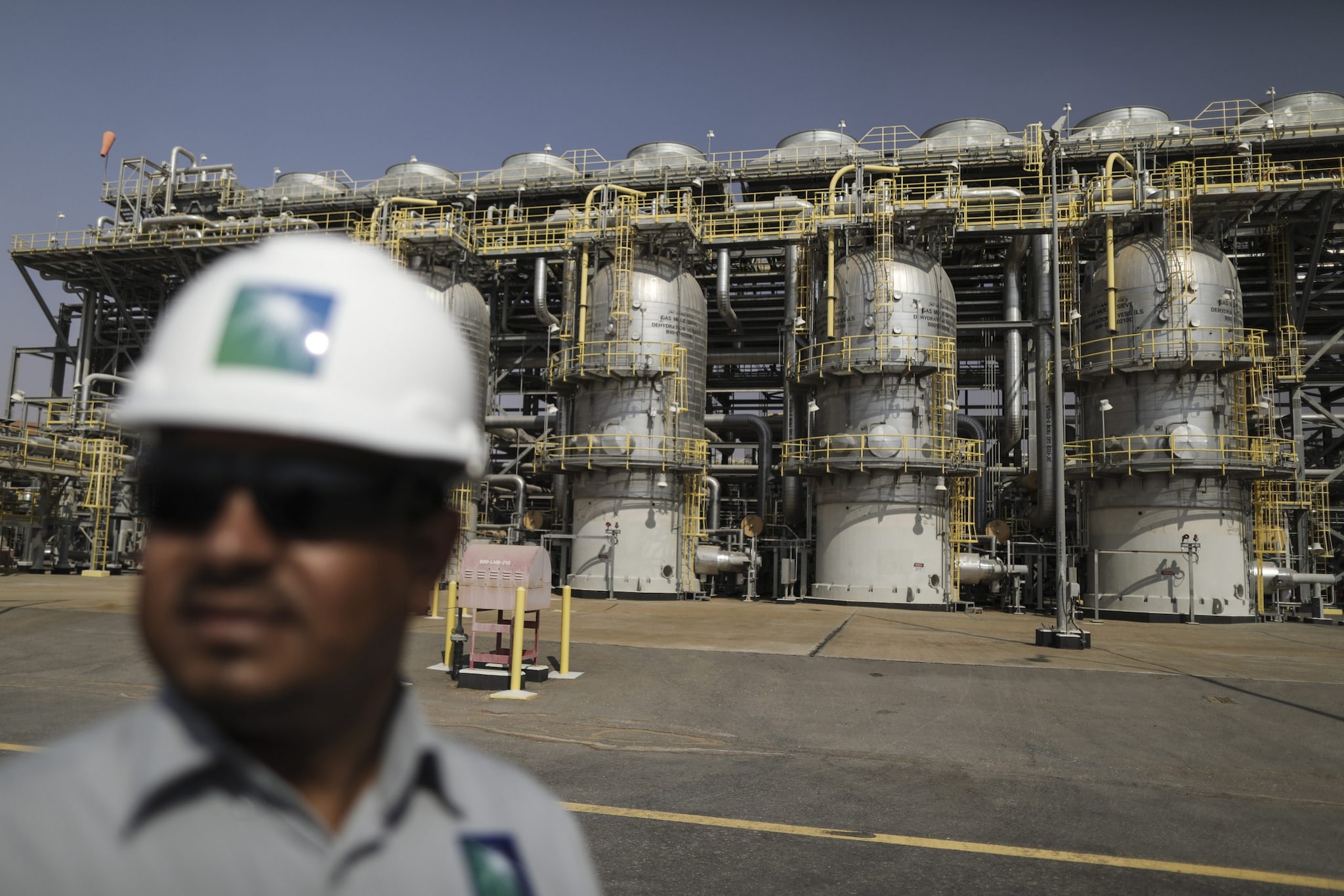
Saudi Arabia is no longer just a gas station. It is becoming a refinery powerhouse. When Aramco "reduces" sales to a third-party refiner in Japan or South Korea, those barrels aren't disappearing. They are being routed into specialized, high-margin domestic facilities or joint-venture refineries in China that lock in long-term demand.
Refining margins in the West are volatile, but the integrated model—where you own the well, the pipe, and the refinery—is where the real money lives. Critics see a drop in export numbers and shout "weakness." I see a company moving up the value chain to capture margins that used to go to middlemen.
Why the Red Sea Crisis is a Distraction
Observers love a good war story. It’s easy to blame the Houthi rebels or regional tensions for shifting trade flows. It makes for a compelling graphic on a news broadcast. But if you’ve spent any time looking at the actual freight costs and insurance premiums (the "war risk" surcharges), you’d know they are a rounding error for a company that generated $121 billion in net income in a single year.
Aramco isn’t scared of the Red Sea. They are exploiting the volatility.
By strategically reducing "term" contract volumes to certain buyers, Aramco regains the flexibility to play the spot market or redirect supply to their own expanding petrochemical complexes. Crude oil is a commodity; chemicals are a specialized product. Moving from selling the former to the latter is the smartest play in the history of the energy business.
The Official Selling Price (OSP) Game
Most people don't understand how Saudi Arabia actually controls the market. It isn't just through OPEC+ quotas. It’s through the OSP—the monthly price adjustment they set for different regions.
When Aramco raises the OSP for Asia while keeping it flat for Europe or the US, they aren't "losing" the Asian market. They are testing the price elasticity of their most dependent customers.
- China is addicted to Saudi Grade.
- India is playing a dangerous game with Russian discounted barrels.
- Japan and South Korea have almost zero alternatives for the specific heavy-acidic crude their refineries were built to process.
Aramco knows this. They are squeezing the margins of Asian refiners because they can. If a Japanese refiner complains about a lower allocation, Aramco essentially tells them to pay more or find it elsewhere. And guess what? There is no "elsewhere" that offers the same reliability and volume.
The Russian Discount Fallacy
The "lazy consensus" says Saudi Arabia is losing ground to Russia in the East. Since the invasion of Ukraine, China and India have gorged on cheap Urals.
But look closer at the refinery configurations. Most advanced refineries in Asia are "tuned" for Saudi Light or Medium. You cannot just swap 100% of your feedstock to Russian Urals without damaging your equipment or significantly lowering your yield of high-value products like jet fuel and diesel.
Aramco is letting Russia have the low-margin, "desperation" buyers while they consolidate their grip on the high-end, technologically advanced refiners who require consistent chemical signatures in their crude. This isn't a loss of market share; it’s a filtering process.
The Downstream Trap
I’ve seen analysts miss the mark on this for a decade. They treat Aramco like a mining company. They should be treating it like a tech company that owns its own operating system.
The "Asia sales reduction" is a symptom of Liquid-to-Chemicals (LTC).
The LTC Equation
$$Total Value = (Volume \times Crude Price) + (Yield \times Chemical Margin)$$
By diverting crude away from simple exports and into LTC plants, Aramco is effectively "shorting" the raw commodity market to "go long" on the plastics, polymers, and synthetic materials that build the modern world.
Stop Asking if Asia is Buying Less
The real question you should be asking is: "Who is Saudi Arabia choosing to feed?"
In a world of shrinking "easy" oil, the Kingdom is picking winners. If you are a refiner in a country that isn't signing 20-year investment deals with Riyadh, you are on the chopping block.
- Winners: Chinese mega-refineries with Saudi equity stakes.
- Losers: Merchant refiners in Singapore or Korea who buy on the open market and offer no strategic depth.
The Risk of the Contrarian Stance
Is there a downside? Of course. By tightening the noose on supply, Aramco risks accelerating the transition to renewables in these Asian Tiger economies. If you make oil too expensive or too hard to get, you give the electric vehicle (EV) lobby in Beijing more ammunition.
But Riyadh has calculated that the "energy transition" is slower than the activists claim. They are betting that even if gasoline demand peaks, the demand for the polyester in your clothes, the plastic in your phone, and the carbon fiber in your EV will keep growing.
They aren't cutting sales because they are struggling. They are cutting sales because they are evolving.
The Hard Truth for Investors
If you are waiting for a return to the "good old days" of unlimited Saudi exports to the highest bidder, you are dreaming. The Kingdom has realized that being the world’s swing producer is a thankless job that leaves money on the table.
They are now the world’s swing processor.
The next time you see a report about reduced Asian allocations, don't look at the tankers. Look at the construction cranes at the SATORP refinery or the Jubail industrial city. That is where the oil is going. It isn't being lost to war; it's being "upcycled" into profits that the traditional export model could never touch.
The era of cheap, abundant Saudi crude for everyone is over. The era of the Saudi-led global chemical monopoly has begun.
Get used to it or get out of the way.