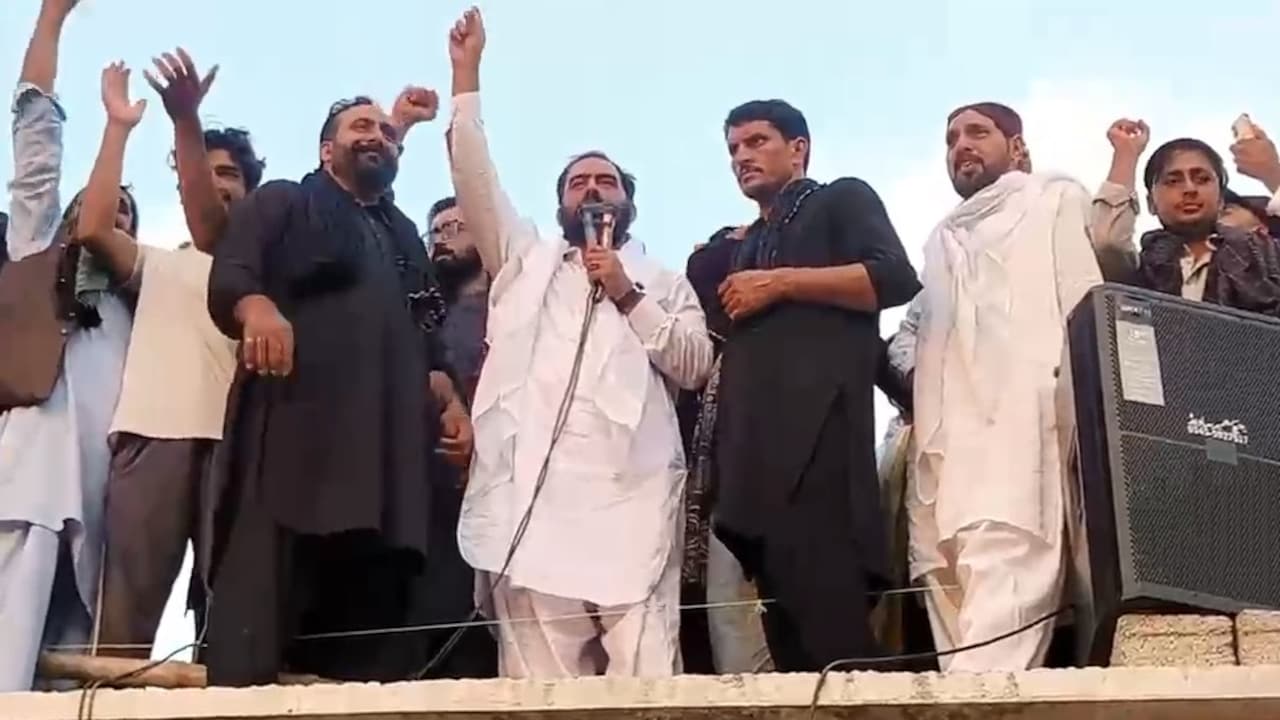
The mainstream media loves a neat, predictable script. When a political activist from Pakistan-administered Kashmir stands in front of a microphone and declares that the state security apparatus handed out weapons only to later brand those same locals as liabilities, the international press goes into a feeding frenzy. The Indian media establishment uses it as a triumphant "I told you so" to validate decades of state rhetoric. The Pakistani state apparatus moves swiftly to suppress the broadcast, chalking it up to foreign intelligence operations.
Both sides are completely missing the point.
They are looking at a deeply entrenched, multi-layered economic and tactical ecosystem through the childish lens of moral outrage. The lazy consensus across global think tanks is that these regional proxy operations are driven purely by ideological fervor or brutal coercion. That narrative is dead wrong.
The relationship between regional intelligence networks and local actors has never been built on ideology. It is a highly calculated, volatile business transaction. When the terms of that transaction change, the parties turn on each other. It is not a moral failure; it is standard operating procedure in asymmetric warfare.
The Closed Loop Economy of Local Militancy
For decades, the standard playbook for managing disputed borders involved outsourcing kinetic actions to deniable local factions. This is not unique to South Asia. The United States perfected it in Southeast Asia and Afghanistan; the Soviet Union did it across Africa; and European powers did it for centuries.
When an asset claims they were handed a rifle and then abandoned, they are describing the inevitable lifecycle of a deniable asset.
In these border zones, the state does not operate as a benevolent protector or a comic-book villain. It operates as a venture capitalist funding high-risk startups. The currency injected into these regions is not just fiat money; it is authority, cross-border access, and local dominance.
Consider how this ecosystem actually functions on the ground. A young man in a disenfranchised border town faces two choices: scrap for survival in a collapsing regional economy with hyperinflation, or accept patronage from a well-funded security apparatus. The choice is structural, not ideological. The weapon is a contract. It grants the holder immediate social capital, a steady income stream, and immunity from local law enforcement.
But every venture capital firm expects an exit strategy or a return on investment. When the geopolitical weather shifts—when global anti-money laundering bodies tighten the screws, or when bilateral backchannels demand a freeze on border incursions—the funding dries up. The patron state stops paying the dividends.
What happens to a startup when its sole investor pulls the plug? It goes bankrupt. In the world of asymmetric warfare, bankruptcy means being reclassified from a "freedom fighter" to a "security threat." The asset did not change; the market demand for their services did.
Dismantling the Victimhood Narrative
The conventional commentary insists on viewing the local population as helpless pawns trapped between competing nuclear powers. This perspective completely strips local actors of their agency and ignores the profitable nature of their compliance.
Let's address the flawed premise behind the standard questions asked by regional observers:
Why do local leaders turn against the state apparatus?
The public assumption is that these leaders suddenly experience a moral awakening regarding state overreach. The reality is far more cynical. Local elites and political figures operate as middlemen. They broker peace or instability depending on which commodity yields a higher premium.
When a regional leader goes rogue on camera, it is rarely a sign of ideological defiance. It is a classic negotiation tactic. By threatening to expose the dirty laundry of their former handlers, they are attempting to force their way back to the bargaining table. They want a better slice of the administrative budget, cheaper subsidized wheat, or a guarantee that their political rivals won't wipe them out.
Does stripping local autonomy spark genuine independence movements?
The consensus says yes. The data says no. Look closely at the mass protests that regularly shut down Muzaffarabad, Mirpur, or Rawalakot. The international press frames these as grand ideological uprisings for self-determination.
If you look at the actual demands written on the protest banners, they aren't quoting international law or demanding borders be redrawn. They are demanding cheaper electricity bills. They are demanding flour subsidies. They are protesting against the local elite who live in luxury villas in Islamabad while the border districts suffer rolling blackouts.
The unrest is driven by basic stomach-and-pocketbook economics. The moment the state steps in with a financial bailout package or a temporary subsidy, the "revolutionary fervor" dissipates overnight. The geopolitical struggle is merely the aesthetic wrapper used to market a localized labor dispute.
The Lifecycle of the Discarded Proxy
To understand why this friction is inevitable, we have to look at the mechanics of how these networks are built and dismantled.
Imagine a scenario where a corporate entity hires an aggressive, off-books sales team to capture market share through highly questionable tactics. For five years, that sales team delivers results. The corporate executives turn a blind eye to the methods because the numbers look great. Then, a new CEO takes over, the regulatory environment changes, and those aggressive tactics suddenly pose an existential threat to the company’s survival.
Does the corporate office gently phase out the sales team with a generous severance package? No. They fire them for cause, scrub their names from the payroll, and issue press releases denouncing their behavior.
This is exactly what happens when a state decides to clean house. The assets who were once cheered as the frontline of regional defense are suddenly viewed through the lens of international counter-terrorism compliance.
I have analyzed the trajectory of these irregular forces across multiple conflict zones over the last twenty years. The pattern is completely predictable:
| Phase | State Objective | Asset Status | Economic Reality |
|---|---|---|---|
| 1. Activation | Maximum deniable disruption on the border. | Celebrated local defenders / Volunteers. | High capital inflow, weapon distribution, institutional immunity. |
| 2. Stagnation | Maintenance of status quo; controlled tension. | Semi-active reserves / Political leverage. | Maintenance funding, localized corruption tolerated. |
| 3. Liquidation | Compliance with global financial and political watchdogs. | De-listed, labeled as rogue actors or terrorists. | Funding cut, asset seizures, targeted law enforcement operations. |
The mistake the asset makes is believing their own press releases. They forget that their utility was entirely tied to a specific geopolitical moment. When that moment passes, their leverage drops to zero.
The Irony of State Panic
The supreme irony of this entire dynamic is that the patron state is now genuinely terrified of the monster it created. But it is not terrified for the reasons the international community thinks.
The panic in the capital is not about ethics; it is about administrative incompetence. The state security apparatus is excellent at distribution but abysmal at decommissioning. They know how to hand out thousands of assault rifles and establish clandestine logistics chains. They have absolutely no idea how to reintegrate those armed, trained, and highly organized young men back into a civilian economy that is currently in freefall.
When you cut off the financial pipeline to an armed group, they do not simply put down their weapons and go open a grocery store. They pivot to the only other viable industry available to them: organized crime, smuggling, extortion, and protection rackets.
The current internal security crisis facing the state is the direct result of this failed off-boarding process. The local actors aren't screaming for freedom; they are screaming because their business model has been destroyed by state austerity and international pressure.
The Cost of the Counter-Intuitive Truth
Admitting this reality is deeply uncomfortable for everyone involved.
For the patron state, it means admitting that their decades-long strategic depth policy was a massive, non-performing asset that drained billions from the national treasury.
For the rival state, it means admitting that their adversary is not an all-powerful, highly coordinated mastermind of global terror, but rather a chaotic bureaucratic entity desperately trying to manage a domestic blowback crisis.
For the local leaders, it means admitting that their platform is deeply compromised by the very history of patronage they now claim to despise. They cannot pretend to be pure, independent voices of the people when their entire political infrastructure was built using the bricks and mortar provided by the state's intelligence agencies.
The current system is completely unsustainable, but don't expect a sudden collapse or a glorious revolution. Expect more of the same messy, violent friction. The state will continue to execute surgical crackdowns on anyone who talks too loudly to foreign media. The local leaders will continue to use the threat of civil unrest to extract financial concessions from the capital.
The weapons that were handed out decades ago are still in circulation. They are just being pointed at different targets now, depending on who is currently footing the bill.