The neon of Tsim Sha Tsui does not merely light the wet granite pavement after an autumn rain; it bleeds into it. Every puddle becomes a smeared palette of cadmium red and electric turquoise, reflecting a city that has spent decades reinventing the geometry of human density. If you stand near the Star Ferry pier just as dusk settles, you can feel the air change. It thickens. It carries the distinct scent of roasted chestnuts, ozone, wet wool, and the nervous, electric anticipation of a million souls moving in concert.
This is not just a holiday. It is a migration.
Consider a man named Chen Wei, who exists in our story as a prism for a much larger truth. Chen is a middle-school history teacher from Shenzhen, just forty minutes away by high-speed rail, yet he feels as though he has crossed an ocean. On his lapel sits a small, pristine pin of the mainland flag, though he will take it off before he checks into his small hotel room in Mong Kok—not out of shame, but out of a quiet, practical desire to blend into the friction of the crowd. He has saved eight thousand yuan for these four days. His daughter, clutching a plastic souvenir bubble-blower that leaks soapy water onto her sneakers, wants to see the giant pandas at Ocean Park and eat egg waffles until her tongue tingles.
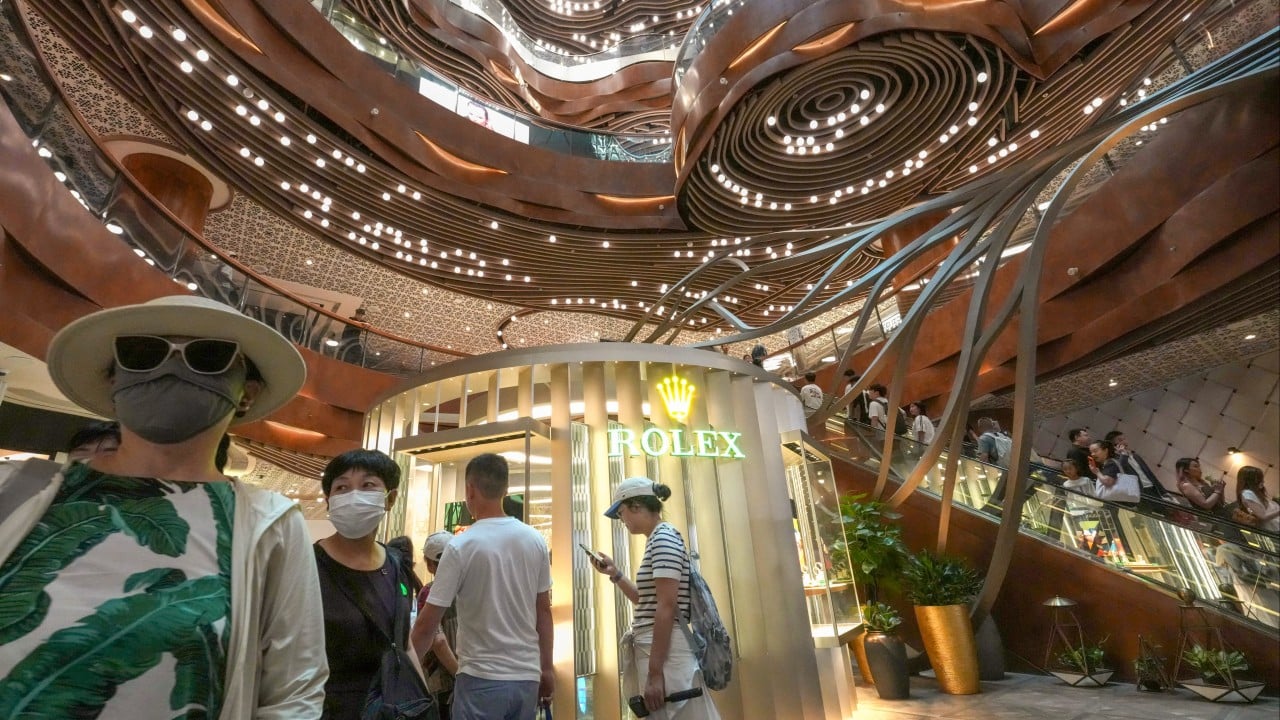
Chen is one of 1.29 million mainland Chinese visitors pouring into the Special Administrative Region during the National Day Golden Week break.
Statistics are cold things. They are born in spreadsheets, sterile and flat, stripped of human sweat and exhaustion. We are told that visitor arrivals will surge, that retail sales in Causeway Bay might see a fractional uptick, that hotel occupancy rates will brush eighty-five percent. But numbers cannot capture the sound of five hundred rolling suitcases simultaneously striking the polished concrete of the West Kowloon terminus like distant thunder. They cannot measure the private anxiety of a restaurant owner in Sham Shuipo who bought an extra three hundred kilograms of brisket, praying that this is the season the ledger finally balances after years of economic vertigo.
Movement is the oldest human story. We chase better light, better food, a momentary escape from the grinding machinery of our daily obligations. For millions across the border, the National Day break is the sole window—the narrow slit of calendar time where work stops, factories pause their mechanical sighs, and families can legally, collectively exhale.
Yet, when 1.29 million people choose the exact same stretch of coastline, the logistics of human joy become a masterclass in modern choreography.
Walk down Nathan Road at nine in the evening. The vertical signboards—those skeletal frames of steel and glowing acrylic that jut precariously over the sidewalks—seem to lean inward, overwhelmed by the human canyon beneath them. Every storefront is a stage. Pharmacists hawk ginseng and dried scallops with the practiced cadence of street-corner revival preachers. Jewelry shops gleam with cold, blinding lumens, their glass cases smudged with the fingerprints of shoppers comparing the purity of gold rings.
Behind one of those counters stands May-Ling, a third-generation jeweler whose family has watched the tides of tourism rise and recede like the South China Sea. She does not look at the visitors as walking statistics. She looks at their shoes.
Dusty shoes mean they just came off the cross-border bus. Scuffed sneakers mean they have been walking the steep inclines of Mid-Levels or queuing for the Peak Tram for three hours.
"They are tired," May-Ling tells me, wiping down the glass with a lint-free cloth, her voice barely audible over the bass thumping from a passing delivery van. "Every year, they come looking for something. Sometimes it is a luxury watch. Sometimes it is just the feeling of being somewhere else, somewhere that feels both foreign and familiar. They want proof they were here."
That proof often comes wrapped in translucent plastic bags. It is the intangible currency of travel: the shared photograph with the junk boat in the background, the digital receipt of a meal eaten on a crowded aluminum stool, the blister on the heel that hurts just enough to prove the day was real.
Critics in distant newsrooms often look at these massive surges of cross-border tourism through a lens of friction. They write about strained infrastructure, crowded MTR carriages, inflated hotel tariffs, and the cultural friction points that inevitably arise when two distinct social ecosystems collide under high pressure. They talk about overtourism as if it were a weather event, an uninvited typhoon that simply happens to a passive landscape.
That view misses the profound symbiosis at play.
Hong Kong has always been a city built by transit. Its DNA is made of wayfarers, refugees, traders, and dreamers who arrived with cardboard suitcases and built skyscrapers out of sheer stubbornness. When the Golden Week crowds arrive, they are not invading an ancient, fragile museum piece. They are breathing life into its commercial engine. They are the blood cells moving through the arteries of a port city that was quite literally designed to receive them.
Consider the MTR operators who sleep four hours in breakrooms to keep the train frequencies tight. Consider the hotel receptionists who field the same polite, desperate question in Mandarin sixty times an hour: Is there a harbor view available? Consider the street vendors slicing pineapple buns with surgical speed.
They are all part of an invisible architecture of hospitality that rarely makes the evening news. We focus on the spectacle of the fireworks over Victoria Harbour—the pyrotechnic blooms of crimson and gold that turn the night sky into a temporary canvas—forgetting that the real spectacle is the machinery of human adaptation happening quietly on the ground.
At midnight, the crowds thin, but they do not vanish. They migrate indoors.
In a narrow noodle shop in Jordan, Chen Wei sits across from his exhausted daughter. She has fallen asleep with her head resting against his forearm, her breathing soft and rhythmic against the hum of a rusted ceiling fan. On the table sits an empty bowl of beef brisket noodles and a half-melted mango pudding.
Chen is tired, too. His feet throb from pounding the pavement of three different shopping districts. His wallet is noticeably lighter. But as he looks down at his daughter’s sleeping face, illuminated by the amber glow of the street outside, there is no regret in his posture.
He came here for the neon. He came here for the pandas. But beneath all of that, he came for the same reason anyone crosses a border: to step out of his own shadow for a few days and feel the pulse of a larger world.
Outside, the harbor water laps quietly against the seawall, indifferent to the numbers, the politics, the statistics, and the transient millions. It simply rises, falls, and waits for the morning tide.