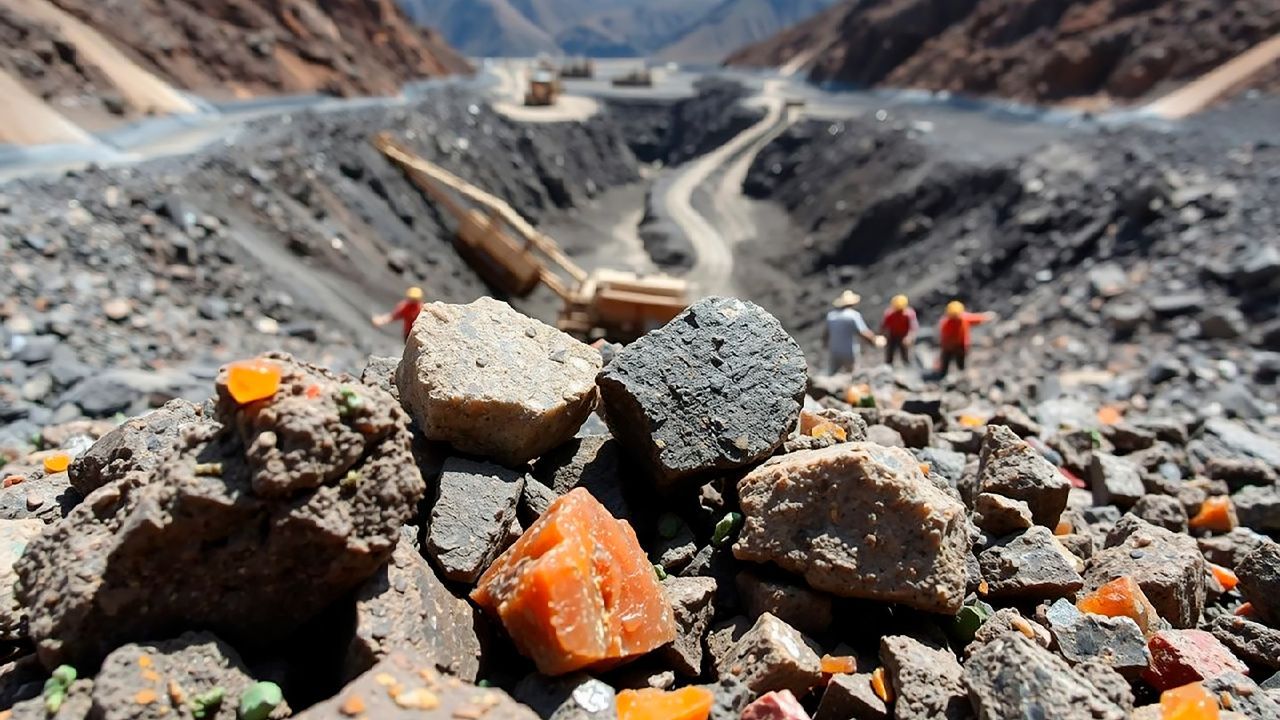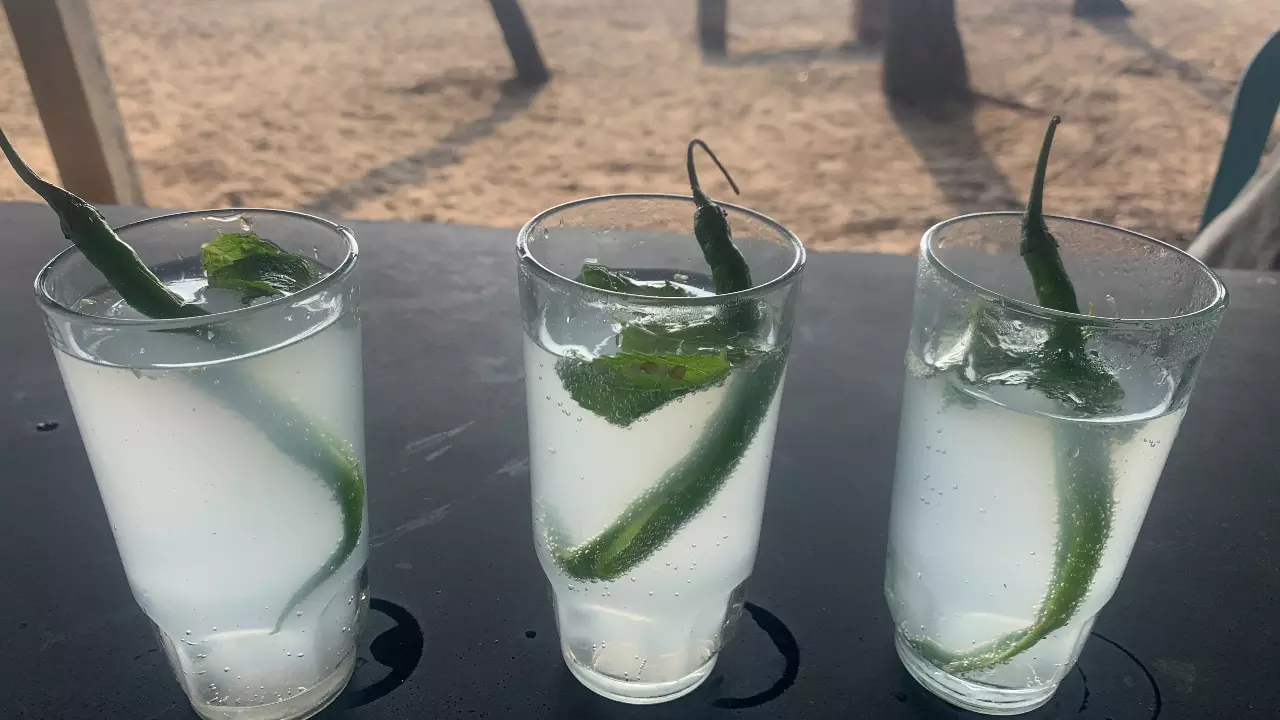
The entry of Mahua and Goan Feni into the United Kingdom spirits market is not merely a product launch; it represents a high-stakes stress test of the global GI (Geographical Indication) framework against the dominance of industrialized ethanol. While the UK consumer base has matured through the "premiumization" of mezcal and craft gin, Indian heritage spirits face a unique structural bottleneck: they must transition from informal, village-scale production to a rigorous international supply chain without losing the chemical complexity that defines their value proposition.
The Structural Anatomy of Heritage Spirit Entry
The success of Mahua and Feni hinges on three distinct variables: regulatory classification, chemical differentiation, and the "Provenance Premium" logic.
1. The Regulatory Arbitrage Problem
International spirit markets are governed by rigid definitions. Under current UK and EU regulations, a spirit must meet specific ABV (Alcohol by Volume) minimums and methanol limits to be legally sold.
- Feni's Constraint: Cashew Feni, derived from the cashew apple, and Coconut Feni, from palm toddy, are traditional products with high variability. To scale for the UK, producers must standardize the distillation process to ensure consistent esters and aldehydes while remaining under the legal methanol cap of $1000$g per hectolitre of $100%$ vol. alcohol.
- Mahua's Opportunity: Mahua is unique as the world's only spirit distilled from a flower (Madhuca longifolia). Because it does not fit neatly into the "Brandied Fruit" or "Grain Spirit" categories, its entry requires a "Spirit Drink" classification, which allows for greater flexibility in marketing but poses a challenge for shelf-space competition against established categories like Rum or Tequila.
2. The Chemical Differentiation Matrix
To outcompete established global spirits, Indian heritage brands are leaning into their molecular profiles. Unlike vodka, which aims for neutral high-purity ethanol (96% ABV post-distillation), Feni and Mahua are "flavor-forward" spirits distilled to lower strengths (usually 40-45% ABV) to retain essential oils.
The chemical profile of Feni is dominated by high concentrations of ethyl acetate and 2-methyl-1-butanol, providing its characteristic pungent, fruity aroma. Mahua, conversely, contains a specific volatile profile that mimics the terroir of the central Indian forests—earthy, floral, and slightly sweet. This chemical complexity is the primary defense against "Big Alcohol" imitation; these profiles are nearly impossible to replicate in a continuous column still used by industrial producers.
The Three Pillars of Market Penetration
The strategy for these spirits in the UK market can be broken down into three operational pillars: Authentication, Adaptation, and Aspirational Tiering.
Pillar I: Authentication and the GI Moat
The Geographical Indication (GI) tag for Goan Feni is its most potent economic tool. It functions as a legal monopoly, preventing any spirit produced outside of Goa from using the name. For the UK market, this creates an "Enforced Scarcity" model. Investors are betting that the GI status will do for Feni what it did for Champagne or Cognac—move the product from a "local moonshine" perception to a "protected luxury" asset.
Pillar II: Supply Chain Adaptation
The transition from a cottage industry to an export powerhouse requires solving the "Consistency-Complexity Trade-off."
- Sourcing Bottlenecks: Mahua flowers are hand-picked by tribal communities in states like Madhya Pradesh and Chhattisgarh. The supply chain is fragmented. To export to the UK, companies like Heritage Spirt Co. must implement a centralized collection and quality-control system that meets British food safety standards (BRCGS).
- Logistics of Volatiles: Traditional Feni is often aged in "garrafões" (large glass carboys). For international shipping, the industry is shifting toward inert stainless steel or specific oak aging to stabilize the spirit during the 45-day sea transit from Mumbai/Mormugao to London/Felixstowe.
Pillar III: Aspirational Tiering (The Mezcal Pathway)
The blueprint for Mahua and Feni is the "Mezcal Model." A decade ago, Mezcal was viewed as a rustic Mexican spirit. Through aggressive tiering—separating "Espadín" (mass-produced) from "Ancestral" (clay-pot distilled)—it achieved a premium status.
Indian producers are replicating this by launching "Single Estate" or "Small Batch" variants in London’s high-end cocktail bars (e.g., Soho or Mayfair). By targeting the "On-Trade" sector (bars and restaurants) first, they utilize bartenders as brand educators to mitigate the consumer’s initial hesitation toward unfamiliar flavor profiles.
The Cost Function of Export Expansion
Exporting a heritage spirit involves a significant "Compliance Tax" that impacts the final retail price.
$C_{export} = C_{prod} + L + T + M$
Where:
- $C_{prod}$: Production cost (higher for labor-intensive hand-harvesting).
- $L$: Logistics and stabilization for transit.
- $T$: UK Excise Duty (the largest variable, currently calculated at £28.50 per liter of pure alcohol).
- $M$: Marketing and education spend required to build a new category.
The UK duty structure penalizes high-ABV spirits, forcing Indian producers to find the "Sweet Spot" between 37.5% and 42.8% ABV to remain competitive against premium gins while maintaining enough "kick" to represent the original product faithfully.
Identifying the Value Bottleneck: The Consumer Perception Gap
The primary risk to this expansion is not quality, but the "Stereotype Lag." Indian spirits have historically been associated with mass-produced IMFL (Indian Made Foreign Liquor)—essentially neutral spirits with caramel coloring.
To overcome this, the UK strategy relies on The Transparency Protocol. Producers are increasingly using QR codes on labels to track the spirit back to the specific forest or grove where the flowers or cashews were harvested. This data-driven approach to provenance is designed to satisfy the "Conscious Consumer" who demands social equity (fair pay for tribal harvesters) alongside liquid quality.
Mapping the Competitive Landscape
Feni and Mahua are entering a saturated "Global Craft" market. Their primary competitors are not Scotch or Vodka, but other "Sense of Place" spirits:
- Cachaça (Brazil): Competes on the "Fresh/Green" flavor profile.
- Sotol/Raicilla (Mexico): Competes on the "Wild/Foraged" narrative.
- Shochu/Sake (Japan): Competes on the "Ancient Tradition" and "Technical Mastery" angle.
Unlike Cachaça, which is often relegated to the Caipirinha, Mahua’s versatility in cocktails—working as both a base spirit and a modifier—gives it a structural advantage in modern mixology.
The Strategic Play for 2026
The long-term viability of Indian heritage spirits in the UK depends on moving beyond the "exotic novelty" phase. Success requires a shift from storytelling to systematic category building.
- Action 1: Standardizing the Sensory Lexicon: The industry must establish a universal language for describing Mahua and Feni. Terms like "funky," "estery," and "botanical" must be backed by chemical analysis to provide importers with the confidence to buy at scale.
- Action 2: Bilateral Trade Integration: The ongoing UK-India Free Trade Agreement (FTA) negotiations are the single most important external factor. A reduction in tariffs could lower the $C_{export}$ variable by $15-25%$, allowing these spirits to move from the £50+ "Ultra-Premium" shelf to the £35-£40 "Frequent Purchase" bracket.
- Action 3: Diversification of the Raw Material Base: To mitigate climate-related crop failures (e.g., unseasonal rains affecting Mahua flower drying), producers must invest in climate-controlled storage facilities in India to ensure a multi-year "Vintage" supply, preventing the stock-outs that frequently kill new brands in the UK market.
The entry of these spirits is a pivot point for the Indian beverage economy. If the UK launch succeeds, it provides a repeatable framework for other regional spirits like Arrack (from coconut) or Lugdi (from rice) to follow. The goal is no longer just selling a bottle; it is the institutionalization of Indian terroir on the global stage.