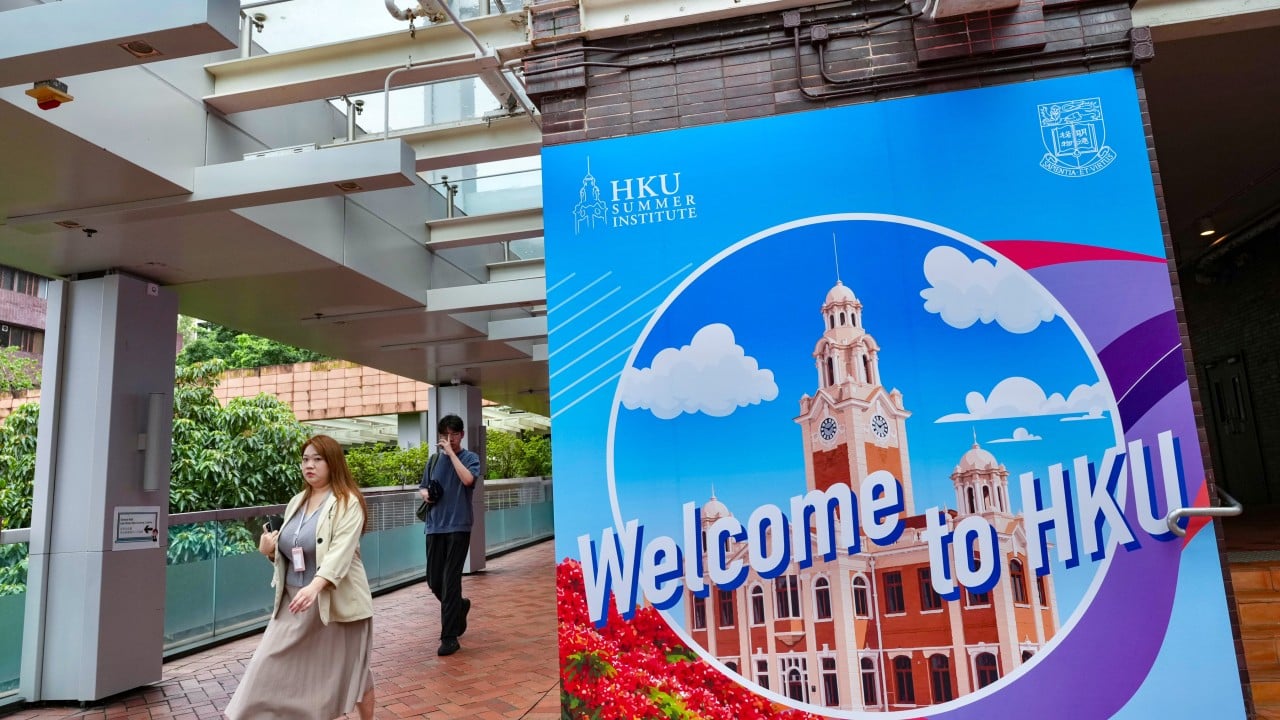
The mainstream media loves a decline-of-the-West narrative. Look no further than the recent panic over global university rankings, where commentators point to the steady rise of institutions in Hong Kong and mainland China as proof of an intellectual power shift. The consensus is lazy: Asian universities are out-classing Western rivals through sheer academic merit, while American ivy leagues are collapsing under the weight of political infighting and administrative bloat.
It is a compelling story. It is also entirely wrong.
The rise of mainland Chinese and Hong Kong universities in global league tables—such as the Times Higher Education (THE) and Quacquarelli Symonds (QS) rankings—is not a story of educational superiority. I have spent years analyzing academic data pipelines and institutional funding models. What we are actually witnessing is the ultimate triumph of algorithmic optimization.
Asian universities did not reinvent higher education. They decoded a broken ranking formula and gamed it to perfection.
The Flawed Metric of Academic Prestige
To understand how this happened, you have to look at how these lists are manufactured. The two dominant ranking bodies rely heavily on metrics that can be easily manipulated if an institution has enough state-backed capital.
Take the "Citations per Faculty" metric. On paper, it measures research impact. In reality, it rewards volume and insular academic networks. For the past decade, mainland China and Hong Kong have poured billions into targeted research initiatives. They built massive laboratories and tied faculty compensation directly to publication counts in high-impact journals.
The result? An explosion of scientific papers. But quantity does not equal breakthroughs.
Imagine a scenario where five researchers at a well-funded university in Shanghai co-author ten papers a year, systematically citing each other’s work and the work of their immediate colleagues. The algorithmic crawlers used by ranking firms register this as a massive spike in research authority. The university shoots up the leaderboard. Meanwhile, a professor at a mid-tier American state university might spend five years writing a definitive, field-defining book that gets cited less frequently but shifts the entire discipline. The ranking algorithm penalizes the latter.
Furthermore, internationalization metrics are easily bought. QS rankings heavily weight the ratio of international faculty and students. While Western universities face strict immigration caps and intense public scrutiny over visa numbers, institutions in Hong Kong and the mainland have used massive financial packages to attract foreign post-doctoral researchers. These researchers often stay for just a year or two, doing minimal teaching but anchoring their global publications to the host institution's address. It is a brilliant, expensive, and completely artificial way to inflate a global score.
The Trillion-Dollar Valuation Illusion
The obsession with these rankings distorts the actual economic value of a degree. Parents and students view a top-20 ranking as a guarantee of elite career outcomes. It isn't.
In the real world of global finance, technology, and corporate law, recruiters do not consult the latest QS list before hiring. They rely on historical prestige and deeply entrenched alumni networks. A degree from a lower-ranked Dartmouth or Brown University still carries vastly more professional leverage in global markets than a degree from a fast-rising university in mainland China that cracked the top 30 last year.
By treating university rankings like a corporate scorecard, we have created an environment where institutions prioritize metric optimization over actual education.
Dismantling the "People Also Ask" Assumptions
Whenever this debate surfaces, the same questions dominate public discourse. The premises underlying these questions are fundamentally flawed.
- Are Western universities losing their edge? No. They are losing their monopoly on metric manipulation. The core strength of Western higher education—critical thinking, academic freedom, and cross-disciplinary innovation—cannot be easily quantified by an algorithm.
- Why is Asia winning the research race? Because Asia treats research like a manufacturing supply chain. If you treat papers like widgets, you can optimize production lines. But this approach rarely produces the foundational, disruptive discoveries that alter industries.
- Should students choose a university based on global rankings? Only if they intend to work exclusively within the echo chamber of academia. For the corporate world, the ranking is white noise.
The Dark Side of Algorithmic Optimization
There is a cost to winning a rigged game. In chasing these metrics, rising universities have created hyper-stressed environments that stifle actual innovation.
Faculty members are placed on grueling publication quotas. If they do not produce a specific number of papers in recognized journals within a strict timeframe, their contracts are terminated. This high-pressure environment forces researchers to play it safe. They pursue incremental, boring variations of existing studies because they know those papers will get peer-reviewed and published quickly. Truly radical ideas—the kind that might fail repeatedly before changing the world—are discarded because they are too risky for the scoreboard.
Western institutions are far from perfect. They are plagued by administrative inflation and skyrocketing tuition costs. But their vulnerability in global rankings stems from a refusal (or inability) to completely corporatize their academic output to satisfy a foreign commercial ranking firm's arbitrary spreadsheet.
How to Choose a University Without the Blindfold
If you are a student, a parent, or an investor, stop looking at the aggregate scores. They are a marketing illusion designed to sell magazines and premium consulting services to university boards. Instead, judge institutions on metrics that actually correlate with long-term value.
Look at Endowments and Private R&D Spend
Real innovation requires money that isn't tied to immediate political or metric goals. Look at how much private industry invests in a university's labs. Companies do not invest millions in a department to help a university move from rank 45 to rank 40; they do it because the lab is building something they can commercialize.
Track the Employment Outcomes of the Bottom 25%
It is easy for a university to boast about its top graduates who land roles at Goldman Sachs or Google. The true measure of an institution's power is what happens to the students who finish in the bottom quarter of the class. Do they still get recruited by reputable firms? If the answer is yes, the university possesses genuine institutional leverage. If the answer is no, you are looking at a school that relies entirely on a few star pupils to mask an ineffective career network.
Evaluate Academic Freedom Longevity
True intellectual capital cannot survive in an environment where certain topics are off-limits or where institutional priorities shift at the whim of state directors. Innovation requires the freedom to fail, to offend, and to challenge prevailing dogmas.
The Western university system is under structural strain, but its foundational architecture remains unmatched. Do not confuse a competitor's mastery of the ranking algorithm with a shift in the global balance of intellectual power. The institutions climbing the charts today are simply playing a game the West invented—and eventually grew too bored, or too wise, to keep playing.