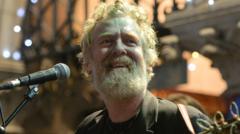
We love the myth of the suffering bard. We buy the vinyl, stream the cinematic tears, and swallow the convenient fiction that raw emotional output equals authentic art. Glen Hansard built an entire career on this exact sleight of hand. For three decades, the narrative surrounding the Irish troubadour has remained aggressively uniform: the scrappy busker from Ballymun, the accidental movie star from Once, the eternal working-class romantic screaming his vocal cords raw for our collective catharsis.
It is a comforting story. It is also entirely misleading.
The lazy consensus in music criticism treats Hansard as a folk-rock saint who stumbled out of Grafton Street into the Oscars purely by accident. Critics point to his battered Takamine acoustic guitar—caged in duct tape and bruised from decades of abuse—as physical proof of his authenticity. They frame his career as a triumph of grit over glamour.
Strip away the romanticism, however, and you find something far more calculating: a masterclass in professional nostalgia management. Hansard did not survive the modern music industry by accident. He survived by weaponizing an archaic archetype in an era entirely obsessed with manufactured vulnerability.
The Busker Myth vs. Industry Reality
Let us look at the foundational myth. The accepted industry lore paints Hansard as the street musician who refused to play the corporate game. The reality? Street busking in Dublin during the late eighties and nineties was not a quaint acoustic hobby. It was a rigorous, hyper-competitive crucible. If you could not hold the attention of a distracted pedestrian rushing down Grafton Street over the roar of traffic and pub chatter, you starved.
Hansard learned early that volume equals survival. But he also learned that performance is an aggressive act of persuasion. When he formed The Frames in 1990, he did not reinvent Irish rock; he fused the bleeding-heart emotionalism of Van Morrison with the sonic bluster of early U2.
The Once Trap and the Burden of Accidental Stardom
"People want to believe that art happens to you, not that it is engineered through ten thousand hours of failing in dark rooms."
When John Carney cast Hansard alongside Marketa Irglova in the 2007 micro-budget film Once, the world collectively swooned. The chemistry was palpable, the Oscar win for "Falling Slowly" was historic, and the soundtrack became a global phenomenon.
Yet, this career-defining moment created a cage.
The industry pigeonholed Hansard as the patron saint of late-night acoustic heartbreak. Fans expected every subsequent album to sound like a kitchen-sink confession recorded on a cassette deck. When he pushed back with The Frames or embraced dense, brass-heavy, cacophonous arrangements on his solo records like Between Two Shores, the market resisted.
The mistake critics make is viewing Hansard as a passive participant in his own mythology. He leans into the battered-guitar aesthetic because he understands the psychological mechanics of the audience. We do not want pristine perfection from our folk singers; we want scars. Hansard gives us the visual illusion of falling apart while maintaining absolute, ironclad control over the stage.
The Mechanics of Vocal Self-Destruction
Let us talk about the singing. Music journalists routinely praise Hansard for his "unfiltered throat-ripping delivery." They call it fearless.
From a physiological standpoint, it is a ticking clock.
I have watched sound engineers wince as Hansard steps away from the microphone entirely, projecting unamplified vocal grit across a packed amphitheater, tearing his chords to shreds for the cheap seats. Critics call this passion. Vocal coaches call it malpractice.
By treating his voice as an expendable instrument of raw emotion, Hansard establishes an impossible standard of sincerity. Younger singer-songwriters watch him bleed over a melody and assume that vocal health is secondary to emotional trauma. This is dangerous. It sets an unrealistic benchmark where quiet restraint is branded as cowardice, forcing artists to scream their way through intimacy just to prove they mean it.
The Economics of Eternal Struggle
Consider the business model of the modern troubadour. Major labels collapsed, streaming payouts plummeted, and yet Hansard continues to sell out venues across North America and Europe. How?
Because he monetized the aesthetic of the underdog.
In an economy saturated with algorithmic pop stars and TikTok-optimized hooks, the guy with the battered acoustic guitar represents a tactile antidote. Hansard sells proximity. When he jumps off the stage, walks down the aisle of a sold-out theater, and sings the final chorus of a song without a microphone, the crowd experiences a manufactured jolt of community.
It is brilliant theater. But let us not mistake brilliant theater for accidental folk art. Hansard tours relentlessly because touring is where the margin lives, and he understands the exact psychological trigger required to turn a passive listener into a lifelong loyalist.
The Uncomfortable Truth About Authenticity
We need to stop asking whether Glen Hansard is genuine. The question itself is a trap. Authenticity in popular music is not a static trait you are born with; it is a maintained narrative.
Hansard is not an accidental survivor of a bygone musical era. He is its most persistent architect. He took the romantic debris of Irish folk tradition, weaponized his own larynx, and built a fortress out of vulnerability.
The next time you watch a live clip of him closing his eyes, gripping the neck of that ruined Takamine, and howling into the ether, do not just absorb the emotion. Watch the mechanics. Notice the timing. Recognize the calculation behind the chaos.
True mastery never looks easy. Sometimes, it looks like falling apart on purpose.
.png?width=1200&auto=webp&trim=0%2C0%2C0%2C0)