The morning air in a sterile laboratory doesn’t smell like war. It smells of ozone, isopropyl alcohol, and the faint, metallic tang of industrial cooling systems. In a specialized facility on the outskirts of Tehran, this scent is the backdrop for the most delicate work imaginable: the cultivation of isotopes and the synthesis of oncology medications. It is a place of precision, where a fraction of a degree in temperature determines whether a batch of medicine will save a life or become expensive waste.
But precision is a two-edged sword. The same sophisticated machinery required to stabilize a radioactive tracer for a PET scan is, in the eyes of a satellite orbiting miles above, a high-value target in a shadow war that has finally stepped into the light.
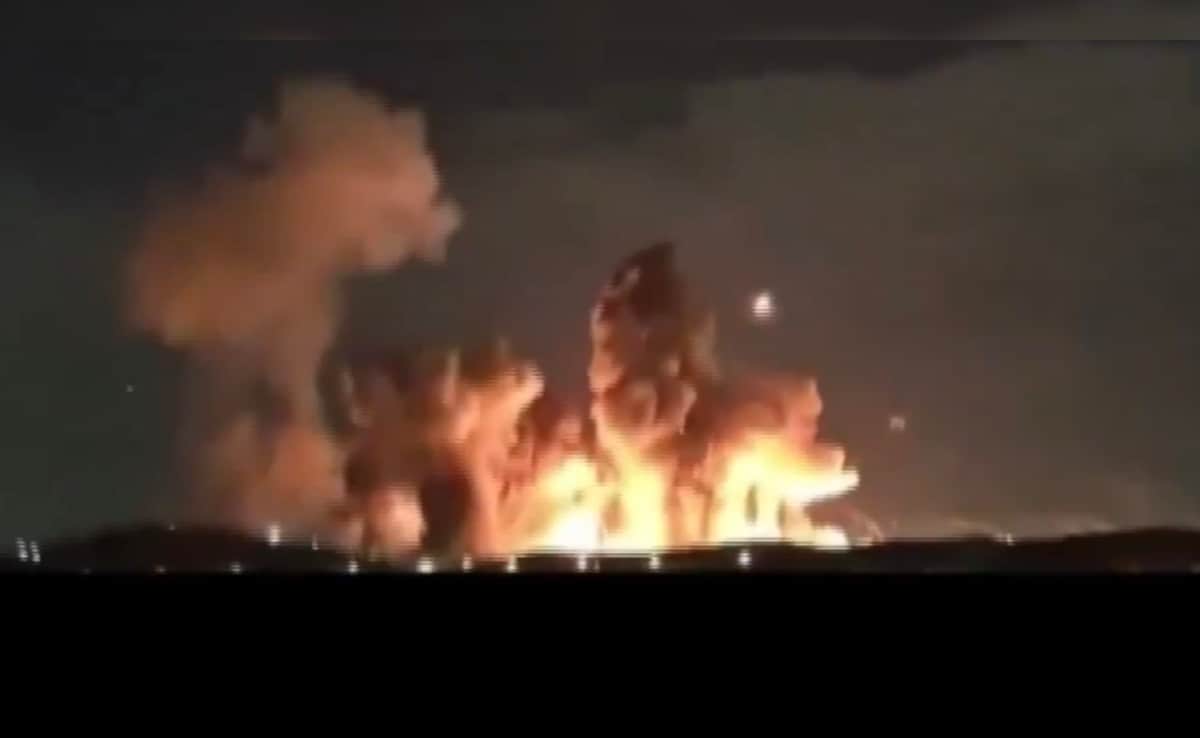
When news broke that U.S. and Israeli strikes had hit an Iranian company associated with cancer drug production, the reports were clinical. They spoke of "dual-use facilities" and "strategic degradation." They used the language of maps and munitions. What they missed was the quiet, agonizing math happening in the waiting rooms of hospitals from Isfahan to Mashhad.
War is loud. Cancer is silent. When the two collide, the silence is what breaks you.
The Myth of the Clean Strike
Modern warfare prides itself on the "surgical strike." The term suggests a medical level of accuracy, a removal of the tumor without damaging the healthy tissue of a nation. But when the target itself is a medical facility, the metaphor collapses.
Consider a hypothetical patient—let’s call her Samira. She is forty-two, a teacher, and she has a localized neuroendocrine tumor. Her survival depends on a specific radiopharmaceutical. This isn't a drug you can buy in bulk or store in a warehouse for years. It has a half-life. It decays. It is a race against physics.
When a facility like the one targeted is taken offline, the supply chain doesn't just "slow down." It vanishes. For Samira, the geopolitics of the Middle East suddenly condense into a single, empty glass vial. The "strategic success" of a missile strike is, for her, a death sentence written in fire and steel.
The complexity of these strikes lies in the "dual-use" label. Intelligence agencies argue that the high-precision centrifuges and chemical reactors used to create life-saving isotopes are the exact same tools needed to refine materials for a nuclear program or chemical weapons. It is a cruel irony of physics: the more advanced our ability to heal becomes, the more it mirrors our ability to destroy.
The Shadow of the Infrastructure
We often think of war as a series of events—a blast, a fire, a casualty count. We rarely view it as the systematic dismantling of a country's future health. Iran’s pharmaceutical industry has long been a point of national pride, a way to circumvent years of grueling international sanctions that made importing Western drugs nearly impossible. They built their own. They became self-reliant out of necessity.
By targeting a company that sits at the intersection of defense and medicine, the strikes do more than damage a building. They shatter the confidence of the entire medical community.
Imagine being a scientist in that building. You spent a decade studying molecular biology. You believe your work is the highest form of service. Then, one Tuesday, the roof caves in because the world decided your laboratory was actually a fortress. The loss of intellectual capital—the researchers who flee, the students who choose different paths, the knowledge lost in the rubble—is a hidden tax on the human race.
The technical reality is that these facilities are incredibly hard to rebuild. A specialized bioreactor isn't something you can order on a whim. It requires calibration that takes months. It requires a stable power grid, which is often the first thing to go in a conflict. The ripple effect of a single night of airstrikes can be felt in the oncology wards for a decade.
The Invisible Stakes
Why does this happen? The logic of the U.S. and Israeli defense departments is rooted in a grim pragmatism. They argue that if a facility is producing components for a missile program under the guise of medical research, the risk of "not" striking is higher than the humanitarian cost of the strike.
It is a game of shifting shadows. The Iranian government has every incentive to blur the lines between civilian and military infrastructure to create a "human shield" of legitimacy. Conversely, attacking forces have every incentive to claim that any civilian site was actually a secret command center.
The truth is usually buried under the debris.
But beyond the "who started it" of the geopolitical sandbox, there is a deeper, more unsettling question: At what point does the pursuit of security make us fundamentally insecure? If we must destroy the means to cure cancer to prevent the means to wage war, we are trapped in a cycle where the "protection" of life requires its abandonment.
We see the satellite photos of charred earth and think we understand the damage. We don't. We don't see the pharmacy shelves going bare. We don't see the father explaining to his daughter why her treatment has been postponed indefinitely. We don't see the doctors who have to decide which patient gets the last remaining dose.
The Fragility of the Modern World
Our world is held together by invisible threads of logistics. We assume the lights will stay on, the water will run, and the medicine will be there. We assume that even in war, there are lines that aren't crossed. But the targeting of a company involved in cancer drug production signals that those lines have become blurred beyond recognition.
This isn't just about Iran. It’s about the precedent. It’s about the realization that in the modern era, our most vital civilian infrastructure is also our most vulnerable strategic weakness.
The strike wasn't just a military action; it was a stress test for the concept of international humanitarian law. When "dual-use" becomes a catch-all justification, every hospital, every power plant, and every water treatment facility becomes a legitimate target. We are moving toward a reality where the "collateral damage" is no longer an accidental byproduct of war, but its primary mechanism of pressure.
The cost of these strikes isn't measured in the price of the missiles or the value of the destroyed equipment. It is measured in the quiet, desperate breaths of people who have no part in this war, but who are paying for it with their lives.
As the dust settles over the site of the Iranian pharmaceutical plant, the geopolitical analysts will move on to the next map, the next flashpoint, the next "strategic objective." But for those left behind, the war has just begun. It is a slow war of attrition, fought in the bloodstream and the bone marrow, where the enemy isn't a foreign power, but a biological clock that has been forced to tick faster.
The glass vials are broken. The isotopes are decaying. And somewhere, in a quiet house in a city we will never visit, a woman named Samira is looking at a calendar, wondering if the world outside her window even knows she is there.