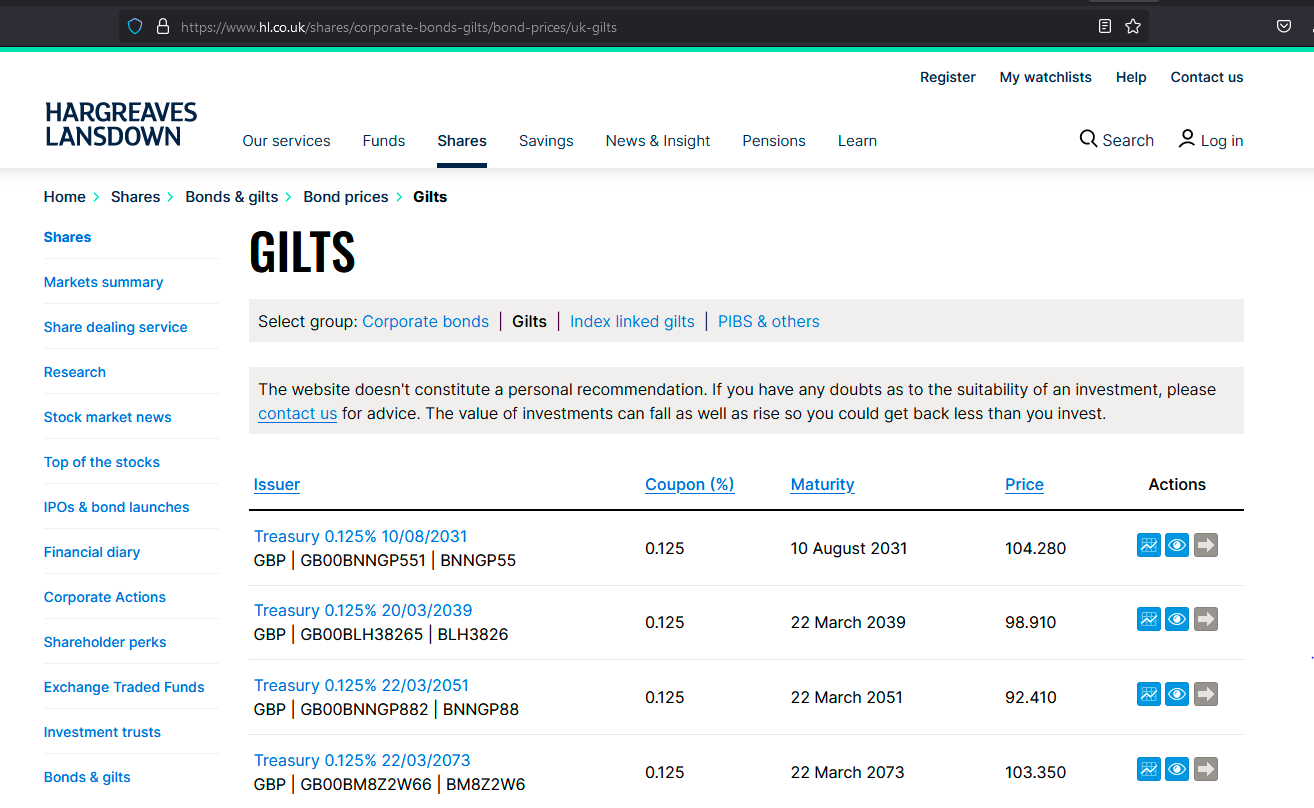
The collapse in UK government bond prices—and the subsequent spike in yields—is not a localized market tremor but a fundamental repricing of the British sovereign risk profile against a backdrop of sticky inflationary expectations. When the Gilt market slumps, it signals a breakdown in the consensus regarding the Bank of England’s (BoE) ability to engineer a "soft landing." Traders are currently discounting a higher terminal rate, moving beyond the transitory narrative to price in a structural shift in the cost of capital. This repricing is driven by a feedback loop between fiscal expansion, labor market tightness, and the mechanics of the yield curve.
The Triad of Gilt Devaluation
To understand the current sell-off, one must look past daily price fluctuations and examine the three primary drivers of sovereign debt depreciation. If you found value in this post, you should check out: this related article.
- Inflation Persistence and Adjusted Real Yields: Nominal yields are rising because the market expects inflation to remain above the 2% target for a duration that exceeds previous BoE forecasts. If expected inflation rises faster than nominal yields, the real yield—calculated as $r = i - \pi^e$, where $i$ is the nominal interest rate and $\pi^e$ is expected inflation—remains suppressed. The market is currently demanding a higher nominal buffer to ensure positive real returns over a 10-year horizon.
- The Supply-Demand Imbalance: The UK Treasury’s requirement for debt issuance to fund fiscal deficits is clashing with the BoE’s Quantitative Tightening (QT) program. Unlike the previous decade, where the central bank was the "buyer of last resort," the BoE is now an active seller. This creates a supply overhang that forces private buyers to demand a higher "term premium"—the extra compensation required for the risk of holding long-term debt over rolling over short-term bills.
- Cross-Currency Basis Swaps and Sterling Volatility: Gilts do not trade in a vacuum. If the Federal Reserve maintains a higher-for-longer stance while the BoE is perceived as hesitant, the Sterling-Dollar exchange rate faces downward pressure. A weaker pound imports inflation through higher energy and commodity costs, which in turn forces the BoE to hike rates more aggressively to protect the currency, further devaluing existing fixed-income assets.
The Transmission Mechanism of Higher Rates
A rise in Gilt yields is the primary gear in the UK’s economic transmission mechanism. It dictates the "risk-free rate" upon which all other assets are priced.
Mortgage Market Contagion
UK residential mortgages are predominantly linked to 2-year and 5-year swap rates, which are derivatives based on Gilt yield expectations. When 10-year Gilt yields climb, swap rates move in lockstep. This creates an immediate "affordability shock" for the approximately 1.5 million households coming off fixed-rate deals annually. The lag between a Gilt market slump and a cooling property market is usually three to six months, as the higher cost of debt filters through the banking system’s lending criteria. For another angle on this event, check out the latest update from Reuters Business.
Corporate Cost of Capital
For UK PLC, the "Weighted Average Cost of Capital" (WACC) increases as the cost of debt rises. This is not a linear relationship. At certain thresholds—specifically when the cost of new debt exceeds the Return on Invested Capital (ROIC)—corporations move from expansion to "defensive cash preservation."
- Fixed-Interest Erosion: Existing corporate bonds are repriced lower to match the higher Gilt yield.
- Variable-Rate Liabilities: Companies with large floating-rate debt loads see an immediate impact on their interest coverage ratios.
- Equity Valuation Drag: High Gilt yields increase the "discount rate" ($r_d$) used in Discounted Cash Flow (DCF) models, where $V = \sum \frac{CF_t}{(1+r_d)^t}$, causing a contraction in price-to-earnings multiples even if earnings per share (EPS) remain stable.
The Bank of England’s Strategic Dilemma
Traders are betting on a BoE rate rise because they see the "Taylor Rule" in action. This rule suggests a target interest rate based on the divergence of actual inflation from the target and the gap between potential and actual GDP.
The Fiscal-Monetary Mismatch
The UK government’s fiscal policy and the BoE’s monetary policy are currently in a state of friction. If the Treasury increases spending or cuts taxes, it stimulates demand, which the BoE must then neutralize by raising rates further. This creates a "higher terminal rate" than would be necessary in a coordinated policy environment.
- Inflation Expectations and the Wage-Price Spiral: As the BoE remains behind the curve, the risk is that the public begins to expect higher inflation as the new normal.
- Labor Market Participation: Structural labor shortages in the UK (post-Brexit and post-pandemic) create upward wage pressure that is independent of global supply chain shocks.
- The "Sticky" Service Sector: While energy prices fluctuate, service sector inflation (which is wage-driven) is more difficult to suppress, requiring a more prolonged period of high interest rates to bring down.
Mapping the Yield Curve Inversion
A "normal" yield curve slopes upward, reflecting the higher risk of lending over long periods. When short-term Gilt yields rise above long-term yields, the curve inverts. This inversion is currently a predictive signal for a UK recession.
- 2-Year Gilt Yields: Highly sensitive to the BoE’s Base Rate expectations.
- 10-Year Gilt Yields: Reflect long-term growth and inflation expectations.
- 30-Year Gilt Yields: Driven by pension fund demand and long-term sovereign solvency.
The current inversion signals that while traders expect the BoE to hike rates in the short term to combat inflation, they also expect these hikes to trigger a significant economic slowdown that will eventually necessitate rate cuts in the distant future. This "boom-bust" cycle is what the market is currently pricing in with its aggressive betting on a near-term BoE move.
Quantifying the "Mini-Budget" Legacy
The memory of the 2022 Gilt market crisis remains a psychological anchor for traders. The current slump is partially a "credibility premium" that the UK must pay to international investors. The Gilt market's sensitivity to even minor fiscal announcements is a sign of "liquidity fragility."
LDI Mechanics and Market Stability
Liability-Driven Investment (LDI) strategies used by pension funds are the hidden leverage in the UK bond market. When Gilt prices fall (and yields rise), these funds must post more collateral. If the fall is too rapid, it triggers a forced sell-off of Gilts to raise cash, creating a "death spiral" of plummeting prices. The BoE’s temporary intervention in late 2022 showed the limit of its tolerance for market volatility. However, the current slump is being allowed to persist because it is perceived as a fundamental repricing rather than a systemic liquidity failure.
Strategic Asset Allocation Shift
For institutional investors and corporate treasurers, the current Gilt slump necessitates a tactical pivot. The "60/40" portfolio (60% equities, 40% bonds) is under stress because the correlation between the two has turned positive. In an inflationary environment, both stocks and bonds can fall simultaneously.
- Duration Reduction: Reducing the "weighted average maturity" of bond holdings to minimize capital loss from further yield spikes.
- Inflation-Linked Gilts (Linkers): While these offer protection against CPI rises, they are also highly sensitive to real yield movements, making them a volatile hedge.
- Cash and Equivalents: The rising BoE Base Rate makes cash a viable asset class for the first time in 15 years, offering a "risk-free" return that rivals the dividend yield of the FTSE 100.
The Strategic Path for Corporate and Private Actors
The current Gilt market trajectory is a lead indicator for a period of "higher-for-longer" capital costs. For a corporate treasurer or a strategic planner, the primary objective is to de-risk balance sheets before the full impact of the BoE’s rate-hiking cycle is realized.
- Immediate Debt Refinancing: Any maturing debt in the next 12-18 months should be addressed now, before further Gilt yield expansion increases the credit spread demanded by lenders.
- Operational Efficiency over Expansion: In a high-yield environment, the "hurdle rate" for new projects must be adjusted upward by at least 200-300 basis points to account for sovereign risk.
- Currency Hedging: Expect Sterling volatility to increase as the BoE navigates the narrow corridor between inflation and recession. Short-term hedging of USD and EUR requirements is a priority.
The most critical action is to assume that the "terminal rate" priced in by the market—currently hovering between 5% and 6% depending on the week's data—is the new baseline. Any strategic plan built on the assumption of a return to zero-interest-rate policy (ZIRP) is fundamentally flawed and carries significant solvency risk. The Gilt market's slump is the market’s way of communicating that the era of cheap British debt is over, and the transition to a high-cost environment will be both volatile and permanent.