Listen.
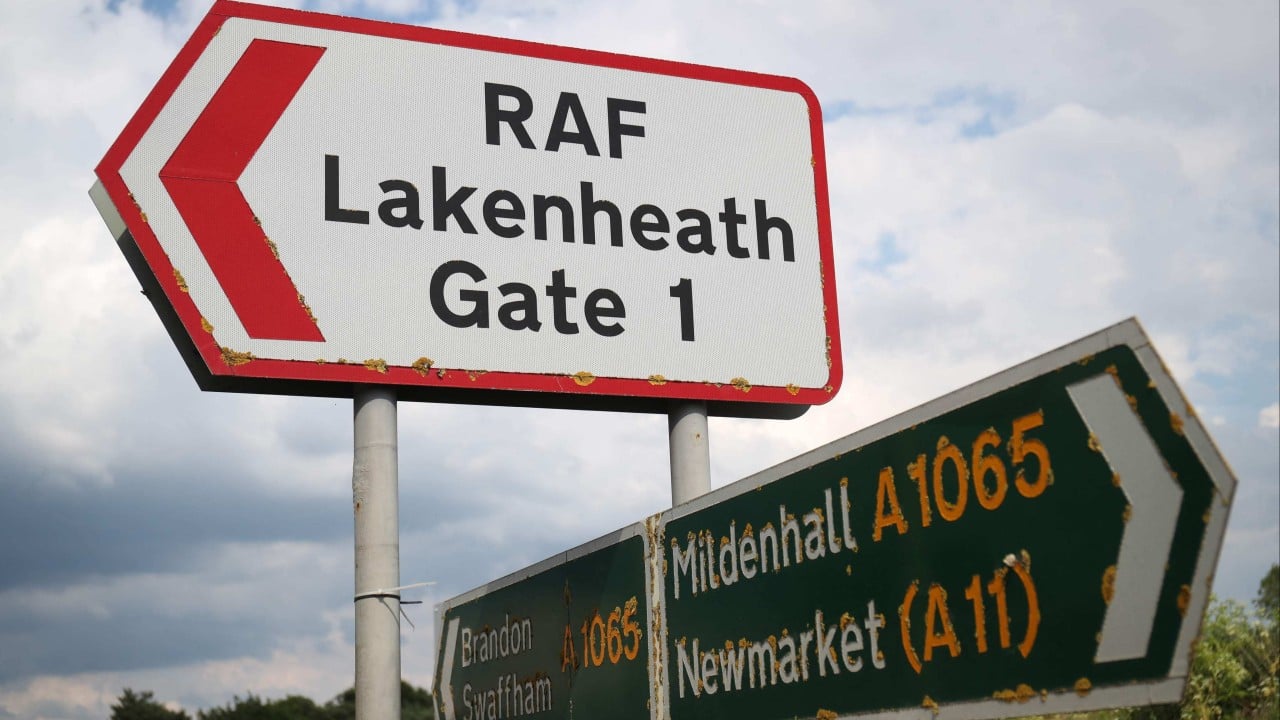
Above the flat, wind-scoured fens of East Anglia, where the damp chill of the North Sea settles deep into the marrow of your bones before November even ends, the night sky used to belong entirely to the roar of afterburners and the predictable blink of commercial wingtips. If you have ever stood near the perimeter fence of RAF Lakenheath at two in the morning, you know that sound—a low, chest-rattling thrum that vibrates through the soles of your boots long before a twin-tailed F-15E Strike Eagle splits the dark. You know the smell of burnt JP-8 aviation fuel hanging heavy in the mist, and you know the strange, comforting certainty of concrete bunkers, razor wire, and multi-million-dollar radar arrays watching every inch of the horizon.
That certainty broke on a cold autumn night in 2024.
Between November 20 and November 22, something else entered the dark over three vital military installations in England—RAF Lakenheath, RAF Mildenhall, and RAF Feltwell. They were not supersonic bombers. They were not rogue fighter jets screaming across the Channel. They were small, uncrewed aerial systems—drones—moving with quiet, deliberate purpose through restricted military airspace while tens of thousands of people slept miles away under duvets, entirely unaware that the rules of modern security were being rewritten above their roofs.
To read the official military communiqués released in the aftermath is to encounter a masterclass in institutional understatement. Spokespeople for United States Air Forces in Europe confirmed that small unmanned aerial systems were spotted in the vicinity of and over the bases, fluctuating in number and configuration. They noted that installation leaders determined the incursions did not impact base residents or critical infrastructure, and that the military retains the right to protect its installations. Clean. Sanitized. Almost boring.
It is anything but boring.
When you strip away the sterile phrasing of defense press releases, what happened over Suffolk and Norfolk was a profound psychological breach—a reminder that the most heavily fortified airbases in Western Europe can be probed by machines that cost less than a used hatchback.
The Anatomy of an Invisible Siege
Consider a hypothetical night shift inside a security operations center at Lakenheath—let us call our watch officer Sergeant Miller, a composite drawn from the real airmen who pull twelve-hour rotations monitoring the skies over Britain.
Miller is twenty-six, fueled by lukewarm coffee and the monotonous glow of three radar monitors. For months, his job has been defined by high-altitude threats: long-range Russian reconnaissance aircraft testing the edges of North Sea airspace, or allied sorties returning from training runs over the Wash. His screens are calibrated to catch giants—massive, fast-moving chunks of titanium and radar-absorbent carbon composite hurtling through the stratosphere at Mach 2.
Then, just after midnight, a security patrol near the perimeter fence calls in over the radio. They see lights. Not the sweeping strobes of a Boeing 787 descending toward Stansted, and not the familiar navigation lights of an F-35A Lightning II coming home to roost. These are small, erratic points of red and green hovering near the treeline, drifting across the wire, pausing over the hardened shelters where some of the most advanced tactical aircraft on earth sit fueled and waiting.
Miller looks at his primary air-search radar. Nothing.
The screen is blank because traditional military radar is built to filter out noise—flocks of geese, swaying wind turbines, low-flying gulls blown inland from the coast. A quadcopter or a fixed-wing hobbyist drone built from foam and carbon fiber has a radar cross-section roughly the size of a seagull. To the billion-dollar eyes designed to spot an incoming cruise missile from three hundred miles away, the intruders over Suffolk were practically ghosts.
Think of it like locking every bank vault in London with three-foot-thick steel doors, laser grids, and armed guards, only to realize that someone has been slipping miniature cameras through the air vents. The fortress itself remains intact, yet the illusion of total control vanishes in an instant.
Why These Three Bases Matter
To understand why the Pentagon and the British Ministry of Defence reacted with quiet urgency—deploying roughly sixty British military personnel to assist American forces in tracking the mysterious craft—you have to look at what sits beneath those Suffolk flight lines.
RAF Lakenheath is not just another airfield. It is the crown jewel of American airpower in Europe, home to the 48th Fighter Wing—the Liberty Wing—and the first permanent European base for the fifth-generation F-35A stealth fighter. Ten miles away, RAF Mildenhall serves as the indispensable logistical heartbeat for air refueling and special operations across Europe, Africa, and the Middle East. If Lakenheath is the spear, Mildenhall is the arm that throws it. Just up the road sits RAF Feltwell, a crucial hub for housing, support, and communications infrastructure that keeps thousands of American service members and their families functioning on British soil.
And there is another shadow hanging over Lakenheath, one rarely mentioned in casual local chatter but discussed constantly in defense circles from Washington to Moscow: the suspected return of American tactical nuclear weapons to British soil for the first time since 2008. Budget documents and infrastructure upgrades at Lakenheath have pointed toward hardened storage facilities capable of housing B61-12 gravity bombs.
Suddenly, three or four buzzing silhouettes over a perimeter fence stop looking like a prank by local hobbyists.
If you are a foreign intelligence service—or a proxy network operating on its behalf—you do not need to drop a bomb on an F-35 to hurt NATO. You just need to watch. You fly a modified drone over the fence at night, equipped with high-sensitivity optical sensors or signals-intelligence receivers. You map the patrol patterns of the security forces. You measure how many minutes pass between the first visual sighting and the arrival of a quick-reaction truck. You record the radio frequencies used when the base goes on alert. Most of all, you test the political hesitation of two nuclear-armed democracies operating on peacetime rules.
The Paralysis of Peacetime Rules
Here is the uncomfortable truth that few defense officials want to say out loud: shooting down a drone over a crowded English county is a legal and physical nightmare.
In a war zone—say, over the dusty plains of eastern Syria or the trenches of the Donbas—the rules are brutally simple. If an unidentified drone approaches your perimeter, you jam its signal, blind its sensors with directed energy, or shred it with a burst of 20mm cannon fire. Nobody worries about where the debris lands.
Suffolk is not a war zone. Around Lakenheath and Mildenhall lie quiet market towns like Brandon and Bury St Edmunds, family farms, ancient churches, and A-roads carrying commuters home in the dark. If an airman opens fire with a rifle or launches a kinetic interceptor at a drone hovering three hundred feet above the runway, gravity still applies. What goes up comes down—potentially through the windshield of a delivery van on the A1065 or into the roof of a cottage.
Even electronic warfare—jamming the radio frequencies that connect a drone to its operator—carries massive collateral risks in peacetime Britain. Blast enough electromagnetic interference into the Suffolk night to sever a drone's control link, and you risk knocking out local cell towers, disrupting air traffic control communications for civilian liners flying overhead, or scrambling the GPS systems of emergency ambulances racing down country lanes.
I remember speaking years ago with a counter-drone engineer who had spent months testing radio-frequency jammers on a remote Scottish range. He told me that the hardest part of his job was never building a weapon strong enough to kill a drone; it was building one polite enough not to blind the neighbors. Over Suffolk in November 2024, that politeness became an asymmetric weapon in the hands of whoever was holding the controller.
Not an Isolated Spark
If November 2024 had been a one-off freak occurrence, intelligence analysts might have slept easier. It was not.
Look at the pattern stretching across the Atlantic and the North Sea over the past few years, and a chilling picture emerges. In December 2023, swarms of unidentified drones repeatedly penetrated the restricted airspace above Langley Air Force Base in Virginia—home to F-22 Raptor stealth fighters and vital air-defense command centers—for seventeen consecutive nights. The incursions were so persistent and so baffling that NASA even deployed a high-altitude WB-57 research aircraft to help track them, and top Pentagon officials were pulled into emergency briefings at the White House.
Months later, similar mystery craft appeared over military test ranges in Nevada and sensitive sites in New Jersey. Across Europe, unidentified drones have buzzed German military bases where Ukrainian soldiers were training on Patriot missile systems, hovered over Norwegian offshore oil and gas platforms in the North Sea, and lingered near Swedish nuclear power plants.
Notice the shared DNA in every single one of these incidents:
- No clear attribution. The operators rarely leave a calling card. Often, the drones appear to launch from moving vehicles, quiet lay-bys, or vessels offshore, vanishing before local police can cordon off the surrounding roads.
- Sophisticated coordination. Hobbyists flying a store-bought DJI quadcopter usually hit built-in geofencing software that refuses to let the machine take off near an airport or military base. Getting multiple drones simultaneously into restricted military airspace requires custom firmware, deliberate planning, and nerve.
- Psychological friction. Every incursion forces the world's most expensive militaries to burn manpower, scramble helicopters, brief politicians, and admit publicly that something slipped past their defenses.
We are living through the democratization of espionage. Thirty years ago, photographing the tarmac of a foreign airbase required a spy satellite costing a billion dollars or a U-2 spy plane flying at seventy thousand feet. Today, it requires a soldering iron, an encrypted radio link, and a willingness to park a transit van in a muddy ditch two miles downwind of a runway.
The Human Cost Behind the Wire
It is easy to talk about drones, radar cross-sections, and geopolitical gray zones as if they exist purely on whiteboards in Whitehall or the Pentagon. But standing behind those fences in Suffolk are real people—young men and women far from home, raising toddlers in base housing, walking dogs along misty lanes, and trying to sleep before dawn flights.
Imagine being a spouse living on RAF Feltwell during those three nights in November. You read the local news alerts on your phone. You hear the sudden thump of a British police helicopter or military rotorcraft circling low over your neighborhood at midnight, its searchlight sweeping across the fields behind your backyard. You do not know if it is a lost teenager with a Christmas toy, an activist group staging a protest, or a hostile state reconnaissance team probing the place where your husband or wife works.
That low-grade, persistent uncertainty is the exact currency of modern hybrid conflict. It does not break bones or crater runways. Instead, it erodes trust. It forces defenders to look over their shoulders constantly, exhausting crews who are already stretched thin by global deployments from Eastern Europe to the Red Sea.
And there is a deeper vulnerability we rarely admit: our own technological hubris. For decades, Western military doctrine was built on the assumption that superiority meant bigger, faster, higher, and more expensive. We mastered the art of fighting peer enemies in the upper atmosphere while leaving the lowest five hundred feet of air—the messy, cluttered zone just above the treetops—largely unguarded against cheap, disposable machines.
Reclaiming the Low Sky
The response to the Suffolk incursions signals that the era of shrugging off mystery drones is over, even if the solutions remain messy and incomplete.
In the days following the sightings, British defense officials deployed specialized counter-UAS units—specifically personnel trained in the ORCUS system, a modular British counter-drone architecture combining advanced radars, electro-optical cameras, and radio-frequency sensors designed to detect, track, and identify small aerial threats without immediately resorting to explosives. Across NATO, defense budgets are shifting rapidly toward directed-energy weapons—high-energy lasers like Britain's DragonFire and microwave emitters capable of frying a drone's delicate internal electronics silently in midair without sending shrapnel raining onto civilian neighborhoods.
Even more importantly, the legal walls separating civilian policing from military defense are being quietly redrawn. When an unknown drone crosses the fence of a military base in Suffolk, jurisdiction blurs instantly: the sky above the base belongs to defense authorities, while the road two hundred yards away where the operator might be standing belongs to local constables in Norfolk or Suffolk Constabulary. Closing that gap requires shared sensor networks, rapid-response teams trained across agencies, and clear legal authority to neutralize threats before they disappear back into the dark.
Yet technology and policy can only narrow the gap; they will never close it completely. Every time engineers build a better frequency jammer, operators switch to autonomous fiber-optic tethers or pre-programmed GPS waypoints that require no radio link at all. Every time radar software gets sharper at spotting plastic propellers, drones shrink further, flying lower, hugging the contours of hedgerows and drainage ditches until they pop up directly over the target.
Walk down a country lane near Lakenheath on a clear winter night today, and everything looks peaceful again. The mist rises off the Fenland drainage ditches. The pubs close their doors, spilling warm yellow light onto wet cobblestones. Overhead, the unmistakable twin lights of a fighter jet bank gracefully into the wind, lining up for final approach, its engines echoing off the clouds like distant thunder.
Everything appears solid, permanent, and utterly secure—until you tilt your head back, stare into the empty blackness just above the treetops, and realize how much room is left in the dark for things we still cannot see.