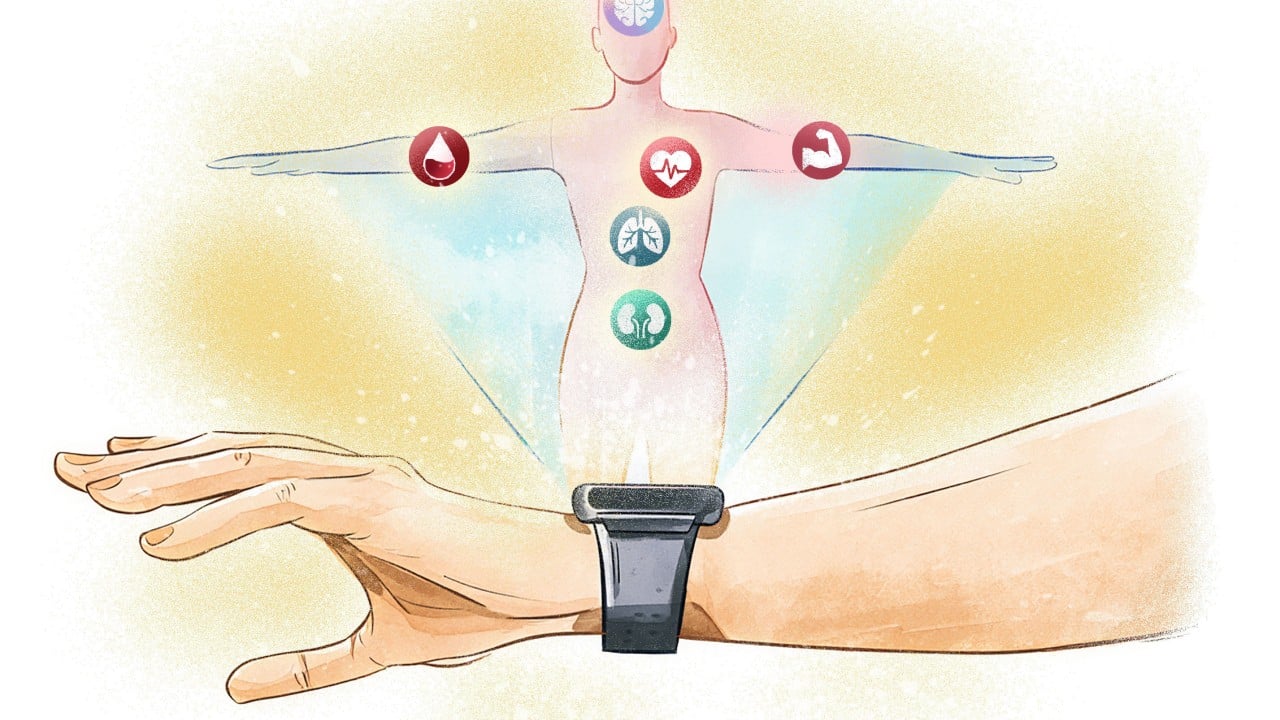
The screen flickered at 3:14 in the morning. Not with an incoming call, nor an urgent text message about an unread email, but with a quiet, pulsing vibration against a tendon. A green light traced a slow ellipse beneath the glass casing, tracking the faint, rhythmic expansion of a radial artery in a dark bedroom in Mid-Levels.
To the person wearing it, the watch was jewellery. To the algorithms humming on a server farms thousands of miles away, the wearer was a data point teetering on a statistical edge. You might also find this similar story insightful: The Silent Architects Building Tomorrow From Inside the Machine.
Minutes later, an alert blinked into existence. An irregular rhythm detected. Atrial fibrillation. The phrase sounds clinical, distant, something written on a monochrome chart in a hospital basement. But when it flashes on a piece of brushed titanium strapped to your own arm while the city sleeps, it feels less like a medical diagnostic and more like a ghost whispering a prophecy.
We bought these devices for vanity. We wanted to count steps on the commute to Central, to close exercise rings while jogging along Bowen Road, to check notifications without pulling a phone from a pocket. We treated them like pedometers with Bluetooth. We forgot that we were strapping laboratory-grade diagnostic instruments to our bodies. As highlighted in latest coverage by TechCrunch, the effects are widespread.
Then came the morning when the warning actually saved a life.
Consider a hypothetical resident named Chan, an accountant who spends his days buried in spreadsheets and his nights staring at ceilings. He is fifty-two, drinks too much milk tea, and ignores the dull ache behind his shoulder blades because pain is just the tax you pay for living in Hong Kong. One Tuesday, his wrist taps him on the shoulder. It tells him his heart is stumbling. He ignores it. It taps him again. Stubbornly, he opens the companion app, reads a paragraph written by an automated health engine, and decides to visit a cardiologist just to shut the machine up.
By sunset, he is lying on a gurney with cold gel smeared across his chest. The doctor confirms what the silicone strap predicted: a silent, wandering electrical storm in the upper chambers of the heart, a stroke waiting for an invitation.
That is the modern paradox. We carry miracles of biomedical engineering on our bodies, yet we wander around in a state of profound psychological confusion. Can we trust them? Or are we being slowly manipulated by silicon valley software engineers who profit from our hypochondria?
The question itself reveals our collective anxiety. We want absolute certainty from objects that are inherently probabilistic. A consumer smartwatch is not a 12-lead electrocardiogram machine operated by a trained cardiologist. It is a tiny computer trying to read micro-fluctuations in light passing through skin, sweat, and hair follicles. It uses photoplethysmography, shining LEDs through the wrist to measure changes in blood volume with every beat. It is brilliant. It is also imperfect.
When that imperfection meets human psychology, things get complicated.
Walk into a clinic in Tsim Sha Tsui on any given Thursday morning, and you will find the fallout. Patients sit in molded plastic chairs, clutching their smartphones like prayer books. They swipe frantically through battery-drained apps, showing doctors jagged little red graphs.
Doctor, look. My heart stopped for three seconds during lunch.
The doctor sighs, looks at the screen, and then looks at a patient whose biggest problem is not an impending myocardial infarction, but a severe case of digital panic. The watch saw a momentary artifact—a loose strap, a sudden shift in posture, a muscle twitch—and interpreted it as mortal peril. The algorithm did its job: it erred on the side of caution. But the human mind, fragile and imaginative, turned a false positive into a terminal diagnosis.
This is the hidden cost of constant biometric surveillance. We have traded the blissful ignorance of our ancestors for the anxious omniscience of machines. Every heartbeat is cataloged, scored, and graded. Sleep is no longer a passive state of biological repair; it is an exam you can fail. If your deep sleep score dips below forty percent, you wake up feeling exhausted not because you actually are, but because the software told you that you ought to be.
Yet, dismissing the technology as a toy for the paranoid is a dangerous mistake.
To understand why, you have to look past the marketing campaigns and examine the raw mechanics of public health in a dense metropolis. Hong Kong is a city built on velocity. We move fast, work late, and treat our bodies like high-yield engines meant to run at maximum RPM until they seize up. Cardiovascular disease does not announce itself with dramatic cinematic clutching of the chest. It creeps in through the back door, disguised as fatigue, stress, or normal aging.
Traditional healthcare is inherently reactive. You only see a doctor when something hurts badly enough to justify the wait in a public outpatient queue. By then, the window for prevention may have slammed shut.
Consumer wearables shift the paradigm from reactive defense to proactive interception. They act as an omnipresent sentry, watching our biological baseline when we are too distracted to notice the drift. When a healthy thirty-something notices their resting heart rate creeping upward week over week, it is rarely a heart attack. More often, it is an early warning of impending burnout, a thyroid shift, or a stealthy viral infection brewing before the first cough manifests.
The device does not care about your deadlines. It only reads the electrical and optical signals of your physical reality.
The friction arises because we do not know how to translate machine data into human wisdom. We treat raw telemetry as gospel truth rather than a prompt for further investigation. When a smartwatch warns of an irregularity, it is not writing a prescription. It is tapping you on the shoulder and saying, Go ask someone who actually knows.
Instead, many of us fall into two distinct traps. The first is absolute denial. We rip the watch off, mutter about glitchy gadgets, and go back to ignoring our bodies until an ambulance arrives. The second is obsessive submission. We become enslaved to the dashboard, checking our recovery scores before our feet even touch the floor, letting an algorithm dictate our mood for the day.
Both approaches miss the point entirely.
The true value of these devices lies in the gray space between dismissal and devotion. They are navigational aids, not autopilot systems. They are compasses that can point toward hidden reefs, but they cannot steer the ship around them.
Think of the wearable as a translator standing between your silent biological machinery and your conscious mind. Your body speaks in whispers—a slight tightness in the chest, a fractional drop in heart rate variability, a half-degree elevation in nocturnal skin temperature. Most of us are too deafened by the noise of daily life to hear those whispers. The watch captures them, turns them into numbers, and flashes them on a screen.
What happens next depends entirely on our maturity as users.
If we use these tools to cultivate bodily literacy rather than health anxiety, everything changes. We learn what our resting baseline actually looks like after a night of deep sleep versus a night of drinking wine with clients in Soho. We notice how stress at the office physically manifests in our nervous systems hours before we feel emotionally overwhelmed. We stop treating health as a static state and start viewing it as a dynamic, responsive dialogue with our environment.
The transition is not easy. It requires a fundamental shift in how we view authority. For generations, medical knowledge was locked behind clinic doors, accessible only through white coats and formal consultations. Now, health data is democratized, streaming in real-time straight to our wrists, raw and unfiltered.
That democratization is messy. It floods emergency rooms with worried-well patients and drives cardiologists to distraction. It creates bizarre cultural anxieties that previous generations never had to navigate.
Yet, beneath the noise of false alarms and marketing hype, a quiet revolution is taking place. Lives are being caught in the net before they slip away. Hidden arrhythmias are being mapped. Silent declines in physical resilience are being arrested.
The ghost on your wrist is not a guardian angel, nor is it a corporate spy trying to sell you insurance policies. It is simply a mirror. It reflects back the physical reality of the life you are living, stripped of excuses, rationalizations, and hope.
When that screen lights up in the dark, it forces a confrontation with the most fragile truth of our existence. We are mortal, we are busy, and we are remarkably bad at listening to ourselves.
The machine listens, even when we refuse to. What we choose to do with its warnings is the only question that matters.