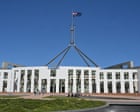
The carpet in the corridors of Australian Parliament House is a very specific shade of muted eucalyptus green, designed to absorb sound and soothe the nerves of people deciding the fate of twenty-seven million citizens. If you walk those halls on a Tuesday morning when the bells are ringing for a division, the air smells faintly of burnt espresso, wool suits, and damp limestone.
Most Australians will never smell that air unless they buy a ticket for a guided tour, empty their pockets into a plastic tray at the front desk, pass through a magnetometer, and stay strictly behind the velvet ropes. In similar news, we also covered: What Most People Get Wrong About Strikes Near Qeshm Island and the Strait of Hormuz.
Except for the people wearing the orange passes.
I spent three years working in a cramped ministerial wing on the Senate side, drinking terrible instant coffee and watching the rhythm of the building. At first, you think the power lives in the chambers where the cameras point—where politicians yell across the dispatch box about the cost of groceries or the price of gas. You quickly realize that the chamber is just the theater. The real work happens in the quiet pockets outside the committee rooms, in the private dining rooms, and along the carpeted blind spots where security cameras don't bother to look. And if you stand near the lifts long enough, you start recognizing the faces of men and women who were never elected by a single soul, yet they swipe through the heavy timber doors with the practiced ease of people who own the mortgage. TIME has also covered this fascinating topic in extensive detail.
Recent data pulled from parliamentary disclosures has finally put a cold, hard number on that casual familiarity. Nearly two thousand sponsored passes—the golden tickets that grant unescorted, everyday access to the heart of Australian democracy—are currently sitting in the wallets of corporate lobbyists, industry association executives, and former politicians turned consultants.
Two thousand.
To put that in perspective, there are only 227 elected members and senators in the entire federal parliament. For every single representative you voted for, there are roughly eight hired guns wandering the halls with a security clearance that lets them bypass the front desk entirely.
The Architecture of Access
To understand why a piece of laminated plastic matters so much, you have to understand the geography of Canberra. The city itself is a series of wide, cold roundabouts designed to keep people separated, and Parliament House sits on Capital Hill like a fortress buried under a lawn. When a normal constituent—say, a dairy farmer from Victoria or a nurse from Western Sydney—wants to speak to their local MP about a policy that is wrecking their livelihood, they have to book a flight, pay for a hotel, sign in at the public entrance, get a temporary visitor sticker that expires at sunset, and wait in a sterile foyer until a junior staffer comes down to escort them up. They get fifteen minutes. They are watched the entire time.
Now consider a hypothetical scenario, one that plays out in variations every single sitting week. Let’s call him Marcus. Marcus used to be a senior advisor to a cabinet minister; today, he works for a consulting firm representing three major energy conglomerates. Because a friendly backbencher signed a single form—a form that requires zero public explanation and triggers no automatic disclosure of who Marcus is actually being paid to represent—Marcus holds an orange sponsored pass.
Marcus doesn't wait in the foyer.
He walks straight through the private entrance, nods to the Australian Federal Police officer who knows his first name, and takes the lift directly to the ministerial wing. He doesn't need an appointment because he happens to "bump into" the transport minister's chief of staff while they are both waiting for a flat white at Aussies Café. He slides into a booth at the Members' Dining Room. While the nurse from Western Sydney is still trying to get past the metal detectors downstairs, Marcus has already had three casual, unrecorded conversations about why a proposed regulatory reform would be "unworkable" for his clients.
None of this is illegal. That is the part that makes your stomach turn when you finally see the system up close. It isn't a heist in the dark; it is a perfectly legal architecture built by the very people who benefit from it.
The Numbers Nobody Wants to Print
When transparency advocates and independent crossbenchers finally forced the release of the pass data, the sheer scale of the shadow workforce shocked even the veterans of the press gallery. Out of roughly 1,900 sponsored passes issued by MPs and senators, hundreds belong to people whose literal job description is to bend government policy toward private profit.
Major telecommunications giants, fossil fuel producers, gambling conglomerates, banking associations, and defense contractors all have permanent foot soldiers roaming the building. Even more troubling is what the data doesn't show. While the federal government maintains an official Register of Lobbyists, there is a massive, glaring loophole built right into the rules: "in-house" lobbyists. If a mining company or a sports betting giant hires its own full-time government relations director, that person does not have to register as a lobbyist at all. They can get an MP to sponsor their security pass, walk the halls for years, and never once appear on a public transparency register.
We are looking at a two-tier democracy. On the outside, citizens are told to write submissions to parliamentary inquiries, sign petitions, and wait three years for an election to make their voices heard. On the inside, corporations are buying permanent real estate in the peripheral vision of lawmakers.
Why do MPs hand these passes out so freely?
It’s rarely a briefcase full of cash. Australian politics is cleaner than that, and far more subtle. It is a culture of mutual convenience. A backbencher from a regional seat is overwhelmed, understaffed, and drowning in briefing papers on subjects they barely understand. Along comes a charming, well-dressed former colleague—someone who used to work for the same party—offering industry data, pre-written talking points, and an invitation to a nice dinner in Kingston. Signing a pass sponsorship form takes ten seconds. Saying no feels rude. And besides, everyone else is doing it.
The Invisible Tax on Your Everyday Life
It is easy to treat Canberra’s pass scandal as an inside-the-beltway squabble—just another bit of political grease in a machine that has always run a little dirty. Honestly, when I first started covering policy debates, I used to shrug at it too. You tell yourself that politicians are adults, that they can listen to a lobbyist and still make up their own minds.
Then you watch how a bill actually dies.
You see it happen in slow motion over six months. A reform is announced with grand speeches—maybe it’s a ban on gambling ads during children's sports broadcasts, or tighter rules on predatory payday lenders, or stricter emissions standards for cars. The public overwhelmingly supports it. The polls are clear. The moral case is airtight.
Then the orange passes go to work.
They don't storm the gates. They simply flood the zone. They corner undecided MPs in the hallways and whisper about "unintended consequences" and "job losses in marginal seats." They hand over glossy, industry-funded economic modeling that looks terrifying on paper. Slowly, quietly, the bill gets delayed. Then it gets sent to a committee. Then the wording is softened—a word changed from must to may, a deadline pushed back by four years, an exemption carved out for the biggest players in the market. By the time the law passes, it has the teeth of a gummy shark.
You feel the result of those hallway conversations every time you open your power bill, every time you get hit with a hidden bank fee, and every time your kid watches a rugby match and recites the odds for the first try-scorer before they even know how to do long division. You are paying an invisible tax for every orange pass hanging around a lanyard in Canberra.
The Revolving Door Never Stops Spinning
What makes this ecosystem so suffocating is that the boundary between the regulators and the regulated has practically dissolved. In Canberra, politics is no longer a calling; for a massive chunk of the political class, it is simply an internship for a much more lucrative second career.
Look at the names attached to the lobbying firms holding these passes. You will find former defense ministers consulting for weapons manufacturers, former health advisors representing pharmaceutical giants, and former energy staffers working for gas exporters. They aren't being paid six-figure salaries because they are brilliant strategists. They are being paid because they have the mobile numbers of current cabinet ministers saved in their favorites, and they know which corridor leads to the back door of the Prime Minister's suite.
Think about the psychology of a sitting MP in that environment. When the person lobbying you today was your boss three years ago—and might be the person who gets you a cushy consulting gig when you lose your seat at the next election—how fiercely are you going to push back against their client's interests?
Human nature doesn't require a bribe to be compromised. It just requires proximity, familiarity, and self-preservation.
Cracking Open the Doors
The tragedy is that fixing this doesn't require a constitutional revolution. It requires basic, common-sense hygiene that any corporate boardroom or local council would already demand.
First, the orange pass system needs to be burned to the ground and rebuilt. No lobbyist—whether they work for a third-party firm or in-house for a corporation—should hold an unescorted, permanent pass to Parliament House. If a representative of a private company wants to meet an MP, they can sign in at the front desk, wear a visitor badge, and be escorted to and from the meeting, just like the dairy farmer and the nurse.
Second, every single entry by a registered or in-house lobbyist should be logged in real time on a public, searchable database, alongside the names of the MPs they met and the specific legislation they discussed. Transparency isn't a punishment; it is the bare minimum price of admission to a public building paid for by taxpayers.
Finally, Australia needs a strict, enforceable cooling-off period—at least three to five years—before former ministers and senior staffers can cash in their public service credentials as private lobbyists. If you help write the rules for an industry, you shouldn't be allowed to sell your inside knowledge back to that industry the week after you clear out your desk.
Some in Canberra will argue that these rules would make government less efficient, that MPs need to hear from business leaders to understand how the economy works. They are right about one thing: lawmakers should hear from business. They should hear from unions, charities, scientists, and small business owners too.
They just shouldn't have to trip over them on the way to the bathroom.
Late at night in Parliament House, after the bells stop ringing and the press gallery files its last copy, the cleaning crews move through the eucalyptus-green corridors with industrial vacuums. The building goes quiet. On the walls hang portraits of former prime ministers, staring down at the empty carpets where millions of dollars' worth of influence were traded over lukewarm coffee just hours before. The building belongs to the people of Australia—at least, that is what the brass plaques by the front doors say. Until someone finally takes away the keys from the guests who never leave, the rest of us are just standing outside in the cold, looking through the glass.