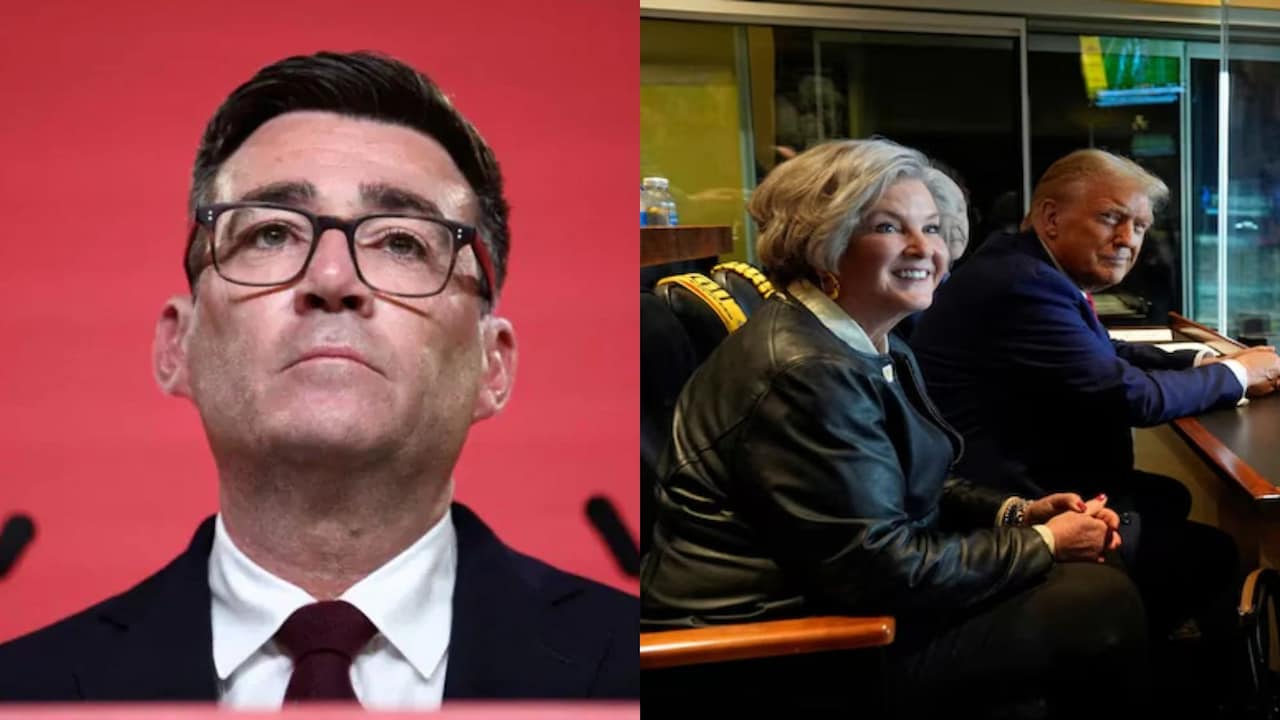
The phone on the desk does not ring. It blinks.
In the quiet hours of high office, where the air smells faintly of old carpet and floor wax, an incoming ping carries an electric sort of gravity. A notification. A name flashing on a screen that commands the attention of a nation. For a prime minister, the digital ether is a crowded room filled with ambassadors, backbenchers, crisis managers, and old friends. Everyone wants a piece of your ear. Everyone wants to believe their voice matters in the cacophony of power.
So when a message arrived claiming to be from a prominent American ally, a trusted confidant in the swirling vortex of trans-Atlantic politics, the reflex was not suspicion. It was muscle memory.
You reply. You trade pleasantries. You slip into the shorthand of modern governance, where gravity is compressed into fifteen-second text bubbles and diplomatic crises are managed between sips of lukewarm tea.
Except the person on the other end was not who they said they were.
Security reports would later reveal a startling breach of social engineering, a high-level digital masquerade where a trickster donned the borrowed digital credentials of a Trump ally to slip past the velvet ropes of Downing Street’s communications. The UK prime minister had exchanged messages with a phantom.
How does that happen?
To understand, you have to look past the cybersecurity jargon and into the psychology of how leaders actually live. Power is profoundly isolating. When you operate at the apex of decision-making, your circle shrinks until it consists of a few stressed aides and a handful of global counterparts whose phone numbers you keep saved like rare currency. You are constantly hunting for signal in a hurricane of noise.
Imagine, hypothetically, standing in a dimly lit operations room during a live crisis exercise, watching how easily an unfamiliar face in a standard-issue suit can walk past three checkpoints simply because they carry an air of absolute, unshakeable belonging. That is social engineering. It does not hack code; it hacks human empathy, professional courtesy, and the desperate desire not to cause a diplomatic incident by ignoring someone important.
The phisher did not need a sophisticated brute-force algorithm. They needed something much simpler. They needed the Prime Minister's institutional politeness.
Modern communication has stripped away the friction that used to protect us. A century ago, a message from an American political heavyweight required couriers, wax seals, stationery bearing watermarks, and verification protocols that took days. Even twenty years ago, diplomatic channels went through secure cables, encrypted phone lines, and foreign office intermediaries whose entire job was to verify pedigree.
Today? We live in the era of the quick chat app.
Convenience is the Trojan horse of security. We traded the friction of security for the speed of modern life. We wanted leaders who are accessible, responsive, and plugged into the global pulse. We got leaders who text on the go, responding to pings while walking down the tarmac toward a waiting helicopter, thumbing out quick replies while the rotor blades deafen everyone around them.
In that rush, the line between reality and impersonation blurs.
Let us be honest about how these scams work in the broader digital ecosystem. Every day, ordinary people fall victim to spear-phishing campaigns where a scammer pretends to be a bank manager, a tax authority, or a panicked relative. We shake our heads at the screen. We wonder how someone could be so foolish as to wire money or hand over passwords to an obvious fraud.
Yet, scale that vulnerability up to the highest levels of statecraft, and the mechanics remain identical. The target is never the firewall. The target is always the human being sitting behind it.
When a fraudster adopts the persona of a powerful political figure, they leverage an invisible psychological shield: deference. A leader is trained to maintain alliances, to stroke egos, to keep doors open even when a relationship is strained. To ignore an incoming message from a key foreign ally feels like a diplomatic snub. It feels risky. The fear of missing a crucial shift in foreign policy outweighs the faint, nagging suspicion that something might be off.
The prankster or operative knew this calculus well. They understood the rhythm of high-stakes governance. They knew that power creates blind spots.
Consider what happens next in these kinds of breaches. The immediate reaction is panic, followed by an immediate institutional wall-building exercise. Cybersecurity experts are called in. Logs are scrubbed. Protocols are rewritten. Officials give solemn press conferences about hardening infrastructure and tightening verification standards across all government channels.
Yet, the core vulnerability remains stubbornly human.
No two-factor authentication protocol can entirely fix the flaw of wanting to believe that the person whispering in your ear is who they claim to be. In politics, narrative is everything. Leaders are constantly performing roles, managing perceptions, and trying to stay three steps ahead of the next headline. When someone flatters that narrative—when an apparent ally reaches out with shared concerns or private insights—it strokes the exact part of the political brain that wants validation.
This incident is not merely an embarrassing security lapse for Downing Street. It is a cautionary tale for an interconnected world that has grown dangerously casual about digital identity.
We have built a global infrastructure where anyone can claim to be almost anything, provided they know the right buzzwords, the right tone, and the right targets. We live in an age where deepfakes mimic voices, where burner accounts masquerade as diplomats, and where the boundary between authentic statecraft and digital theater has dissolved entirely.
The UK prime minister’s text exchange with a fake ally is a snapshot of our collective vulnerability. It proves that the most sophisticated weapon in modern espionage is not a complex piece of malware designed to crash a power grid. It is a simple text message sent to the right phone at the exact moment when the recipient is too busy, too tired, or too eager for an ally to check the credentials.
The screen goes dark. The notification light stops blinking. But the ghost in the machine remains, reminding us that no matter how high we climb, we are all just one clever message away from being fooled.


