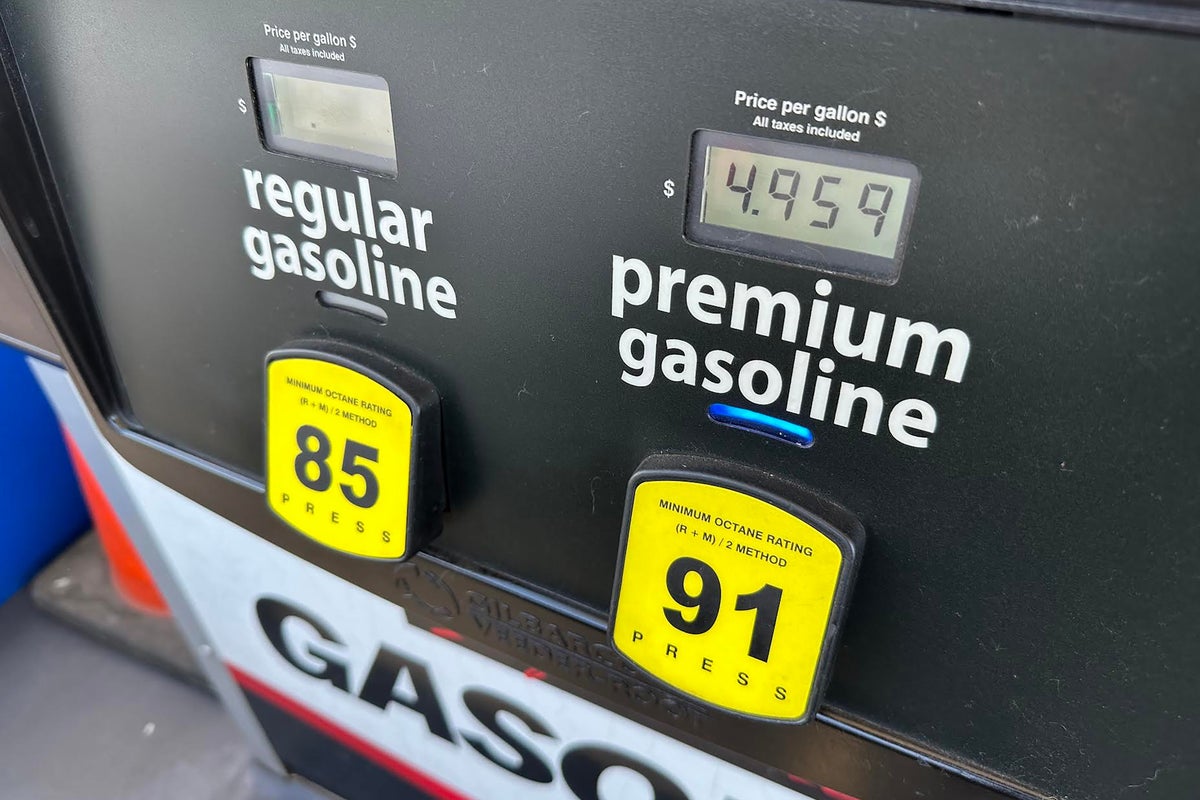
Sarah didn't look at the giant plastic numbers glowing red against the Tuesday morning drizzle. She already knew the routine. For eighteen months, her left thumb had executed a precise, anxious dance on her banking app every time she pulled into the Shell station on Elm Street. Tap. Check checking balance. Tap. Check savings. Calculate the exact deficit required to ensure her Honda Civic had enough juice to hit three different drop-off zones before her shift started at nine.
Then, the click.
Not the mechanical snap of the nozzle shutting off, but the sharp intake of breath when the numbers on the pump display rolled past forty dollars, then fifty, then fifty-five. It was a rhythmic, suffocating tax on simply existing.
This morning was different. The numbers had shifted overnight. The first digit on the board had tumbled backward, a quiet retreat that felt less like economic policy and more like a sudden, unprompted truce in a war that had drained her savings account to a husk.
Across the country, millions of drivers are experiencing that same strange, cautious lifting of the chest. Prices at the pump are falling. The numbers are dropping below thresholds we thought we might never see again. We are told to rejoice, to breathe easier, to plan that summer road trip that seemed financially reckless just six months ago.
But relief is a fickle emotion when you don't know who granted it, or how quickly they might take it back.
To understand why the numbers are tumbling right now, we have to look away from the illuminated signs on the highway and peer into a complex, global game of chicken. Crude oil is a commodity wrapped in a paradox. For two years, the narrative was dominated by scarcity. Geopolitical borders bled, supply chains fractured like brittle plastic, and the post-pandemic world suddenly demanded more fuel than the veins of the earth were willing to yield. Prices skyrocketed because the world was terrified of running dry.
Now, the pendulum has swung. The current dip isn't a gift; it is a mathematical consequence of a cooling global engine.
Consider China. For decades, the country’s industrial appetite was an insatiable furnace, consuming millions of barrels of oil a day to feed a manufacturing colossus. Today, that furnace is sputtering. Factory floors are quieter. Real estate markets there are trembling. When the world’s factory slows down, its thirst for oil drops. Suddenly, the frantic scramble for supply looks more like a game of musical chairs where nobody wants to sit down.
At the same time, the American oil machine is pumping at historic levels. Fields in West Texas and North Dakota are churning out crude with a relentless, mechanical ferocity. It is a simple, brutal equation of the marketplace. When supply surges and demand falters, the price must break.
The immediate result feels like a victory for the driveway budget. Ten dollars saved on a fill-up means fresh groceries instead of boxed pasta. It means a movie ticket. It means a tiny fraction of peace of mind.
Yet, any mechanic will tell you that a sudden drop in oil pressure isn't always a sign that the engine is running smoothly. Sometimes, it means the system is losing power.
The anxiety that lingers at the edge of this relief is entirely justified. We have been burned before. We remember the erratic valleys of 2020, followed by the agonizing peaks of 2022. The system is inherently fragile, wired to react to whispers, rumors, and distant storms.
What happens when winter approaches and home heating demands collide with transportation needs? What happens if a single shipping lane in the Middle East is choked by conflict for even forty-eight hours? The truth is, the current low prices are built on a foundation of temporary stability. Refineries are running at high capacity because the weather has been cooperative and seasonal maintenance schedules haven't yet interrupted the flow.
It is an uncomfortable reality to accept. We like to believe that the expenses governing our daily survival are tethered to something logical, something stable. Instead, the cost of Sarah’s commute is dictated by decisions made in glass towers in Riyadh, boardroom standoffs in Houston, and economic data released by bureaucrats in Beijing. We are all passengers in a vehicle we cannot steer.
This vulnerability is why the current dip feels less like a permanent correction and more like a brief intermission.
Eventually, the seasonal math will shift. Refineries will transition from their cheaper summer blends to more complex, winterized formulas. Production cuts from global oil cartels, which have been largely offset by American output, may finally begin to squeeze the market as inventories draw down. The bargain we are enjoying today is borrowing time from tomorrow.
The real danger lies in misinterpreting this moment. It is easy to treat a temporary reprieve as a permanent shift in the weather. We buy the larger car. We sign up for the longer commute. We stop looking at the numbers on the app.
Sarah finished fueling her car. The total stopped at forty-two dollars. A month ago, it would have been sixty. She hung up the nozzle, the metal cold against her palm, and got back behind the wheel. She didn't celebrate. She didn't plan a vacation. She simply turned the key, watched the fuel gauge needle sweep to the right, and wondered exactly how many miles she had left before the world changed its mind again.
The red numbers on the sign kept glowing in the rain, holding their breath, waiting for the wind to change.


