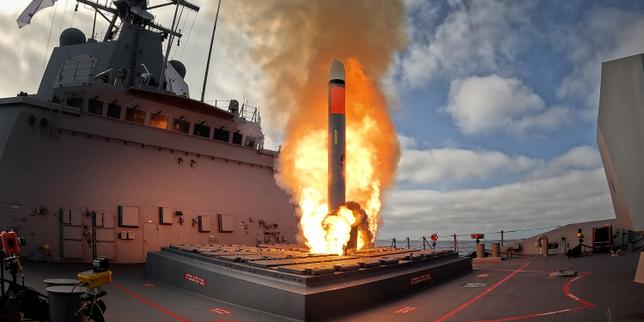
Germany is changing its military strategy fast. The decision to buy American Tomahawk long-range missiles isn't just another routine defense purchase. It's a massive shift in how Berlin views European security. For decades, the German government avoided long-range strike capabilities. That era is over.
Russia's actions in Ukraine changed everything. Berlin realized its current arsenal couldn't hit targets deep inside enemy territory if a major conflict started. By bringing Tomahawks into the fold, Germany is signaling that it wants a real deterrent.
The Reality Behind the Tomahawk Deal
The plan involves stationing conventional long-range US capabilities in Germany, including Tomahawks, SM-6 missiles, and developmental hypersonic weapons. This phase begins in 2026. The goal is simple. Europe needs to fill a capability gap while it develops its own deep-strike weapons.
Let's look at what the Tomahawk actually brings to the table. We're talking about a weapon that can travel over 1,500 kilometers. It flies low to evade radar. It can change course mid-flight. For Germany, this introduces a capability the Bundeswehr simply hasn't possessed in recent history.
Missile Type: Tomahawk Land Attack Missile (TLAM)
Range: Approx. 1,600 km (1,000 miles)
Flight Profile: Low-altitude terrain-following
The decision didn't happen in a vacuum. It aligns with NATO's broader strategy to reinforce its eastern flank. If you look at the geography, a 1,500-kilometer range from German soil reaches well into Eastern Europe and parts of Russia. That changes the calculus for any potential aggressor.
Missing Pieces in the European Arsenal
Many wonder why Germany didn't just use the Taurus missile it already has. The Taurus is excellent. It destroys bunkers with incredible precision. But it's an air-launched missile with a range of around 500 kilometers. You have to fly a jet close to the target area to drop it.
Tomahawks are different. They launch from the ground or ships. You don't need to risk pilots or expensive jets early in a conflict to strike distant targets. They offer a layer of persistent threat that shorter-range systems can't match.
The integration won't be effortless. Germany operates different command structures and communications systems compared to the US military. Setting up the infrastructure to store, maintain, and potentially fire these missiles requires years of preparation and billions of euros.
Political Backlash at Home
Chancellor Olaf Scholz faced immediate heat for this move. Critics across the political spectrum argue that hosting these weapons makes Germany a primary target. Some politicians from the left and the far-right claim this mirrors the Cold War missile crisis of the 1980s. They worry about escalation.
But the government's stance is firm. Weakness invites trouble. The defense ministry maintains that deterrence is the only way to guarantee peace in Central Europe right now. They believe relying solely on the American nuclear umbrella without conventional deep-strike options leaves a dangerous middle ground open for exploitation.
Furthermore, this buy is a stopgap measure. France, Germany, Italy, and Poland recently signed a letter of intent to develop their own European long-range strike missile. That project will take at least a decade to yield results. Until then, Berlin is writing checks to Washington.
What Happens Next
Defense contractors are already preparing the logistics. If you're tracking defense policy, watch how the German budget handles this strain. The special 100-billion-euro military fund is drying up quickly. Future maintenance and procurement for these missile systems will have to come from the regular defense budget, which is already under heavy scrutiny.
Keep an eye on the infrastructure developments at US military bases in Germany, particularly Ramstein and surrounding artillery command posts. That's where the initial deployment framework will take root. European allies will likely follow suit with similar acquisitions as the continent scrambles to build a unified defensive wall.



