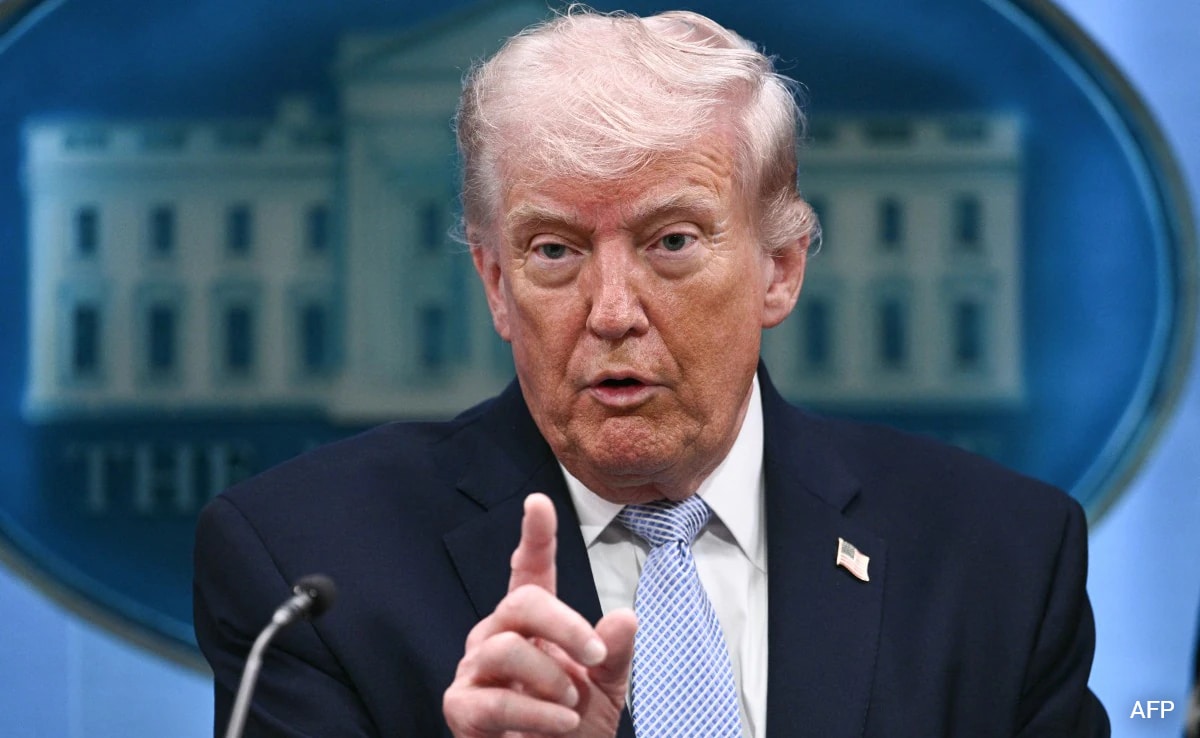
Donald Trump’s recent broadside against the German Chancellor—demanding he "fix your broken country"—is the kind of low-hanging fruit that populist rhetoric feeds on. It’s easy. It’s loud. It’s also fundamentally wrong about what is actually happening in the heart of Europe. The "lazy consensus" from both the American right and the European left is that Germany is a dying industrial titan, a victim of high energy costs and bureaucratic sclerosis.
They see a "broken" country. I see a nation undergoing a brutal, necessary, and entirely intentional pivot that most observers are too terrified to acknowledge.
Germany isn’t failing to fix its old model. It is actively killing it.
The narrative that the Chancellor is doing a "terrible job" assumes the goal is to return to the 2010s—a decade defined by cheap Russian gas, an insatiable Chinese appetite for combustion engines, and a reliance on the U.S. security umbrella. That world is gone. To "fix" Germany by those old standards would be like trying to fix a horse and buggy in the age of the jet engine.
The Myth of the Industrial Heartbeat
The loudest critics point to the decline of the Mittelstand and the struggles of giants like Volkswagen and BASF. They cite the $100 billion energy price shock following the invasion of Ukraine as the smoking gun.
Here is the truth: Germany’s heavy industry was a dead man walking long before the first pipeline was cut.
High-volume, low-margin manufacturing in Europe was an anomaly supported by artificial life support. When you rely on a single, hostile neighbor for 55% of your natural gas, you aren't a manufacturing powerhouse; you are a hostage. The current "pain" isn't a sign of failure. It is the agony of a detox.
We are witnessing the "de-industrialization" of Germany, but not in the way the doom-scrollers suggest. It is a transition from high-carbon, energy-intensive manufacturing to high-value, IP-heavy engineering. If you think Germany is "broken" because it isn't making as much steel as it used to, you’re looking at the wrong ledger.
Why Trump and the Critics Miss the Point
The criticism coming from Mar-a-Lago focuses on strength as a factor of output and trade surpluses. But a massive trade surplus is actually a sign of an unbalanced economy that under-invests in its own infrastructure and people. For years, Germany exported its capital and imported its energy. It was a fragile loop.
The Chancellor’s "terrible job" is actually the thankless task of internalizing costs that were previously ignored.
- Defense Spending: For thirty years, Germany enjoyed a "peace dividend" that was essentially a subsidy from the American taxpayer. Reversing this isn't a sign of a broken country; it’s a sign of a country finally growing up.
- Energy Transition: The Energiewende is messy. It’s expensive. But while critics mock the reliance on wind and solar, they ignore the fact that Germany is building the world’s most resilient decentralized energy grid.
- Labor Dynamics: Germany has the highest employment rate in its history. If the country were truly "broken," you’d see bread lines, not a desperate hunt for skilled labor.
The Brutal Reality of the German Pivot
Let’s be clear about the downsides. This isn't a "seamless" transition. It’s a gut-wrenching overhaul that will likely see several household names go bankrupt or move production to South Carolina or Shanghai.
I’ve spent twenty years watching legacy industries try to pivot. Most fail because they try to save the past. The current German administration is doing something much more radical: they are letting the past die.
When Trump says "fix your broken country," he means "go back to being the predictable, manufacturing-heavy partner we understand." But Germany understands that being a "factory" for the world is a race to the bottom. The future is in the architecture of the system—the software, the hydrogen electrolysis patents, the specialized chemical compounds, and the green steel technology.
Dismantling the "People Also Ask" Delusions
"Is Germany in a recession?"
Technically, yes. Effectively, no. A recession in a country with full employment and record-high household savings is a statistical quirk, not a national crisis. The "recession" is concentrated in energy-intensive sectors that should be shrinking.
"Has Germany lost its competitive edge?"
Only if your definition of "edge" is "who can burn the most coal to produce the cheapest widget." In the sectors that will define the next fifty years—carbon capture, synthetic fuels, and high-precision robotics—Germany’s R&D spending as a percentage of GDP remains higher than almost any other G7 nation.
"Is the Chancellor failing?"
He is failing the popularity contest. He is succeeding at the structural demolition required to build something modern. Leaders who "fix" things by slapping duct tape on old systems are praised in the short term and blamed for the eventual collapse.
The Counter-Intuitive Truth
If you want to see a broken country, look for one that refuses to change its fundamental economic assumptions in the face of a shifting world.
Germany’s current chaos is a feature, not a bug. By forcing the cost of energy, defense, and labor to reflect reality rather than subsidies, the German government is stress-testing its economy.
Those who scream that the country is "broken" are usually the ones who benefit from the old, fragile status quo. They want the cheap gas back. They want the quiet subservience to the U.S. security apparatus back. They want a Germany that stays in its lane as Europe’s industrial workhorse.
But the workhorse is dead. What’s emerging is a leaner, more autonomous, and far more technologically sophisticated entity.
Stop looking at the GDP growth numbers of the last four quarters. Start looking at the patent filings in green tech. Start looking at the integration of the European defense industry. Start looking at the fact that Germany is finally spending money on itself rather than just hoarding it.
The "terrible job" being done in Berlin is the hard work of making Germany relevant for 2050, while the rest of the world is still arguing about 2019.
If you're waiting for Germany to "fix" itself by returning to the old ways, you're going to be waiting a long time. The old Germany isn't coming back. And that is exactly why it might actually survive.
Stop trying to fix the old engine. It’s time to realize the car has already changed.