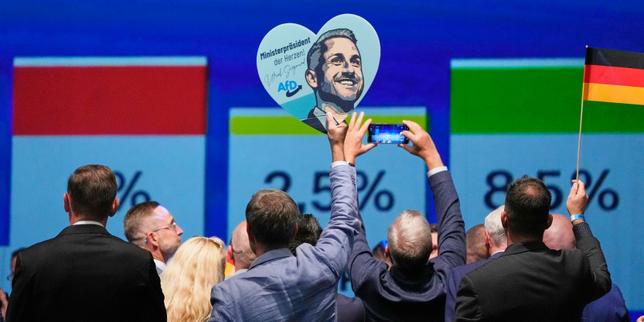
Germany always looked like the boring grown-up in the European room. Stable coalitions, predictable elections, and a stubborn refusal to let political extremes get a foothold. For decades, the post-war consensus held firm. Everyone agreed on the boundaries of acceptable debate. That comfort zone is gone.
If you look at the current German political model, you see cracks everywhere. The rise of the Alternative for Germany party changed the rules of engagement. Parties that swore they would never cooperate with radicals now find themselves sweating over municipal elections and state parliaments. For an alternative perspective, see: this related article.
Let's look at how this happened. You cannot understand modern European politics without seeing how fast the ground shifted in Berlin and beyond.
The fracture of the grand consensus
Germany built its entire post-war identity on a firewall against fascism. The Brandmauer, or firewall, was supposed to keep far-right ideologies permanently outside the halls of power. Mainstream conservatives and social democrats traded places in power for generations. Voters trusted that the system would always correct itself. Similar reporting on this matter has been provided by NPR.
That trust eroded. Economic stagnation, inflation, and rapid demographic changes created fertile ground for discontent. The Alternative for Germany party seized on these anxieties. They didn't just win protest votes. They normalized rhetoric that used to be unspeakable in polite society.
Voters are angry. When housing prices soar in Munich or Berlin while industrial towns in the east watch their factories close, the standard political pitch falls flat. People stopped believing that the traditional parties had answers for them.
The immigration flashpoint and local power shifts
Immigration remains the gasoline on the fire. The arrival of over one million refugees in 2015 split the country. Years later, local municipalities are straining under housing shortages and strained public services.
The Alternative for Germany weaponized these pressures. They frame every local budget crisis as a consequence of federal migration policies. It works. In eastern states like Saxony, Thuringia, and Brandenburg, the party consistently polls near or at the top.
Local elections matter here because power is decentralizing in ways nobody anticipated. When a far-right party wins county commissioner seats or mayoral races, they control local administration. They cut funding for cultural projects, block integration initiatives, and test the limits of constitutional courts.
The firewall is starting to fray at the edges. Local conservative politicians face a brutal choice. Do they form coalitions with radicals to pass local budgets, or do they paralyze local government entirely? Many are choosing compromise over ideological purity. That normalization spreads upward.
What the mainstream is getting wrong
You hear analysts in Brussels and Washington talk about the resilience of German institutions. They point to the strong constitutional court and federal police structures. Those defenses are real. But they miss the human element.
Institutions only work when people respect the unspoken norms behind them. Once politicians start breaking taboos just to win a Sunday talk show or scrape together five extra percent of the vote, the guardrails lose their strength.
Mainstream parties tried copying the rhetoric of the far right to win back voters. That strategy always fails. Voters prefer the original version to a cheap imitation. By chasing anti-immigration sentiment, the center-right Christian Democrats legitimized talking points they used to shun.
Meanwhile, social cohesion frays in the streets. Protests draw hundreds of thousands of people waving democratic flags, terrified for the republic. Counter-protests grow angrier. The political center feels squeezed out.
Where Germany goes from here
The model isn't dead yet. Germany still possesses a robust economy, deep democratic roots, and millions of citizens who remember why extremism destroys nations. But the illusion of invincibility is shattered.
To survive this crisis, the political establishment has to deliver results. People want clean trains, affordable heating, secure borders, and schools that actually function. When governance fails on basic competence, extremism fills the vacuum.
If you want to track the future of European democracy, stop watching Washington and start watching local council meetings in eastern Germany. That is where the actual battle for the republic is happening right now. Pay attention to who backs down and who holds the line. The outcome will decide the future of the entire continent.