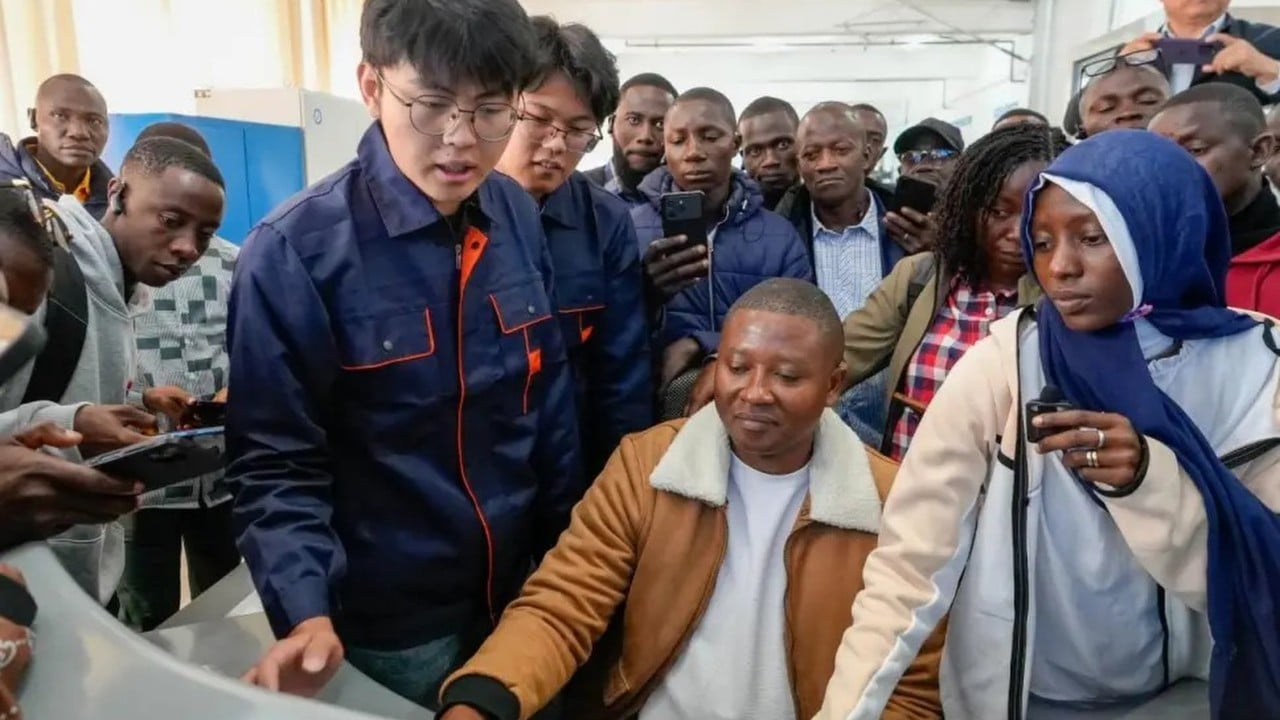
Infrastructure financing buys a construction contract, but technical training buys a generation of institutional dependency. When Chinese state-owned enterprises build standard-gauge railways across East and West Africa—such as the Mombasa-Nairobi Standard Gauge Railway (SGR) in Kenya, the Addis Ababa-Djibouti Railway, and the Abuja-Kaduna line in Nigeria—the physical track is only the initial capital outlay. The real strategic asset is the transfer of operational methodology, safety protocols, and engineering standards. By embedding Chinese railway management systems into the human capital of African transport ministries, Beijing converts short-term construction loans into long-term geopolitical alignment and recurring commercial revenue.
Most analyses of Sino-African infrastructure focus on debt-to-GDP ratios, sovereign loan terms, and raw resource extraction. That framing misses the operational bottleneck that actually determines whether an infrastructure project survives: human capital localization. A railway is a complex, tightly coupled socio-technical system. Without indigenous engineers, dispatchers, signal technicians, and rolling-stock mechanics trained to operate the specific hardware installed, the asset depreciates rapidly or requires permanent expatriate staffing. China’s railway training initiatives solve this operational deficit while simultaneously locking host nations into Chinese technical ecosystems. In related developments, we also covered: The Quiet Reckoning Inside the Machine That Built the Future.
The Architecture of Technical Lock-In
To understand why railway training is a primary instrument of foreign policy, one must examine the mechanics of technical standard-setting. In global infrastructure, hardware and human capital are mutually reinforcing. Once a country adopts a specific signaling system, track gauge, rolling stock architecture, and maintenance regime, the switching costs to an alternative vendor become prohibitive.
This dynamic operates through three distinct mechanisms: Investopedia has analyzed this fascinating topic in great detail.
- Protocol Standardization: Trainees do not merely learn generic mechanical engineering; they learn Chinese National Railway standards (TB standards). Dispatch protocols, safety checklists, and diagnostic software are built around Chinese operational logic. When a Kenyan or Ethiopian engineer is certified under these standards, their professional competence is directly tied to Chinese equipment.
- Supply Chain Path Dependency: Maintenance technicians trained on locomotives built by CRRC (China Railway Rolling Stock Corporation) learn to diagnose faults using proprietary diagnostic tools and order replacement parts from Chinese OEM catalogs. Even after a Chinese firm hands over operational control to a local state-owned enterprise—such as the transition from Afristar to Kenya Railways Corporation—the procurement pipeline remains anchored in China.
- Institutional Mimicry: Senior railway administrators brought to China for executive seminars at institutions like Beijing Jiaotong University or Southwest Jiaotong University absorb more than technical skills. They are exposed to the Chinese state-capitalist model of transport governance, where rail networks are viewed not as standalone profit centers, but as state-directed engines of macroeconomic integration and industrial policy.
This creates a self-reinforcing loop. The more African engineers are trained in Chinese methodologies, the more rational it becomes for African transport ministries to award subsequent expansion phases, branch lines, and rolling stock upgrades to Chinese contractors. The training program lowers the friction of future bilateral transactions.
The Three-Tiered Human Capital Pipeline
China’s approach to African railway training is not an ad-hoc corporate social responsibility initiative. It is a structured, multi-tiered pipeline designed to address every layer of the organizational hierarchy, from track-side laborers to ministerial policymakers.
1. On-Site Vocational Apprenticing
During the construction and initial operation phases, Chinese contractors implement a mentorship model often referred to as "master-apprentice" pairing. Local hires work directly alongside Chinese technicians in signal boxes, locomotive cabs, and maintenance depots. The objective here is rapid functional competence: teaching specific, repeatable tasks such as ultrasonic rail flaw detection, brake system calibration, and automated ticketing management. This tier mitigates immediate political friction over the use of Chinese labor by demonstrating visible local job creation and wage transfer.
2. Localized Technical Institutes and Luban Workshops
To scale training beyond individual project sites, Beijing has established permanent vocational infrastructure within host countries. Programs like the Luban Workshops—named after an ancient Chinese woodworker and modeled loosely on Germany’s dual vocational education system—partner Chinese technical colleges with African polytechnics. For example, in Ethiopia and Djibouti, these workshops provide specialized laboratories equipped with simulated signaling systems, traction power supply models, and rolling stock simulators. By institutionalizing the curriculum inside local universities, China ensures a continuous domestic supply of entry-level technicians without bearing the permanent cost of flying trainees to Asia.
3. Academic Degree Programs and Executive Fellowships
The apex of the pipeline targets the managerial and engineering elite. Funded through the Ministry of Commerce (MOFCOM) and the China Scholarship Council, promising African engineers and ministry officials are brought to China for master's degrees, doctoral programs, and short-term executive training. At universities with deep ties to China’s Ministry of Railways, these cohorts study high-speed rail engineering, transport economics, and logistics management. Upon returning home, these graduates frequently ascend to director-level positions within national railway authorities, becoming internal advocates for Chinese technical specifications and bilateral cooperation.
Operational Realities and Friction Points
While the strategic logic of this training architecture is cohesive, execution on the ground encounters severe operational friction. A rigorous assessment requires separating Beijing's macro-intentions from the messy realities of cross-cultural technology transfer.
The Language and Documentation Bottleneck
Technical manuals, software interfaces, and safety protocols for Chinese rolling stock and signaling equipment are originally authored in Mandarin. Translating complex engineering documentation into English, French, or Swahili often introduces semantic ambiguities. In high-consequence environments like railway dispatching, a poorly translated error code or maintenance interval is a safety hazard. Furthermore, on-site master-apprentice relationships frequently stall when Chinese technicians lack fluency in local languages and African apprentices cannot read Mandarin schematics. Training time is lost to basic communication overhead rather than deep diagnostic problem-solving.
The Transition Gap from Construction to Commercial Operations
Chinese engineering firms excel at civil engineering—laying track, boring tunnels, and erecting bridges on compressed timelines. However, running a commercially viable freight and passenger railroad requires entirely different competencies: dynamic pricing, intermodal logistics integration, cargo consolidation, and preventative asset management. Early training cohorts on projects like the Addis Ababa-Djibouti Railway focused heavily on physical operation—driving the train and maintaining the track—while under-investing in commercial freight logistics and revenue management. As a result, several lines struggled to generate the operating cash flows needed to service their construction debt, forcing extensions of Chinese operational contracts.
Asymmetric Knowledge Transfer
There is an inherent tension between a host government's desire for full technological sovereignty and a commercial contractor's desire to protect intellectual property. While basic operations and routine Level 1 and Level 2 maintenance are readily transferred to local staff, complex Level 3 and Level 4 overhauls—such as traction motor rewinding, proprietary signaling software debugging, and chassis structural repairs—often remain the exclusive domain of Chinese specialists. Without access to source code and advanced diagnostic algorithms, local railway authorities achieve operational independence in name only, remaining reliant on Chinese technical support contracts for major system failures.
The Economics of Workforce Localization
From a pure cost-accounting perspective, aggressive localization of railway staff is an economic necessity for both the African state and the Chinese operator. Expatriate Chinese engineers and managers require hardship pay, housing compounds, security details, international flights, and visa administration. In markets like Kenya and Nigeria, an expatriate technician can cost three to five times more than a locally trained equivalent.
When a Chinese firm operates a railway under an Operations and Maintenance (O&M) contract—as Afristar did on the Mombasa-Nairobi SGR—high expatriate headcount directly erodes the operator's profit margin and inflates the operating subsidy required from the host government. Therefore, training local staff to replace Chinese personnel is the primary lever for reducing operating expenditure (OpEx).
However, rapid localization introduces a short-term productivity dip. As experienced Chinese dispatchers and mechanics rotate out and newly certified local staff take over, mean time between failures (MTBF) can lengthen, and schedule adherence may temporarily decline. Managing this transition requires a phased handover schedule tied to strict competency gates rather than arbitrary political deadlines. When host governments demand accelerated localization for domestic political optics—such as immediately replacing foreign locomotive drivers before local staff have logged sufficient supervised hours—operational safety and asset longevity suffer.
Geopolitical Signaling and Soft Power Mechanics
Beyond balance sheets and engineering standards, railway training functions as a potent instrument of diplomatic narrative-building. Western critiques of Chinese infrastructure investment frequently rely on the "debt-trap diplomacy" thesis, characterizing projects as extractive and neo-colonial. By spotlighting thousands of trained African locomotive drivers, female train captains, and certified signal engineers, Beijing counters this narrative with tangible evidence of capacity building.
This generates high-value domestic political capital for African leaders. Inaugurating a new railway line is a one-time media event; graduating cohorts of local engineers who take over operations from foreign experts provides a recurring political dividend. It allows host governments to frame Chinese partnerships not as passive dependency, but as active industrialization and modernization.
Furthermore, this technical diplomacy exploits a strategic vacuum left by Western development agencies. Over the past three decades, the World Bank and bilateral Western donors shifted away from heavy transport infrastructure and vocational engineering, prioritizing governance reforms, healthcare, and microfinance. By stepping into the hard-infrastructure and technical-training space, China captured an entire generation of African civil engineers and transport bureaucrats who have no comparable Western alternative for large-scale rail development.
Strategic Imperatives for African Transport Ministries
For African policymakers and railway executives, the challenge is not how to avoid Chinese technical standards—which are already deeply embedded in their national infrastructure—but how to extract maximum institutional value from these partnerships while mitigating long-term vendor lock-in.
To convert Chinese training programs into genuine sovereign capability, transport ministries must enforce four operational mandates in future infrastructure and O&M negotiations:
- Mandate Level 3/4 Maintenance Transfer in Initial Contracts: Procurement agreements must explicitly define technology transfer milestones beyond basic operations. Contracts should stipulate that diagnostic software licenses, unencrypted fault-code libraries, and heavy-overhaul procedures be transferred to the national railway authority by year five of operation, backed by financial holdbacks if competency audits fail.
- Decouple Vocational Training from Single-Vendor Ecosystems: While Luban Workshops and contractor-led training provide essential immediate skills, governments must invest in independent national transport academies. These institutions should teach foundational engineering principles alongside multi-vendor systems (comparing Chinese, European, and North American signaling and rolling-stock architectures) so local engineers understand the underlying physics and logic rather than just memorizing proprietary checklists.
- Shift Training Budgets Toward Commercial Freight Logistics: Technical competence in driving trains is useless if the trains run half-empty. Ministries must redirect bilateral scholarship quotas away from pure civil and mechanical engineering toward supply chain management, customs clearance digitization, intermodal port-rail integration, and freight marketing. Profitability, not engineering elegance, determines whether a railway survives.
- Enforce Dual-Language Technical Documentation Standards: No rolling stock or signaling system should be accepted into service without complete, professionally localized technical schematics, maintenance manuals, and software interfaces in the host country's official working language. Reliance on ad-hoc field translation by bilingual site managers is an unacceptable operational risk.
The tracks laid across Africa over the past fifteen years have permanently altered the continent's economic geography. Whether those tracks become engines of sovereign industrial growth or monuments to perpetual technical dependency will be decided not in diplomatic summits, but in the maintenance depots, signaling control rooms, and vocational classrooms where the next generation of African railway engineers is trained.