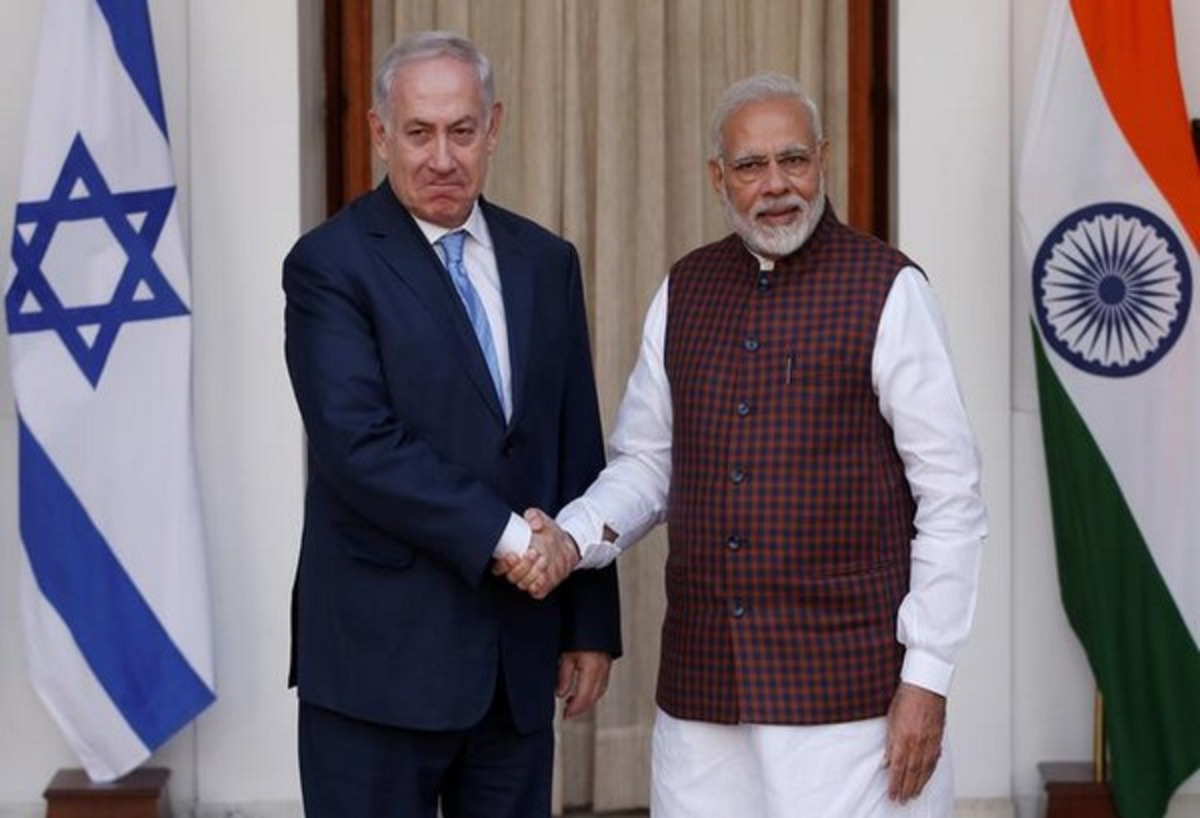
The mainstream media loves a savior narrative. It’s easy to sell. It’s comfortable. It’s also entirely wrong.
The current frenzy suggests that Israeli military strikes on Iran are somehow synchronized with Indian diplomatic calendars or that a visit from New Delhi acts as a starting pistol for regional escalation. This isn't just a reach; it is a fundamental misunderstanding of how sovereign survival works. Israel does not check the traffic in New Delhi before deciding to neutralize an existential threat. To suggest otherwise ignores the brutal, cold calculus of Middle Eastern realpolitik.
The Sovereignty Myth
The "lazy consensus" dictates that India’s growing proximity to Israel gives it a seat at the war-room table. It doesn't. When the Israeli Defense Forces (IDF) green-light a kinetic operation against Iranian assets, they are operating on a timeline dictated by intelligence windows and window-of-opportunity physics—not diplomatic courtesy.
Narendra Modi’s engagement with Israel is a masterclass in de-hyphenation. He has successfully separated India's relationship with Israel from its relationship with Palestine. That is a massive bureaucratic achievement for India, but it does not make India a kinetic stakeholder in the Levant.
Think about the mechanics. Israel’s security doctrine, particularly the Begin Doctrine, explicitly states that Israel will use preemptive strikes to prevent its enemies from acquiring weapons of mass destruction. Does anyone seriously believe a Prime Minister’s flight path from India influences that 40-year-old pillar of national defense?
Middle Power Delusions
Investors and analysts are currently asking: "How will India mediate this?"
They are asking the wrong question. India isn't trying to mediate. India is trying to insulate.
The real story isn't about Indian influence over Israeli missiles; it’s about Indian vulnerability to energy spikes. India imports over 80% of its crude oil. A hot war in the Persian Gulf doesn't offer India a chance to "lead" on the world stage—it offers a direct threat to its fiscal deficit.
We see the same patterns in financial markets. Traders look for "geopolitical alpha" in the wrong places. They watch televised handshakes when they should be watching the insurance premiums on tankers passing through the Strait of Hormuz.
The "Modi factor" in this specific conflict is a domestic PR win, not a foreign policy reality. If you are betting on Indian intervention to stabilize oil prices or halt Israeli strikes, you are essentially betting on a ghost.
The Intelligence Gap
The competitor's narrative relies on the idea that these events are "linked" because they happen sequentially. This is the post hoc ergo propter hoc fallacy at its most dangerous.
Military operations of this scale require months of planning. They require:
- Satellite reconnaissance of Iranian enrichment sites.
- Coordination with US Central Command (CENTCOM) to ensure deconfliction in the crowded airspace of Iraq and Syria.
- The deployment of F-35 "Adir" squadrons to specific readiness tiers.
To imply that these gears start turning because of a bilateral visit is an insult to military science. I have sat in rooms where regional security is briefed; the "optics" of a foreign leader’s visit are usually the last slide on the deck, if they appear at all.
The Real Power Play: The IMEC Pipe Dream
If you want to talk about India and Israel in the same breath, stop looking at missiles and start looking at the India-Middle East-Europe Economic Corridor (IMEC).
This is the actual point of friction. Iran’s primary goal is to remain the indispensable energy node of the region. An integrated rail and shipping link that bypasses traditional choke points and connects Mumbai to Haifa is a direct threat to Iranian and, by extension, Russian and Chinese interests in the region.
Israel’s strikes aren't a "response" to Indian diplomacy; they are the violent background noise of a region trying to decide if it wants to be a trade hub or a battlefield. India’s interest is 100% economic. When the missiles fly, India’s "influence" evaporates because India has no "hard power" projection in the Mediterranean.
Stop Asking About Mediation
"People Also Ask" if India can stop the war.
The answer is a brutal, unvarnished no.
Mediation requires two things:
- The ability to provide security guarantees (which India cannot do for Israel).
- The ability to exert crippling leverage (which India cannot do against Iran without destroying its own energy security).
India is playing a defensive game. It is a brilliant defensive game, but it is not a leadership role in the way the tabloids suggest. India is "multi-aligning," which is a fancy way of saying it is trying to stay friends with everyone so it doesn't get punched in the mouth when the bar fight starts.
The Hard Truth for Investors
If you are looking at the India-Israel relationship as a signal for market stability, you are reading the map upside down.
- Gold and Oil: These are the only two metrics that matter during an Israel-Iran flare-up.
- Defense Exports: This is where the real "India-Israel" story lives. India is the largest buyer of Israeli defense equipment. The relationship is a customer-vendor agreement with benefits, not a mutual defense pact.
- The Rupee: Watch the INR/USD pair. If the conflict escalates, the capital flight from emerging markets will hit India regardless of how many "strong" statements are issued from New Delhi.
The consensus view that India is a "bridge" is a feel-good story for Sunday supplements. In reality, India is a passenger on a very turbulent flight, praying the pilots (Tel Aviv and Tehran) don't decide to crash the plane.
The Logistics of Escalation
Let’s look at the math. A standard Israeli strike package involves dozens of aircraft, electronic warfare suites, and refuelers. The logistical footprint is massive. These operations are launched based on the "Lunar Window" (low light for stealth) or specific intelligence regarding Iranian drone shipments to proxies like Hezbollah.
None of those variables change because a foreign dignitary is in town. In fact, Israel often conducts strikes despite diplomatic visits to signal that its security is non-negotiable and independent of foreign opinion.
The idea that India is "involved" in the timing is a fantasy designed to boost national ego. It ignores the reality that Israel is a nuclear-armed state fighting a shadow war with a threshold nuclear power. In that arena, "friendship" is a secondary currency.
The Mirage of Influence
We have seen this before. Analysts claimed India’s relationship with Russia would end the Ukraine war. It didn't. They claimed India’s "special status" would prevent the Taliban from taking Kabul. It didn't.
There is a consistent pattern of overestimating India's ability to project "soft power" into "hard security" outcomes. India is a massive, growing economy. It is a vital partner for the future of tech and manufacturing. But it is not a regional sheriff.
Israel knows this. Iran knows this.
The missiles fell because the Israeli cabinet decided the cost of inaction exceeded the cost of a strike. They didn't check the Indian PM's itinerary. They checked the radar.
Stop looking for a "Master Plan" where there is only survival. Stop looking for "Global Leaders" where there are only regional combatants. The reality is far more chaotic, far less managed, and significantly more dangerous than the headlines want you to believe.
If you want to understand the Middle East, stop reading the travel logs of world leaders and start reading the cargo manifests of the tankers in the Persian Gulf. That’s where the real war is being fought, and that’s where India’s true interests lie. Everything else is just a distraction for the cameras.
Buy the rumors of peace, but hedge for the reality that no one is coming to save the day. Especially not with a handshake and a press release.