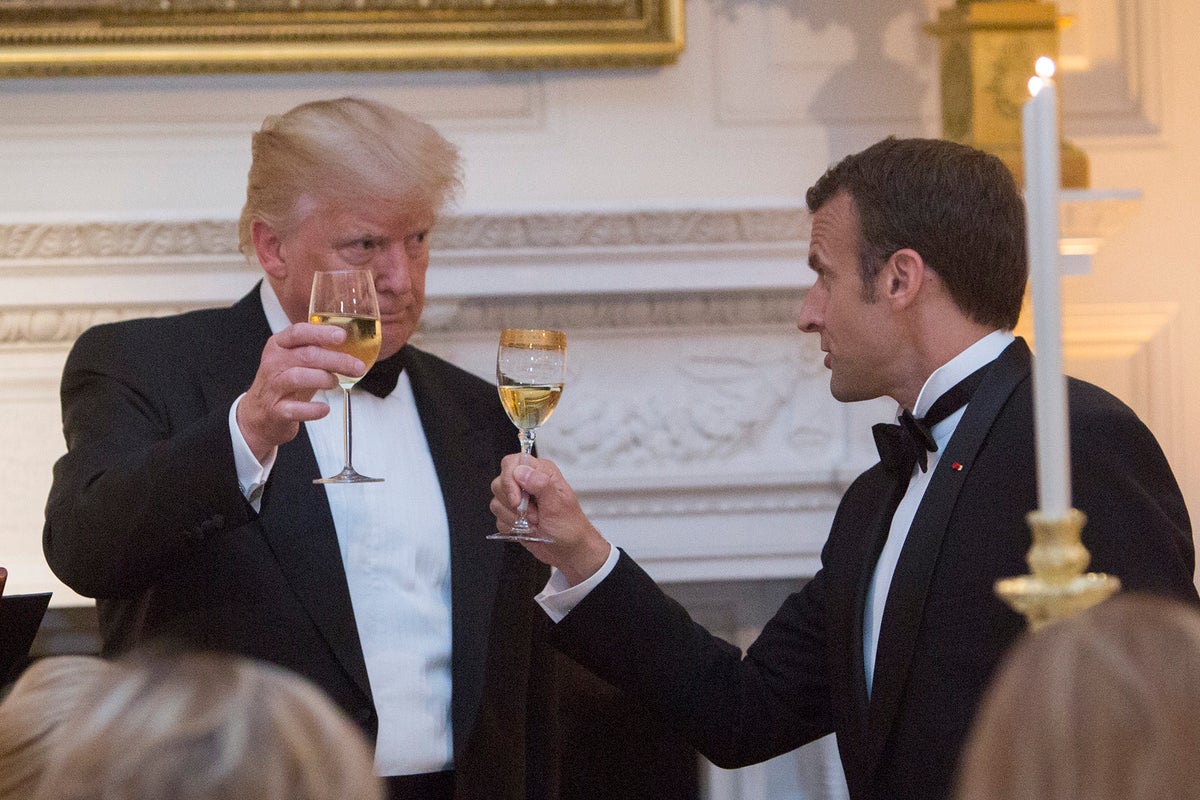
The erosion of the Franco-American diplomatic axis between 2017 and 2020 was not a byproduct of personality clashes, but a calculated collision of two distinct models of nationalist signaling. While mainstream media focused on the optics of handshakes and sunglasses, these interactions served as high-stakes stress tests for a shifting global order. The transition from a "bromance" to a state of strategic friction illustrates the failure of personal rapport to overcome fundamental divergences in trade protectionism, multilateralism, and the defense architecture of Europe.
The Taxonomy of Diplomatic Posturing
Diplomatic interactions operate on two simultaneous tracks: the private negotiation and the public performance. For Donald Trump, the performance was rooted in the logic of dominance and the disruption of established protocol to signal a "strength-first" foreign policy to a domestic base. For Emmanuel Macron, the strategy was one of containment through engagement. Macron attempted to position himself as the "Trump-whisperer," using hyper-masculine signaling—firm handshakes, direct eye contact, and aggressive hospitality—to gain leverage within the White House.
This framework failed because it overestimated the weight of personal vanity in structural decision-making. The breakdown of the relationship was the logical result of three specific pillars of friction:
- The Sovereignty Paradox: Macron’s vision for "European Sovereignty" (autonomie stratégique) stood in direct opposition to the "America First" withdrawal from global police duties.
- Fiscal Asymmetry: The dispute over Digital Service Taxes (DST) targeted American tech giants (GAFAM), creating a zero-sum conflict between French fiscal policy and U.S. economic interests.
- Institutional Skepticism: The diverging views on the relevance of NATO and the Paris Agreement turned symbolic gestures into markers of irreconcilable ideological divides.
The Cost Function of Symbolic Aggression
The "handshake wars" were more than memes; they were physical manifestations of a search for psychological dominance. In game theory terms, these interactions represented a repeated game where neither player was willing to adopt a submissive stance. When Macron mirrored Trump’s aggressive physical style, he successfully signaled that France would not be bullied, but he simultaneously closed the door on the "special relationship" status he sought to cultivate.
The cost of this signaling was a loss of diplomatic fluidity. By treating every meeting as a televised duel, both leaders incentivized their respective bureaucracies to prioritize optics over policy substance. The result was a stagnation of the G7 and G12 agendas. Instead of coordinating on Iranian nuclear containment or trade reform, the administrative energy of both nations was redirected toward managing the fallout of the latest public snub or social media provocation.
The Mechanism of the Digital Service Tax Escalation
The pivot point from cordiality to hostility was rooted in the French 3% tax on digital revenues. This was not a "lifestyle" disagreement but a fundamental clash of tax jurisdictions.
- French Objective: Capture value created by US-based platforms within French borders to fund a social safety net.
- US Response: Frame the tax as a discriminatory strike against American innovation, triggering Section 301 investigations and threats of 100% tariffs on French luxury goods (wine, cheese, handbags).
This specific economic friction proved that "beautiful sunglasses" and shared Bastille Day parades could not bridge the gap when trillions of dollars in market capitalization were at stake. The "Le Bromance" narrative died because the economic cost of the alliance became higher than the political benefit of the friendship.
Strategic Divergence in Global Governance
The dissolution of the relationship can be mapped through the abandonment of shared multilateral frameworks. The American withdrawal from the Joint Comprehensive Plan of Action (JCPOA) and the Paris Climate Accord stripped Macron of his primary objective: acting as the bridge between the US and the global community.
France’s strategy relied on the assumption that Trump could be charmed into staying within the liberal international order. When the US moved toward a "Transactional Realism" model—where alliances are judged solely by immediate trade balances and defense spending percentages—the French model of "Grandeur through Multilateralism" became obsolete. Macron’s 2019 comment that NATO was experiencing "brain death" was the final admission that the personal rapport had failed to secure American commitment to European security on French terms.
The Breakdown of the Narrative Arc
The evolution of the media coverage from "Handshake of the Century" to "Cold War in the Elysée" reflects a fundamental misunderstanding of power dynamics. Analysts often mistake the symptoms of a relationship (the optics) for the causes (the structural interests).
France and the United States moved from a period of tactical alignment to one of strategic competition for the future of the West. The US sought to redefine the West as a collection of sovereign states engaged in competitive bilateralism. France sought to redefine the West as a partnership between a unified Europe and a supportive, yet non-dominant, United States. These two visions cannot coexist within a single "bromance."
Variables of Diplomatic Decay
- The Iranian Variable: The US "Maximum Pressure" campaign conflicted with the French desire for regional stability and commercial access to Iranian markets.
- The Defense Variable: Trump’s demand for 2% GDP spending on defense by NATO members was met by Macron’s push for a European Army, which Washington viewed as a threat to US defense industry hegemony.
- The Trade Variable: The transition from globalism to regionalism meant that the US no longer valued the "European Project" as a stabilizer, but viewed the EU as a "trade foe" second only to China.
The Pivot Toward Strategic Autonomy
The ultimate outcome of the failed Trump-Macron experiment was the acceleration of French-led European integration. Realizing that the American security umbrella was now conditional and transactional, Macron shifted his focus away from Washington and toward Berlin. This move was not a choice but a systemic requirement for survival in a post-unipolar world.
The "Handshake Wars" were merely the opening skirmishes of a larger realignment. France’s subsequent pursuit of "third way" diplomacy—positioning Europe as a power center independent of both the US and China—is the direct legacy of the 2017–2020 friction. The personal failure of the leaders to sustain a partnership forced a structural evolution in how Europe perceives its own agency.
The strategic play for any middle power facing a volatile superpower is to prioritize institutional resilience over personal access. Macron’s attempt to bypass the State Department and deal directly with the President was a high-risk, low-reward maneuver that ultimately weakened the institutional bonds between the two nations. Future diplomatic strategies must account for the "Trump Effect"—the reality that personal rapport is a depreciating asset in a world governed by transactional nationalism.
Strategic planners should focus on building "Policy Moats"—deeply entrenched, technically complex agreements at the bureaucratic level that are resistant to the whims of executive personalities. The failure of the Franco-American bromance serves as a case study in why optics are a poor substitute for structural alignment. When the interests of two nations diverge on the fundamental level of trade and security, no amount of curated imagery can prevent the eventual decoupling. France's current trajectory toward a more assertive, independent role in the Indo-Pacific and in tech regulation is the logical conclusion of this decoupling, marking the end of an era where European leaders look to the White House for their primary strategic direction.


