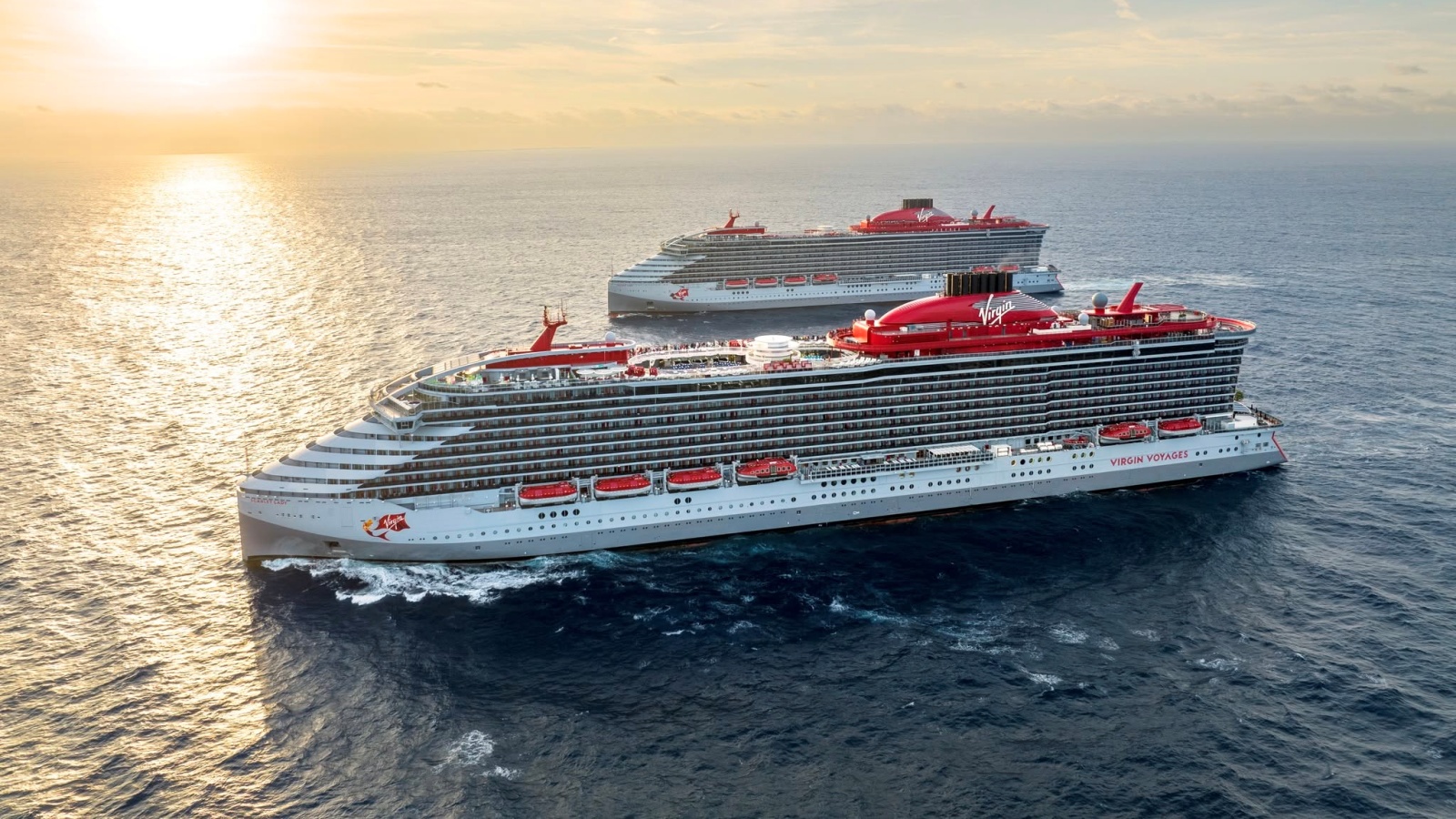
Sovereign borders operate under a complex optimization function balancing economic yield against internal political alignment. The decision by Turkish authorities to deny port entry to the Scarlet Lady, a Virgin Voyages vessel chartered by Atlantis Events carrying approximately 1,900 international LGBTQ+ passengers, serves as a clear case study of this trade-off. This analysis deconstructs the structural, regulatory, and financial mechanisms driving the exclusion, demonstrating how ideological signaling can disrupt the standard economics of international maritime tourism.
The Regulatory Framework of Maritime Denial
International maritime access is governed by a tension between global maritime agreements and local enforcement mechanisms. While the United Nations Convention on the Law of the Sea (UNCLOS) establishes the right of innocent passage through territorial waters, it does not guarantee an absolute right of port entry for foreign vessels. Sovereign nations retain final jurisdiction over their internal waters and berthing infrastructure.
Turkish authorities, specifically the provincial leadership in Aydın and governing bodies in Istanbul, exercised this sovereign discretion by canceling scheduled stops in Kuşadası and Istanbul. The operational mechanism utilized was the invocation of public order and public morality clauses embedded within municipal and national administrative laws. These frameworks allow the state to rescind berthing permits if a commercial activity is deemed incompatible with societal structures or domestic regulatory expectations.
The chain of events was accelerated by a domestic media cycle and subsequent administrative enforcement. A localized social media promotion by an established Istanbul hospitality venue, inviting the cruise passengers to a specific event, was categorized by domestic media outlets as a coordinated public disturbance. The administrative response was dual-pronged:
- The local commercial establishment was shut down by district regulators citing regulatory violations.
- The port authorities revoked the berthing privileges of the incoming vessel to prevent the influx of the demographic group.
The Financial Implication Vector
The disruption of a high-capacity cruise itinerary creates immediate financial recalculations across multiple sectors of the maritime supply chain. The economic impact can be modeled through three primary cost centers: port operator losses, localized tourism revenue deficits, and cruise line operational friction.
[Port Operators: Loss of Tariff/Mooring Fees]
                      │
                      ▼
[Local Merchants: Zero Footfall Capture from ~1,900 Passengers]
                      │
                      ▼
[Cruise Operator: Fuel Burn & Port Rebooking Fees (Egypt/Greece)]
Port Operator Revenue Deficits
Ports operate as high-fixed-cost infrastructure assets that maximize profitability via high utilization rates and consistent berthing fees. The cancellation of a 1,900-passenger vessel deprives the port authority of direct tariff streams, including passenger handling fees, mooring charges, security fees, and fuel/water provisioning margins.
Localized Tourism Yield Destruction
Cruise tourists represent a highly concentrated spending demographic. The loss of approximately 1,900 passengers—primarily originating from high-income regions including the United States, the United Kingdom, Canada, and Australia—directly reduces the immediate revenue of local tour operators, historical site administrations, high-end retail venues, and hospitality businesses in Kuşadası and Istanbul. The failure to capture this footfall represents a permanent loss of daily economic yield.
Cruise Line Operational Friction
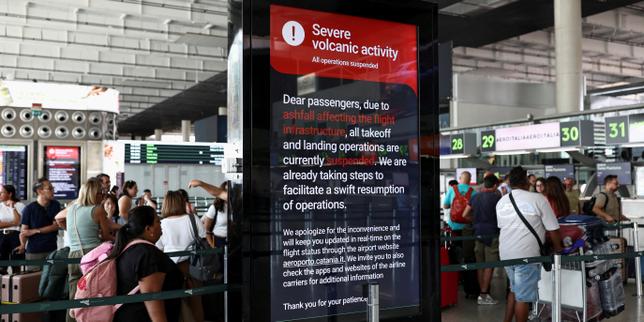
For the vessel operator and charter agency, the denial of entry introduces sudden logistical overhead. The itinerary required a rapid restructuring, diverting the vessel to alternative Mediterranean destinations, specifically Cairo and Crete. This diversion introduces a baseline optimization challenge:
- Increased fuel consumption metrics due to unplanned route extensions.
- Emergency port-slot acquisition fees at short notice.
- The administrative burden of modifying passenger visa and documentation requirements mid-voyage.
Ideological Alignment Over Economic Optimization
The decision to forego measurable tourism revenue highlights a distinct hierarchy of priorities within the host nation’s governance model. The prioritization of domestic political signaling over external economic capital can be understood through a classic risk-reward framework.
Political Return (Consolidation of Conservative Base)
                   >
Economic Return (Immediate Tourism Revenue Inflow)
The state’s calculations determine that the domestic political utility of enforcing conservative family values outweighs the marginal economic value generated by a single luxury vessel. This prioritization is part of a broader, documented shift toward restrictive public policies regarding sexual minorities within the jurisdiction. For over a decade, national and municipal authorities have consistently restricted public assemblies, such as pride marches, utilizing public safety and social cohesion arguments. By extending these internal restrictions to international maritime arrivals, the state signals ideological consistency to its domestic constituency, establishing a firm boundary where economic pragmatism ends and state-sanctioned social policy begins.
Operational Redundancy Protocols for Niche Cruise Operators
The incident exposes a critical vulnerability in specialized or affinity-based cruise operations. When an itinerary relies on jurisdictions with volatile regulatory environments regarding social issues, the risk profile of the entire voyage increases.
To mitigate these geopolitical dependencies, operators must develop more robust structural contingencies. One primary strategy is geopolitical diversification, which involves designing routes with built-in port redundancies in highly stable, legally protected regulatory environments to ensure that alternative berths can be secured with minimal distance variations.
Operators must also establish dynamic risk-monitoring protocols, tracking local media coverage and regulatory shifts in target ports to identify potential entry denials before the vessel departs. Finally, charter contracts must include comprehensive force majeure and sovereign interference clauses to distribute the financial liabilities of sudden port closures more equitably between the charterer, the vessel owner, and local port agencies.
Strategic Forecast for Eastern Mediterranean Routing
The enforcement of moral-value clauses against international maritime arrivals introduces a precedent that will likely alter routing decisions in the Eastern Mediterranean cruise sector. Specialty travel providers and luxury cruise lines targeting high-net-worth Western demographics will increasingly view certain ports not merely as geographic assets, but as regulatory liabilities.
The immediate beneficiary of this structural shift is the regulatory environment of neighboring jurisdictions. Ports in Greece and Cyprus, operating under harmonized European Union non-discrimination legal frameworks, offer absolute operational predictability for diverse passenger demographics. Over a multi-year horizon, a reallocation of capital is highly probable. Major cruise lines will likely reduce their exposure to ports governed by unpredictable social regulations, shifting their primary berthing allocations toward regions where economic transactions are insulated from ideological intervention. The long-term consequence for restrictive jurisdictions will be an erosion of their market share within the premium, international charter tourism segment.