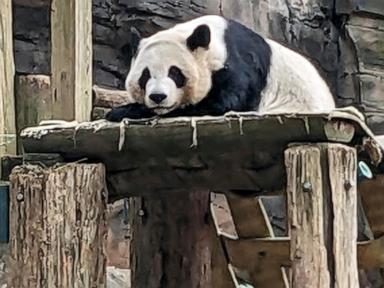
The resumption of giant panda loans to the Atlanta Zoo signifies more than a biological transfer; it represents a calculated deployment of a scarce diplomatic asset within a high-stakes geopolitical framework. While public perception focuses on conservation and "cuteness," a structural analysis reveals a complex mechanism of sovereign risk management, resource scarcity, and bilateral signaling. China’s decision to send a new pair of pandas to Atlanta—following the 2023 expiration of previous agreements—functions as a strategic "thaw" indicator in U.S.-China relations, utilizing a biological monopoly to facilitate high-level communication channels that bypass traditional friction points.
The Sovereign Asset Framework
To understand the return of pandas to Georgia, one must first categorize the Ailuropoda melanoleuca as a non-fungible diplomatic asset. Unlike standard cultural exchanges, "Panda Diplomacy" operates under a strict leasehold model where the Chinese government retains absolute ownership. This creates a unique legal and economic structure defined by three specific variables:
- Sovereign Ownership Retention: Every giant panda currently residing outside of China, including those born in foreign zoos, remains the property of the People's Republic of China (PRC). This ensures a permanent "reversionary interest," allowing the donor nation to exert leverage by choosing not to renew contracts.
- The Rental Premium: Host institutions typically pay an annual fee ranging from $500,000 to $1 million per pair. This capital is earmarked for the China Wildlife Conservation Association (CWCA) for habitat preservation, creating a self-sustaining funding loop that converts foreign capital into domestic environmental infrastructure.
- Biological Scarcity Management: By strictly controlling the global population and breeding rights, China maintains a monopoly on the supply side, ensuring that the presence of a panda remains a high-status signal for the host city and nation.
Strategic Recalibration of the 2023-2024 Cycle
The departure of pandas from several U.S. zoos in 2023—most notably from the National Zoo in Washington D.C.—was interpreted by many analysts as a "Panda Exit," signaling a cooling of relations. The recent reversal, beginning with the San Diego Zoo and now extending to Atlanta, indicates a shift in the Chinese Ministry of Foreign Affairs' tactical playbook.
This recalibration serves a specific function: Conflict De-escalation Signaling. When traditional trade or military dialogues stall, the renewal of biological cooperation acts as a low-risk olive branch. It allows both nations to demonstrate a capacity for cooperation on "neutral" ground (conservation) while the broader structural competition continues. The Atlanta agreement is particularly significant because it bridges the gap between the expiration of the old guard and the introduction of a new generation of diplomatic "envoys," ensuring no long-term vacuum in this specific soft-power channel.
The Economic Burden of Conservation Compliance
From an operational perspective, the Atlanta Zoo faces a high-cost function that extends far beyond the annual lease fee. The infrastructure required to maintain a panda enclosure is specialized and capital-intensive.
- Dietary Logistics: A single panda consumes between 26 to 84 pounds of bamboo daily. Establishing a reliable, local supply chain that meets specific nutritional and pesticide-free standards is a major logistical hurdle.
- Specialized Veterinary Labor: Agreements often mandate the presence of Chinese technicians or continuous knowledge transfer with the Chengdu Research Base of Giant Panda Breeding. This creates a recurring operational expense for personnel and international travel.
- Insurance and Risk Mitigation: Given the asset's sovereign value, insurance premiums for giant pandas are among the highest in the zoological world. A "loss of asset" (death) during a loan period involves not just financial penalties but potential diplomatic fallout.
Despite these costs, the ROI for the host zoo is calculated through increased foot traffic, membership sales, and corporate sponsorships. The "Panda Effect" can increase zoo attendance by an estimated 20% to 40% in the first year of a new arrival, providing the liquidity necessary to fund other, less popular conservation programs.
The Scientific Validation Mask
While the primary driver is political, the mechanism used to justify the exchange is scientific collaboration. The Atlanta-China partnership focuses on:
- Genetic Diversity Mapping: Exchanging data on breeding successes (and failures) to optimize the global captive population.
- Behavioral Ecology: Studying the adaptation of pandas to varying climates—Atlanta’s humidity vs. the temperate forests of Sichuan—to predict how wild populations might react to climate shifts.
- Disease Prevention: Developing vaccines for common panda ailments, which are then applied to the wild population in the Minshan and Qionglai mountains.
By framing the loan as a "research loan," both parties maintain a level of professional distance from the political implications. This creates a "Scientific Buffer Zone" where experts can continue to collaborate even when their respective governments are engaged in trade wars or maritime disputes.
Geopolitical Signaling and Geographic Distribution
The choice of Atlanta is not arbitrary. In the geography of U.S. influence, Atlanta serves as a major logistical and corporate hub. Maintaining a panda presence in the American Southeast allows the PRC to maintain cultural visibility in a region that is home to several Fortune 500 headquarters and a major international airport (Hartsfield-Jackson).
This geographic distribution strategy ensures that China's soft power is not concentrated solely in political hubs like Washington D.C. or cultural centers like New York or Los Angeles. By placing assets in San Diego (West Coast) and Atlanta (South), the PRC achieves a broader "Cultural Saturation" across the American public.
The Risk of Biological Dependency
There is a latent risk for host institutions in this model: Geopolitical Vulnerability. If the relationship between the U.S. and China were to deteriorate sharply, the pandas become "biological hostages." The sudden recall of these animals would result in massive sunk costs for the zoos, which have built multi-million dollar habitats specifically tailored to a species they do not own.
The Atlanta Zoo’s decision to re-engage suggests a calculated gamble that the diplomatic utility of the panda is currently high enough to ensure a stable 10-year loan period. However, the history of the last three years proves that these agreements are subject to the whims of the central government in Beijing, making the panda enclosure one of the most volatile "real estate" assets in any major American city.
Quantifying the "Panda Diplomacy" Lifecycle
The lifecycle of these agreements follows a predictable decay and renewal pattern.
- Year 0-2 (The Honeymoon): High attendance, heavy media coverage, and peak diplomatic utility.
- Year 3-7 (The Plateau): Normalized operations and consistent revenue, though the novelty fades.
- Year 8-10 (The Renewal Pressure): Negotiations begin for contract extension. This is the period of highest leverage for the PRC, as the host zoo is desperate to avoid the public relations nightmare of "losing the pandas."
The Atlanta deal fits into the "Reset Phase" of this cycle. By introducing a new pair now, China resets the clock and ensures another decade of influence in the region.
The Strategic Path Forward
The return of giant pandas to Atlanta should be viewed as a tactical maneuver in a broader strategy of "Managed Competition." For the United States, it provides a visible signal of normalcy and a boost to local economies. For China, it reinforces its status as the sole provider of a global cultural icon and ensures its environmental initiatives receive Western funding and scientific validation.
Organizations and municipalities watching this development must recognize that panda loans are leading indicators of bilateral "temperature." When pandas arrive, it signifies that both nations have agreed to preserve at least one area of cooperative stability. When they leave without replacement, it serves as a warning of structural decoupling. The Atlanta agreement confirms that, for now, the strategy of "Engagement through Conservation" remains a preferred tool for managing the complexities of the U.S.-China relationship. Investors and policy analysts should monitor the specific language of the final memorandum of understanding (MoU), as any shift in the "Research Fee" or "Repatriation Clauses" will signal the next phase of China’s resource-leveraged diplomacy.