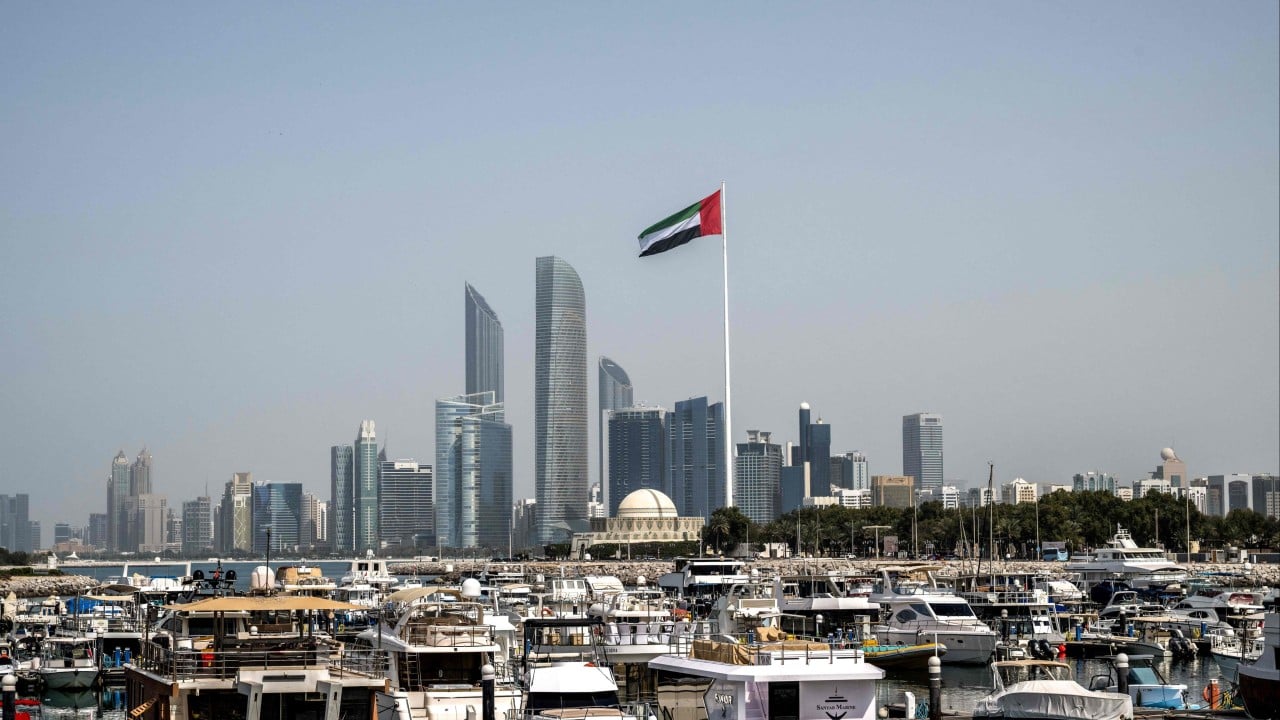
Geography cannot be rewritten. For the oil-rich monarchies of the Persian Gulf, a heavily militarized neighborhood and narrow maritime choke points mean national survival hinges entirely on defense capabilities. For decades, the strategy was simple: buy top-tier American and European hardware to guarantee Western protection. But that reliance has become a strategic liability. Total dependence on foreign suppliers leaves these nations vulnerable to supply chain freezes, political shifts in Washington, and the sudden realization that conventional Western weapon systems are poorly optimized for the cheap, asymmetric drone warfare defining modern conflicts. True defense diversification is no longer an intellectual exercise discussed at economic forums; it is a frantic race against time.
The Illusion of the Western Shield
For a generation, the Gulf security model resembled a premium subscription service. Massive petrodollar surpluses flowed into Washington, London, and Paris. In return, state-of-the-art fighter jets, missile batteries, and armored vehicles flowed into the region.
This transactional arrangement created an illusion of total security. It assumed that Western political will would always align with Gulf security priorities, and that Western defense industrial bases could keep pace with an escalating threat environment. Both assumptions are now crumbling.
The war in Ukraine exposed severe vulnerabilities in Western manufacturing capacity. European and American factories are struggling to produce artillery shells and air defense interceptors fast enough to fulfill current commitments, let alone build up reserves for export clients. A Gulf state facing a prolonged crisis today cannot guarantee that its ammunition reorders will be filled on short notice.
Political volatility compounded the industrial bottleneck. When domestic political pressure in Washington or Berlin can freeze spare parts shipments or block missile sales mid-conflict, relying on a single bloc of suppliers becomes a massive gamble. Gulf capitals watched Western nations restrict arms sales over humanitarian concerns and realized that foreign procurement contracts come with invisible, highly restrictive strings attached.
The Shift to Strategic Autonomy
To mitigate these vulnerabilities, countries like the United Arab Emirates and Saudi Arabia are aggressively rewiring their procurement pipelines. They are shifting away from a binary choice between East and West toward a multi-aligned strategy.
+------------------+-----------------------------+-----------------------------+
| Procurement Era  | Primary Suppliers           | Core Strategic Vulnerability|
+------------------+-----------------------------+-----------------------------+
| Legacy Model     | United States, UK, France   | Political vetoes, supply    |
|                  |                             | chain bottlenecks           |
+------------------+-----------------------------+-----------------------------+
| Diversified Era  | US, South Korea, Turkey,    | Integration complexity,     |
|                  | China, Domestic Production  | interoperability friction   |
+------------------+-----------------------------+-----------------------------+
South Korea emerged as a primary beneficiary of this pivot. Seoul offers highly sophisticated hardware, such as the Cheongung-II medium-range surface-to-air missile system, with a crucial selling point: fewer political restrictions and a willingness to transfer technology. Turkey won massive contracts for its combat-proven drones, giving Gulf militaries access to effective airborne surveillance and strike capabilities without navigating the bureaucratic labyrinth of US export controls.
By mixing suppliers, these states gain significant leverage. If one capital threatens an arms embargo, another stands ready to fill the void. This strategy also forces traditional Western suppliers to reconsider their restrictive export frameworks, lest they lose lucrative, long-term market share to more pragmatic competitors.
The Internalization Mandate
Buying from a broader menu of nations is only a temporary fix. The ultimate goal is localized production.
Through entities like the Saudi Arabian Military Industries and the UAE's Edge Group, billions are being funneled into building a domestic defense ecosystem. The objective is to stop buying finished products off the shelf and instead demand joint-venture agreements where assembly, maintenance, and intellectual property development happen on Gulf soil.
Building a domestic defense industry from scratch requires more than capital. It demands a highly skilled workforce, local supply chains for specialized components, and decades of engineering trial and error. To fast-track this process, Gulf state-backed firms are acquiring stakes in struggling foreign defense contractors, effectively buying the engineering expertise they lack at home.
The focus is not on replicating heavy Western armor or complex fourth-generation fighter jets. Instead, local industries are prioritizing areas where they can iterate quickly: unmanned aerial vehicles, electronic warfare suites, smart munitions, and cyber defense.
The Integration Nightmare
This aggressive diversification policy introduces an immense operational headache that military commanders are now forced to untangle. Mixing American, European, Chinese, and South Korean systems creates an interoperability nightmare.
Modern warfare relies on networked systems. A radar station must communicate instantly with a missile battery, which must cross-reference data with an airborne surveillance platform. When these assets are built on entirely different software architectures, encrypted communication protocols, and data standards, making them talk to each other is incredibly difficult.
Western manufacturers guard their source codes jealously, routinely refusing to let foreign engineers integrate Chinese radars or Turkish drones into their proprietary networks. Consequently, militaries risk operating isolated islands of capability rather than a unified, cohesive defense network.
To bridge these gaps, Gulf states are forced to invest heavily in middleware—custom software solutions designed to translate data between disparate systems. This adds an extra layer of complexity, cost, and potential failure points to their command structures.
Asymmetric Realities
The threat profile in the region changed dramatically over the last ten years. Conventional militaries designed around heavy armor and expensive air superiority are poorly matched against cheap, asymmetric tactics.
A sophisticated, multi-million-dollar air defense missile used to down a ten-thousand-dollar loitering munition is a losing economic proposition. The math favors the attacker. The attack on Saudi oil infrastructure in 2019 demonstrated that even the most expensive Western air defense radars can miss low-flying, slow-moving drone swarms and cruise missiles.
This stark reality accelerated the drive toward technological diversification. Chinese counter-drone lasers and electronic jamming systems are being evaluated and deployed because they offer a much lower cost-per-engagement than standard Western interceptors. Gulf states realize they cannot afford to go broke defending their airspace against cheap mass-produced threats.
Navigating the Washington Backlash
The shift toward non-Western defense partners has caused friction with the United States, which remains the primary security guarantor for the region. Washington views the adoption of Chinese and Russian defense technology as a direct threat to its strategic influence and technological security.
The friction is tangible. The UAE’s pursuit of Chinese telecommunications infrastructure and defense hardware previously stalled its acquisition of the American F-35 fighter jet. Washington fears that Chinese signals intelligence could exploit local networks to harvest data on sensitive US-made platforms operating in the same airspace.
Gulf leaders are holding their ground, refusing to accept the premise that their foreign policy must be entirely exclusionary. They argue that if Washington cannot guarantee timely deliveries and unconstrained technology transfers, they have a sovereign duty to look elsewhere.
This creates a delicate diplomatic balancing act. Gulf capitals must push the boundaries of diversification to secure their autonomy, but stop just short of triggering severe US sanctions or a complete withdrawal of American forces from regional bases.
The Long War for Supply Security
Diversification is a messy, expensive, and politically risky endeavor. It slows down immediate procurement, complicates military logistics, and strains historic alliances. Yet the alternative—total dependence on distant capitals that are increasingly distracted by internal polarization and competing global conflicts—is deemed far more dangerous.
Success will not be measured by the variety of foreign flags painted on the side of military hardware. It will be determined by whether these states can successfully convert foreign partnerships into domestic capability, ensuring that if global supply chains fracture tomorrow, their defense networks remain online, integrated, and fully stocked.


