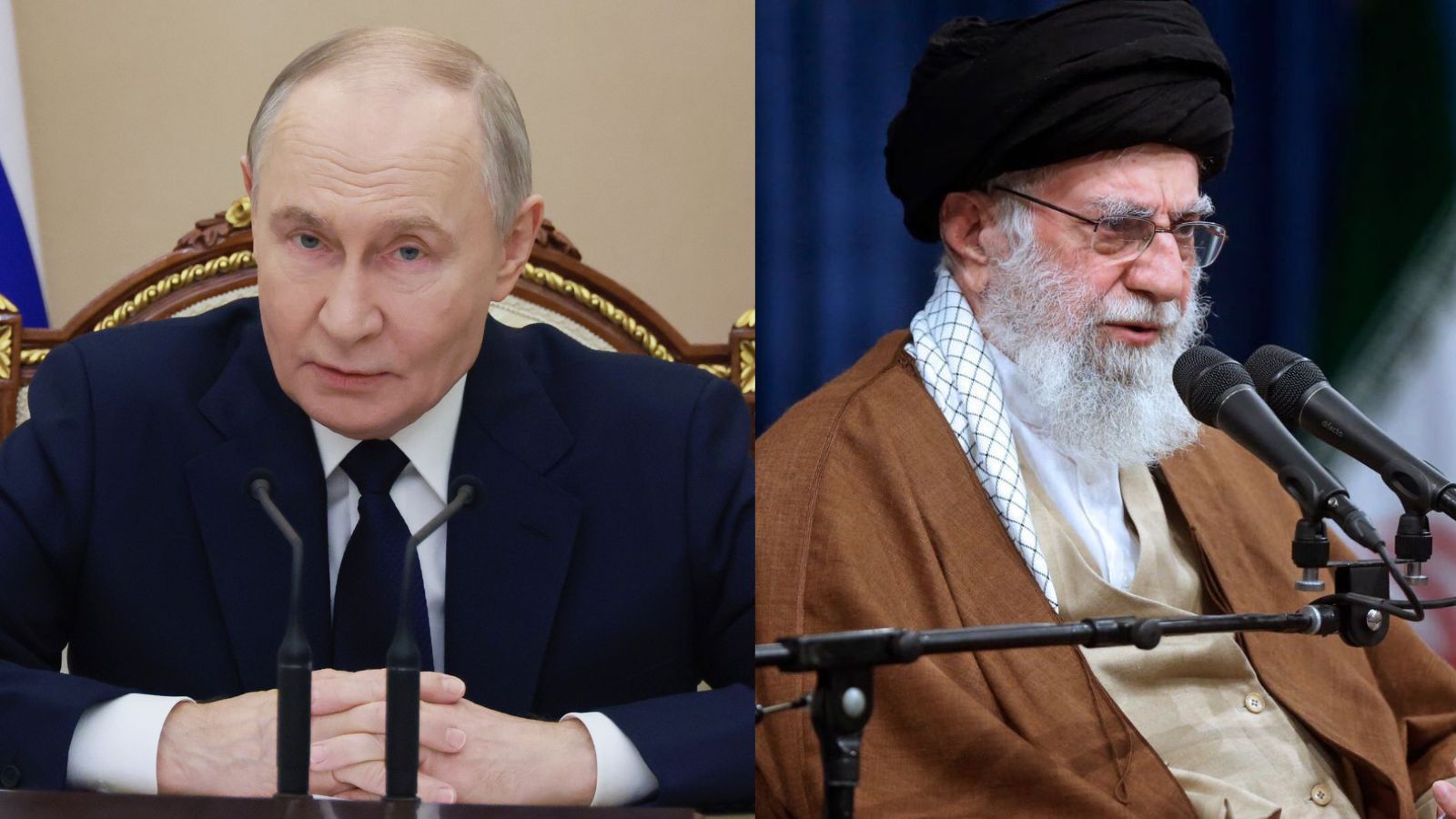
The headlines are screaming about a "cynical murder" and a "breach of international law." Vladimir Putin is clutching his pearls over the demise of an Iranian leader, and the media is dutifully transcribing the outrage as if it were a genuine diplomatic crisis. They are missing the point. This isn't about morality, justice, or even the "sanctity of sovereignty." It is a cold, calculated performance in a marketplace of manufactured instability.
When the Kremlin issues a statement condemning US-Israeli strikes, they aren't defending an ally. They are protecting a supply chain. When the Ayatollah's inner circle vows a "crushing response," they aren't seeking justice. They are managing domestic brand equity. To understand the reality behind the "cynical murder" narrative, you have to stop looking at the blood and start looking at the balance sheets.
The Myth of the "Rogue State" Alliance
The mainstream press loves the "Axis of Evil" trope because it’s easy to sell. It paints a picture of ideologically aligned tyrants holding hands in a dark room. The reality is far more transactional and, frankly, far more fragile.
Russia’s defense of Iran is not born of shared values. It is born of a desperate need for Shahed drones and a desire to keep the United States bogged down in a Middle Eastern quagmire. Every hour the Pentagon spends worrying about Tehran is an hour they aren't focusing on the front lines in Donetsk. Putin’s "condemnation" is a cheap diplomatic asset. It costs him nothing to say and earns him significant leverage with a regional power that provides him with sanctioned hardware.
If you believe this is about a "cynical murder," you’ve been sold a narrative designed for children. In the high-stakes game of global hegemony, there are no murders—only removals of tactical obstacles.
Sovereignty is a Currency, Not a Principle
We hear a lot about "violations of international law" whenever a precision strike hits a high-value target in a sovereign nation. Let's be brutally honest: International law is a suggestion for the weak and a tool for the strong.
Russia invokes international law only when it serves to restrict its competitors. This is the same administration that redrew the borders of Georgia and Ukraine. Their sudden concern for the "territorial integrity" of Iranian-linked sites is a masterclass in hypocrisy. But don't mistake that hypocrisy for a mistake. It is a feature of the system.
In this sphere, sovereignty is a currency. You spend it when you have the power to ignore it, and you hoard it when you want to prevent others from acting. The "lazy consensus" suggests that these strikes destabilize the region. I would argue they simply reveal the instability that was already there, hidden behind the thin veil of diplomatic decorum.
The Economic Reality of Permanent Conflict
Why does the rhetoric stay so high while the actual direct confrontation remains (mostly) calibrated? Because the "Permanent Conflict" model is incredibly profitable for the ruling elites in Moscow, Tehran, and even parts of the Western defense establishment.
- Energy Premiums: Every time a missile flies near the Strait of Hormuz, the "fear premium" on a barrel of oil ticks upward. Russia, a petrostate currently under heavy sanctions, benefits directly from every cent that the price of Brent crude rises.
- Defense Contracts: Instability is the best salesman for anti-missile systems, drones, and electronic warfare suites.
- Domestic Distraction: For Khamenei, a foreign martyr is a godsend. It provides a focal point for nationalistic fervor that masks internal economic collapse and social unrest.
I have seen analysts spend years trying to "solve" the Middle East. They fail because they assume the players want a solution. They don't. They want a managed state of tension that justifies their grip on power. Putin's condemnation is just the latest marketing copy for this ongoing project.
The "Cynical Murder" Fallacy
The competitor article frames the killing as a "cynical murder." This terminology is designed to trigger an emotional response rather than an analytical one. In the world of intelligence and kinetic operations, "cynical" is irrelevant.
Consider the mechanics of the strike itself. It requires a massive intelligence apparatus, localized assets, and a level of technical precision that most nations can only dream of. The real story isn't that a leader was killed; it’s that the Iranian security state was so thoroughly compromised that the strike was possible in the first place.
Putin knows this. His condemnation isn't just for the cameras; it's an expression of anxiety. If the US and Israel can reach out and touch a high-level target in a heavily fortified environment, the message to every other authoritarian leader is clear: Your bunkers are not as deep as you think.
Re-evaluating the "Instability" Narrative
People also ask: "Will this lead to World War III?"
The short answer is no. World wars are expensive, and none of the current players can afford one. What we are seeing is the transition to Liquid Warfare. It’s a state where borders are fluid, targets are specific, and the "war" is fought through proxies, cyber-attacks, and public relations.
Russia’s role in this is to act as the "Global Opposition." By siding with Iran, Putin positions himself as the leader of the non-Western world. He isn't trying to win a moral argument; he's trying to win the "Global South" market share. He wants to show every nation currently annoyed with US hegemony that Russia is the only power willing to stand up and call a strike a "murder" on the world stage.
The Hard Truth for Investors and Policy Makers
If you are waiting for a return to "stability," you are going to lose money. Stability is a 20th-century relic. The 21st century is defined by high-frequency geopolitical shifts.
- Stop looking at official statements: They are scripted for domestic consumption.
- Watch the cargo ships: Follow where the oil and the microchips are moving. That tells you the true state of the alliance.
- Ignore the "Law": Watch the "Capability." If a country has the capability to strike without consequence, they will do it. Everything else is just noise.
The "cynical murder" isn't a tragedy or a turning point. It is a data point. It confirms that the old rules of engagement are dead and have been replaced by a brutal, transparent pursuit of tactical advantage.
Dismantling the Victimhood Complex
The most dangerous part of the current narrative is the portrayal of Iran as a passive victim of "aggression." This ignores decades of IRGC-led proxy wars across Lebanon, Syria, Iraq, and Yemen.
Imagine a scenario where a corporation spent ten years sabotaging its competitors' factories, only to cry "unfair business practices" when one of its own warehouses was targeted. That is the Iranian playbook. Putin is simply acting as the defense attorney for a client he knows is guilty, because he's using the same legal loopholes himself.
The "nuance" the mainstream media misses is that everyone involved is a willing participant in this theater. They all need the "Great Satan" or the "Imperialist Aggressor" to keep their own populations in check. Without the external threat, the internal failures of these regimes would be undeniable.
The Professional Path Forward
The real disruption here isn't the strike; it's the realization that the "international community" is a ghost. We are living in a post-consensus world. If you are a business leader or a geopolitical strategist, your strategy cannot be built on the hope that international norms will be restored. They won't.
You must build resilience into your operations that assumes:
- State-sponsored kinetic actions will continue to happen in high-traffic zones.
- Diplomatic rhetoric will become increasingly detached from reality.
- Alliances will be based on immediate hardware needs rather than long-term ideological alignment.
The "cynical murder" headline is a distraction. It invites you to argue about ethics while the real power shift is happening in the shadows of supply chain logistics and energy dominance.
Don't be the person arguing about the referee's call. Be the person who realizes the game has changed entirely. Stop reading the scripts and start watching the players.
The era of "condemnations" is over; the era of consequences has arrived. If you’re still shocked by the "cynicism" of global politics, you aren't paying attention—you're just an audience member in someone else’s play.
Get off the bleachers. The theater is on fire, and the exits are being sold to the highest bidder.