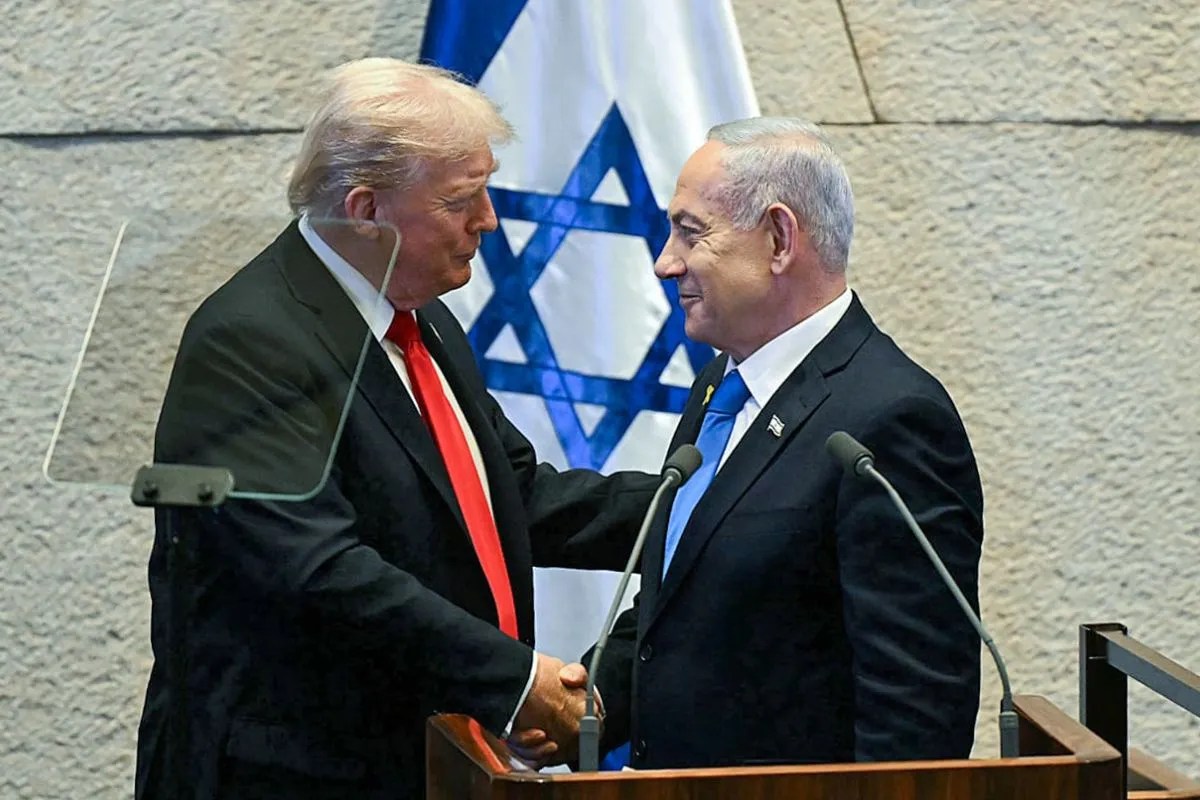
The convergence of interests between Washington and Tel Aviv, long assumed to be structurally concrete, has fractured under the pressure of divergent electoral timelines and clashing strategic objectives. While public rhetoric frequently emphasizes a unified front, senior advisers within the Trump administration increasingly view Israeli Prime Minister Benjamin Netanyahu not as a predictable asset, but as an volatile variable capable of destabilizing American macro-strategy.
This growing skepticism among Donald Trump’s inner circle is not driven by ideological abandonment, but by cold operational friction. The administration's focus centers on executing a definitive diplomatic exit from regional hostility to stabilize global energy markets and lower domestic inflation. Netanyahu’s survival strategy requires an extended security posture to appease a domestic electorate ahead of the upcoming legislative elections. Understanding this friction requires breaking down the core structural misalignments currently governing the bilateral relationship.
The Chronological Disconnect: Midterms Versus Survival
The primary driver of the strategic rift is the direct conflict between two distinct electoral timelines. The American executive branch operates under the immediate pressure of the upcoming midterm elections. High domestic energy prices and prolonged foreign entanglements represent clear liabilities for the ruling party. The administration's primary operational objective is the finalization of the memorandum of understanding with Iran, an agreement designed to guarantee maritime security in the Strait of Hormuz and permanently reduce the risk premium on global oil.
Netanyahu faces a entirely different calculation. Facing a general election, his political viability depends on presenting a decisive victory over regional adversaries. Winding down operations prematurely, before achieving the total degradation of Hezbollah or definitive regime weakness in Tehran, exposes him to severe domestic vulnerability.
This creates an inherent systemic conflict:
- The American objective demands immediate de-escalation to secure economic predictability.
- The Israeli objective requires prolonged, high-intensity operations to justify the security doctrine of the current coalition.
As a result, Trump’s strategic team views Netanyahu’s military choices as direct interference with American domestic economic goals.
The Divergent Cost Functions of Conflict
The strategic disagreement regarding Iran highlights a fundamental breakdown in shared risk assessment. When the military campaign launched, both leaderships shared an immediate tactical objective: degrading hostile infrastructure. However, the conceptual framework for the end-state was never aligned.
[US Objective: Rapid Escalation -> Structural Concessions -> Rapid Diplomatic Exit]
                        vs.
[Israeli Objective: Sustained Conflict -> Systemic Degradation -> Regional Re-alignment]
The Trump administration views military escalation strictly as a tool to force structural concessions before transitioning to diplomacy. The objective was a fast, high-impact demonstration of force to compel Tehran to sign a strict nuclear limitation agreement, leaving broader regional governance to local actors. Trump's close advisers believe this goal was effectively met following initial structural damage to defensive networks.
Tel Aviv views the conflict through an existential, long-term framework. For Netanyahu, a partial diplomatic settlement that leaves the underlying political architecture of the adversary intact is a failure. The Israeli political leadership seeks total systemic degradation.
The structural flaw in this approach, according to Washington planners, is the absence of an achievable exit mechanism. Trump’s advisers argue that Netanyahu lacks the economic or conventional military capacity to sustain an open-ended multi-front war without an permanent American security guarantee—a commitment that directly violates the administration’s core policy of avoiding extended foreign stabilization campaigns.
Unilateralism as a Systemic Bottleneck
The operational friction between the two capitals expanded significantly due to repeated unilateral actions by the Israeli defense apparatus. The administration’s strategic planning relies on strict predictability. When Israel executed uncoordinated strikes against critical infrastructure, it disrupted delicate, back-channel diplomatic negotiations.
White House advisers view these actions as a deliberate attempt by Netanyahu to force the United States into a broader conflict. By creating tactical facts on the ground, Tel Aviv repeatedly altered the escalation matrix, forcing Washington to deploy defensive assets to protect a client state from the predictable retaliation.
The internal assessment among Trump’s chief strategists is that Netanyahu has repeatedly miscalculated the limits of American patience. The public acknowledgment of tense communications—wherein the executive branch asserted absolute authority over the strategic direction of the alliance—signals that the administration no longer tolerates tactical surprises that threaten its broader diplomatic agenda.
The Strategic Realignment of Gulf Security
A secondary structural bottleneck for Netanyahu is the changing stance of the Gulf states. The Trump administration’s regional framework relies heavily on integrating economic interests between Washington, Riyadh, Doha, and Abu Dhabi. These energy-exporting nations require immediate stability to protect infrastructure and advance sovereign economic diversification projects.
Netanyahu’s continued operations in southern Lebanon and refusal to accept comprehensive ceasefire terms directly threaten this regional integration. The Gulf monarchies have made it clear to Washington negotiators that long-term economic normalization and energy cooperation are contingent upon stabilizing the Levant.
Trump’s advisers recognize that prioritizing Netanyahu’s immediate political needs risks alienating critical energy partners whose cooperation is vital for balancing global markets against rival economic blocs. The administration increasingly views the current Israeli political leadership as an obstacle to achieving a broader, sustainable regional security architecture.
The Reality of Asymmetric Dependence
The current crisis exposes the structural imbalance within the U.S.-Israel alliance. For decades, the political narrative suggested a partnership of equals. The current administrative friction reveals the relationship as one of a superpower managing a highly dependent state.
Israel relies on the United States for:
- Continuous logistical resupply and precision munitions.
- Comprehensive diplomatic protection at the United Nations Security Council.
- The underlying financial stability required to maintain high defense spending without destroying domestic credit markets.
The administration’s strategy relies on asserting this leverage directly. By moving forward with the Swiss-mediated framework with Iran without offering Tel Aviv a veto, Washington is demonstrating that its global macroeconomic interests supersede the tactical preferences of the Israeli cabinet.
The strategic choice facing the Israeli defense establishment is clear: align with the timeline dictated by Washington’s macroeconomic priorities or face a systematic reduction in diplomatic shielding and logistical synchronization. The administration has made it clear that the regional security framework will move forward, with or without the consent of the current coalition in Tel Aviv.