Geopolitical non-alignment is an expensive posture disguised as diplomatic independence. As Washington and Beijing restructure global technology supply chains into rigid, adversarial blocs, middle powers attempting to navigate the divide face a structural paradox. The strategy of maintaining macro-level diplomatic equidistance while serving as an operational assembly node for both superpowers creates severe economic vulnerabilities. Malaysia offers a prime testing ground for this dynamic, possessing a mature backend semiconductor ecosystem centered in Penang that attracts capital fleeing geopolitical friction. Yet, an examination of trade flows, export controls, and capital investments reveals that sovereign neutrality at the state level is systematically eroded by technical and structural alignment at the sectoral level.
The prevailing narrative posits that emerging Southeast Asian economies can capitalize on the decoupling of US and Chinese supply chains by positioning themselves as neutral conduits. This perspective mis
Structural Arbitrage in the US China Semiconductor Split
technology, news, business
Geopolitical alignment in modern industrial policy functions as a balance sheet constraint rather than a diplomatic preference. When great powers decouple high-technology supply chains, middle-income economies face an unavoidable trade-off between capital access and sovereignty. Malaysia occupies a structural chasm in this realignment. As a mature node in the back-end semiconductor packaging, assembly, and test ecosystem, the nation cannot simply remain neutral through diplomatic declarations. Neutrality requires operational costs, capital allocation friction, and structural vulnerabilities that shift dynamically with every export control update issued in Washington or Beijing.
To evaluate how Malaysia navigates this polarization, we must discard conventional geopolitical analysis and apply an industrial organization framework. The country’s position rests on three distinct pillars: established legacy infrastructure in outsourced semiconductor assembly and test, capital exposure to foreign direct investment from both superpowers, and a constrained domestic talent pipeline. Examining these variables reveals that neutrality is not a static position of safety. It is an active, expensive balancing act of regulatory arbitrage.
The Back End Monopoly and Capital Lock-In
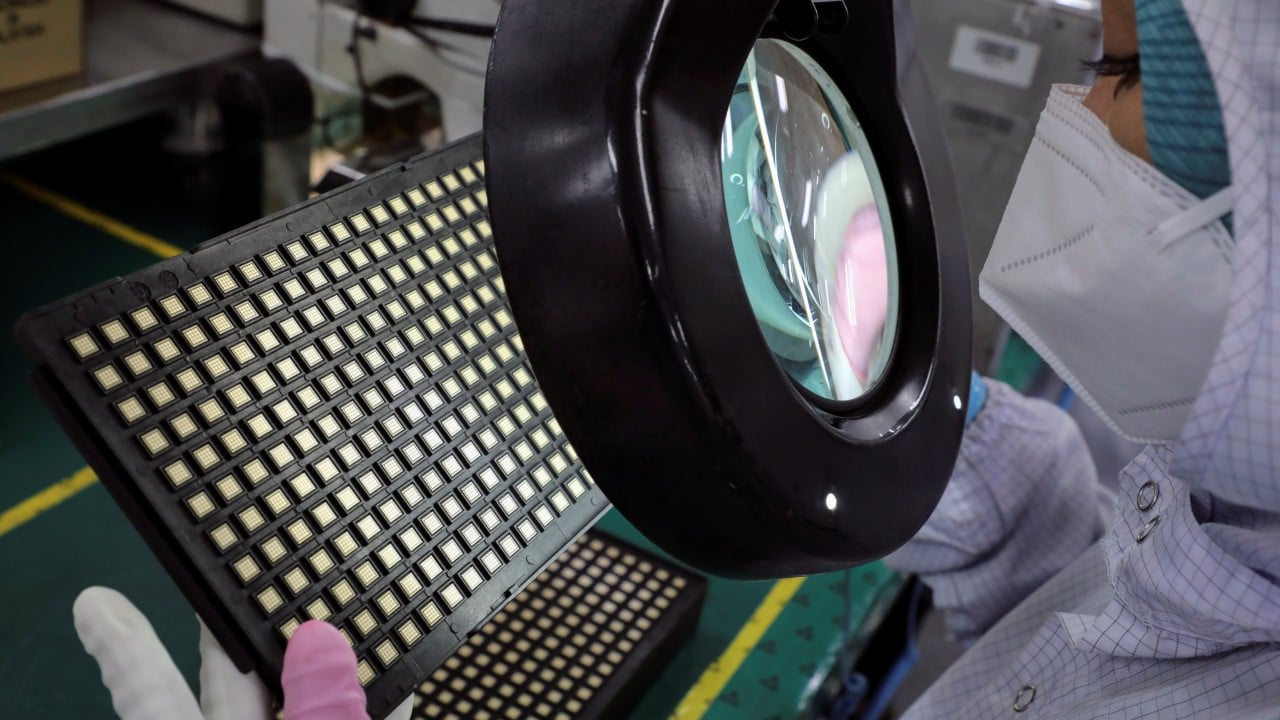
The global semiconductor value chain splits into front-end fabrication—where advanced logic and memory wafers are etched using extreme ultraviolet lithography—and back-end packaging, where those wafers are diced, housed, wired, and tested. While front-end fabrication commands the highest profit margins and captures the bulk of media attention, the back-end represents the critical bottleneck of physical delivery. Malaysia accounts for roughly thirteen percent of the global market for back-end semiconductor packaging, assembly, and test operations.
This market share was not built overnight. It represents decades of accumulated capital expenditure, specialized technical labor experience, and agglomeration economies centered in Penang. Multinational corporations such as Intel, Infineon, and Texas Instruments established deep operational roots there precisely because of historical fiscal incentives, stable infrastructure, and neutral trade positioning.
However, capital lock-in creates a unique vulnerability under great power competition. Back-end operations require continuous capital expenditure to upgrade from traditional wire-bonding to advanced packaging methodologies, such as chiplet integration and 2.5D/3D stacking. These advanced packaging techniques are vital for artificial intelligence accelerators and high-performance computing chips. Because the intellectual property and precision machinery for advanced packaging are heavily concentrated in firms subject to United States export controls, Malaysian facilities face a structural ceiling. They cannot easily upgrade to processing the most advanced nodes without triggering compliance audits that risk cutting off access to Western semiconductor design software and equipment.
Conversely, Chinese semiconductor firms locked out of Western fabrication facilities have increasingly looked southward. They seek assembly and testing partnerships in Southeast Asia to finish legacy and mature node chips that can bypass direct sanctions or serve non-Western markets. This creates a dual-track operational reality within Malaysian industrial zones. Facilities must maintain rigorous compliance firewalls to ensure that equipment and software originating from the United States are not utilized to process restricted Chinese designs, even as they court Chinese fabless design houses looking for safe harbor.
The Cost Function of Regulatory Compliance
Navigating the technology split imposes a heavy transaction cost on local and multinational entities operating within Malaysia. These costs manifest across three distinct vectors: compliance overhead, supply chain bifurcation, and technology transfer friction.
Compliance overhead is no longer a peripheral legal expense. It is a core operational expenditure. Factories must segregate floor space, audit supply chains down to the raw material tier, and implement strict dual-use tracking systems to satisfy Bureau of Industry and Security regulations from the United States. A failure in chain-of-custody verification can result in a facility being placed on restricted entity lists, effectively terminating its ability to source critical testing equipment.
Supply chain bifurcation compounds this friction. Historically, semiconductor manufacturing optimized for a single, globally integrated logistics network driven by comparative advantage and minimal inventory buffers. The current bifurcation forces redundancy. Factories must maintain separate inventory pools, distinct supplier vetting protocols, and alternative routing channels for components destined for Western markets versus those destined for mainland China or domestic consumption. This duplication destroys margin efficiency, transforming what was once a lean, high-volume assembly engine into a fragmented, high-overhead operation.
Technology transfer friction completes the squeeze. As the United States tightens restrictions on equipment exports to any facility in nations deemed intermediary transit hubs for restricted technology, Malaysia’s ambition to move up the value chain into advanced packaging faces severe headwinds. Local engineering firms find it increasingly difficult to acquire the foundational tools required to transition from legacy assembly to cutting-edge heterogeneous integration. The state is thus structurally incentivized to attract lower-tier mature node investments from China while simultaneously attempting to retain high-end multinational anchors from the United States and Europe.
Strategic Arbitrage Versus Strategic Drift
To understand whether Malaysia can maintain its balancing act, we must evaluate the efficacy of its industrial strategy, specifically the National Semiconductor Strategy launched to inject billions into local capability development. The stated objective is to move beyond low-margin packaging into wafer fabrication, integrated circuit design, and equipment manufacturing.
However, industrial policy divorced from capital realities results in strategic drift. Malaysia lacks the domestic capital reserves required to subsidize front-end fabrication at a scale competitive with the United States CHIPS Act, European Union subsidies, or Chinese state-directed funding. Building a modern leading-edge fabrication plant requires tens of billions of dollars in upfront capital expenditure, alongside a guaranteed, multi-decade supply of ultra-pure water, uninterrupted power, and an army of specialized PhD-level semiconductor physicists.
Consequently, Malaysia’s path forward relies on strategic arbitrage rather than direct competition. The state must position itself as the indispensable neutral intermediary for mature nodes—those chips operating at twenty-eight nanometers and above that power automotive systems, industrial IoT, consumer electronics, and power management units. These mature nodes do not face the same draconian export restrictions as advanced AI accelerators, yet they represent the vast majority of physical semiconductor volume consumed globally.
By cementing its status as the premier, trusted jurisdiction for mature node packaging and testing, Malaysia can capture the spillover demand generated as Chinese firms seek to diversify their geographic footprint outside of mainland China, while reassuring Western buyers that their legacy supply chains remain secure and uncompromised.
This arbitrage strategy requires a deliberate refusal to choose sides, coupled with an uncompromising enforcement of regulatory transparency. If the regulatory environment becomes opaque, multinational corporations will accelerate a geographic de-risking process, shifting assembly operations toward alternative neutral jurisdictions such as Vietnam or India. Conversely, if compliance measures are too lax, extraterritorial enforcement from Washington will unilaterally sever Malaysian entities from the global financial and technological grid.
The operational imperative for policymakers is clear. Success is measured not by diplomatic handshakes or neutral rhetoric, but by the precision of compliance firewalls, the aggressive expansion of technical vocational training to alleviate the engineering talent shortage, and the targeted deployment of fiscal incentives toward high-value specialized packaging rather than capital-prohibitive front-end fabrication. Neutrality, in the context of the technology cold war, is an engineering problem solved through rigorous compliance and operational indispensability.