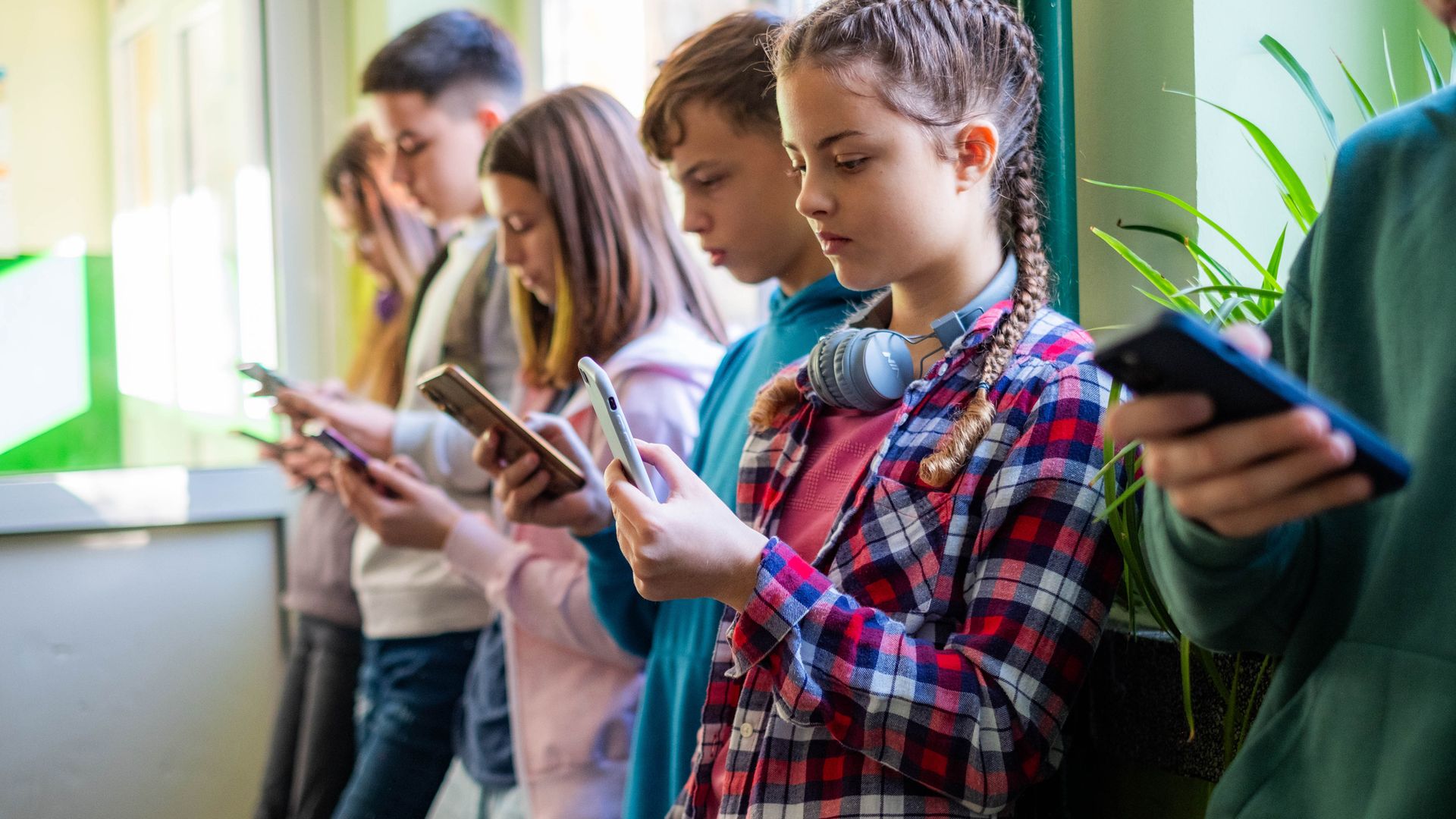
The political chatter around kids and smartphones usually follows a tired script. Activists demand bans, tech executives shrug, and politicians promise crackdowns to appease panicked parents. But a massive shift just broke this stale dynamic. Young people themselves are flat-out asking for the government to step in and fix their feeds.
The UK government just wrapped up its massive "Growing up in the online world" national consultation. It brought in over 116,000 responses before closing. While the politicians debate sweeping bans for under-16s, data from peer research and youth advocacy groups shows something far more interesting. Gen Z and teenagers aren't fighting against online regulations. They're leading the charge for them. Learn more on a connected topic: this related article.
They don't want a patronizing lecture on screen time. They want the tech companies forced to dismantle the predatory features designed to keep them hooked.
The Myth of the Tech-Obsessed Teen
For years, tech lobbyists argued that young people love the open internet exactly as it is. They claimed that any government intervention would alienate the very generation that thrives online. That argument is officially dead. Additional journalism by USA Today explores comparable views on this issue.
Look at the findings from recent youth-led research cohorts. A staggering number of teens and young adults say future generations shouldn't access social media the way they did. They aren't blind to the benefits. They use these platforms to find communities, explore hobbies, and chat with friends. But three in four children report experiencing online harm, according to data compiled by Internet Matters.
The sentiment isn't just "TikTok is toxic." It runs deeper. Young people feel trapped by platforms that prioritize profit margins over mental health. They explicitly point to algorithmic nudges, dark patterns, and gamified features as forms of manipulation. They know they're being played, and they're tired of it.
It is the Architecture, Not the Content
The real insight from the youth responses is where they want the regulations to hit. Most internet safety laws focus heavily on content moderation—taking down bad videos or filtering out nasty comments. Young people say that's missing the point. The issue isn't just what they see; it's how the apps are built.
The Children's Commissioner recently called out the specific design choices that drive compulsive use. Teens want a hard line drawn against features that exploit human psychology.
- Infinite Scroll and Autoplay: Feeds that never end erase natural exit points, making self-regulation incredibly difficult for a developing brain.
- Popularity Metrics: Public like counts and view tallies turn social interaction into a high-stakes competition.
- Vanishing Media: Features like disappearing messages make tracking cyberbullying and harassment nearly impossible.
- Aggressive Location Tracking: Real-time map features put physical safety at risk by broadcasting a child's location to strangers.
This isn't a call for censorship. It's a demand for basic product safety. We don't allow car manufacturers to sell vehicles without seatbelts and tell drivers to just "drive safer." Yet, we expect teenagers to navigate hyper-optimized, addictive algorithms using nothing but willpower.
The Problem with a Total Ban
With the Children's Wellbeing and Schools Act 2026 moving through Parliament, the government faces heavy pressure to introduce strict age limits. Some factions want an outright social media ban for anyone under 16. It sounds like a quick fix, but it faces major pushback from digital rights experts and even international allies.
The United States government weighed in on the UK consultation, sending a formal response that openly favored parental tools over blunt government prohibitions. Their argument? Heavy-handed bans risk forcing kids into darker, unregulated corners of the web where tracking harms is impossible.
Then there's the massive privacy issue. To enforce a total ban for under-16s, tech platforms have to verify the age of everyone logging in. That means the price of admission to the internet becomes a digital ID check. Digital rights groups warn this ends online anonymity, creating a massive surveillance state that puts journalists, whistleblowers, and vulnerable people at risk.
Instead of a blanket ban, youth advocates prefer a risk-based framework. If a tech company can't prove its platform is safe by design for a 14-year-old, then 14-year-olds shouldn't be allowed on it. Put the burden of proof on Silicon Valley, not the user.
Artificial Intelligence is the Next Battleground
The consultation also highlighted a fast-growing risk that the Online Safety Act 2023 barely touched: generative AI companions.
While everyone was looking at Instagram, millions of teens started turning to AI chatbots for emotional support and companionship. Research from the Government Office for Science shows that vulnerable kids increasingly rely on LLM-driven bots as social lifelines.
These systems don't have feelings, but they're programmed to simulate them perfectly. When a teenager in psychological distress pours their heart out to an AI, they aren't getting professional help—they're interacting with an unregulated database designed to maximize engagement. Youth safety groups demand these systems face strict guardrails immediately before chatbot addiction becomes the next public health crisis.
What Needs to Happen Now
The consultation is over, and the government promises a full analysis of the 116,000-plus responses. We need structural changes to tech infrastructure, not more digital literacy quizzes for schoolkids.
First, regulators must mandate "safety by design." Platforms should turn off algorithmic recommendations, infinite scroll, and public metric counts by default for anyone under 18. If a user wants those features, make them opt-in with explicit verification.
Second, parental controls need immediate standardization. Right now, managing a child's devices requires navigating a labyrinth of different settings across Apple, Google, Meta, and ByteDance apps. Over 80% of parents want these controls streamlined into a single, cohesive framework.
The kids have spoken, and they aren't asking for permission to scroll forever. They're asking for someone to finally turn off the machine.