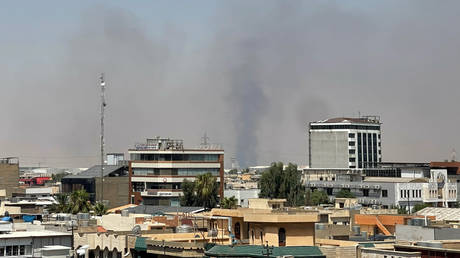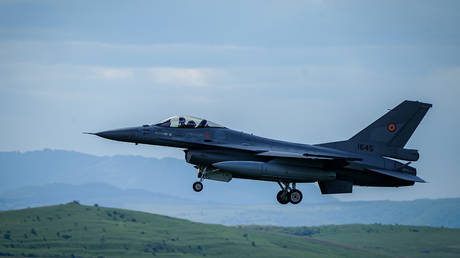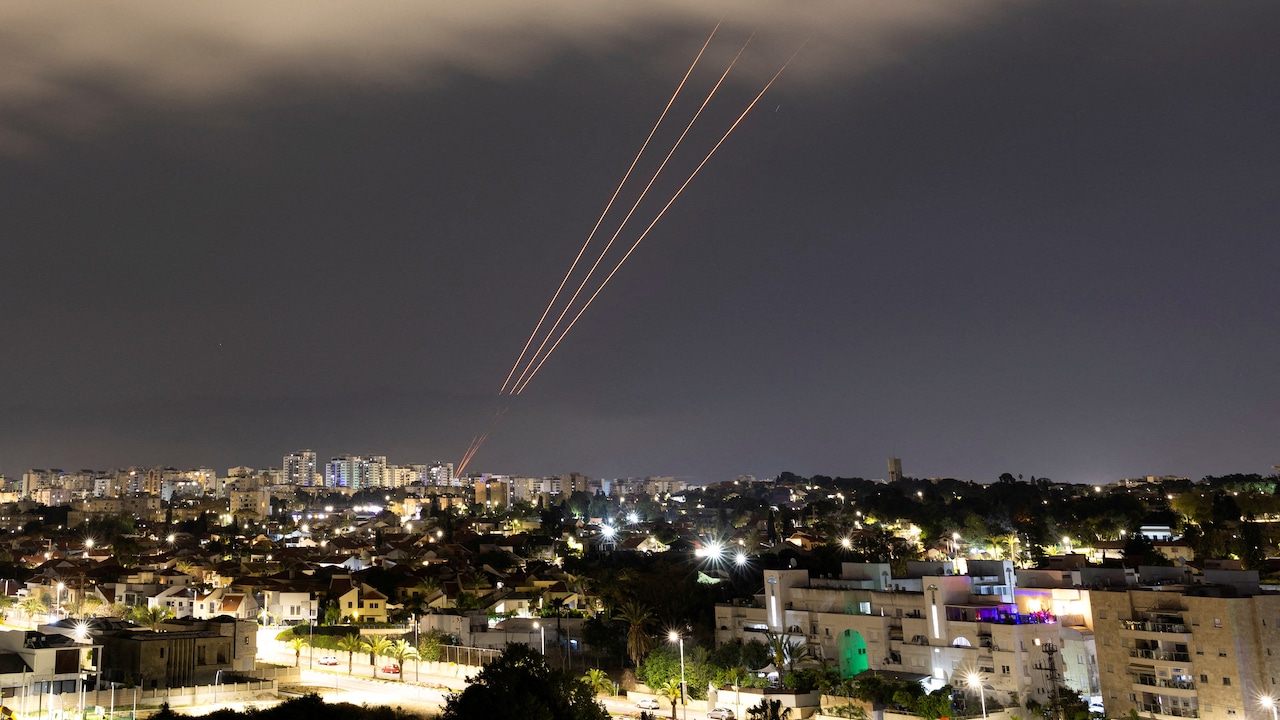
The claims by the Iranian military regarding coordinated drone strikes on United States forward operating positions in Kuwait, Jordan, and Bahrain expose a structural shift in regional conflict mechanics. Conventional analysis frequently misinterprets these kinetic actions as isolated political retaliations or symbolic escalations. In reality, they represent the execution of an asymmetric saturation strategy engineered to stress Western air defense architectures, impose severe economic externalities on host nations, and alter the risk-benefit equation of forward-deployed US forces. Understanding this operational calculus requires deconstructing the technological, logistical, and architectural frameworks governing modern proxy and direct state-level warfare in the Middle East.
The strategic architecture of Iran’s strike methodology rests upon three distinct operational vectors: geographic multi-axis synchronization, cost-imposition asymmetry, and host-nation infrastructure vulnerability. By launching simultaneous loitering munitions toward highly consolidated installations—such as Sheikh Isa Air Base in Bahrain, Al-Azraq Air Base in Jordan, and Ali Al Salem Air Base in Kuwait—Tehran tests the physical and computational saturation thresholds of localized air defense grids.
The Saturation Mechanics of Loitering Munitions
The deployment of platforms like the "Arash" kamikaze drone highlights a highly optimized cost function. These systems are constructed primarily from commercial off-the-shelf components, small displacement engines, and composite materials with low radar cross-sections. They possess long operational ranges and are capable of pre-programmed autonomous flight via integrated GNSS tracking and inertial guidance packages.
The primary tactical objective of these platforms is not necessarily complete kinetic destruction, but rather computational and material exhaustion of defense systems. The interception mechanics present a steep cost asymmetry:
$$Cost_{Asymmetry} = \frac{Cost_{Interception}}{Cost_{Munition}}$$
When an adversary deploys a loitering munition manufactured for approximately $20,000 to $50,000, defending forces are structurally forced to respond with interceptors—such as MIM-104 Patriot or National Advanced Surface-to-Air Missile Systems (NASAMS)—costing between $1 million and $4 million per unit. This math creates a structural bottleneck in long-term campaign sustainability.
Furthermore, the simultaneous arrival of low-altitude, low-velocity targets can saturate the tracking capacity of fire control radars. Phased-array systems must allocate distinct tracking beams to prioritize threats. When high-volume drone swarms are paired with ballistic or cruise missile profiles, the target discrimination logic of Automated Battle Management Systems is pushed to its operational limits, increasing the statistical probability of a leaked munition penetrating the terminal defensive layer.
Host-Nation Vulnerabilities and Collateral Friction
A critical blind spot in standard security assessments is the secondary economic and operational friction imposed on the host nations themselves. US forward-deployed infrastructure does not exist in a vacuum; it relies heavily on local utility, transit, and economic ecosystems.
- Logistical Bottlenecks: Claims of strikes near installations in Kuwait, including areas serving Camp Arifjan and Camp Udairi, directly target the terrestrial logistical pipelines that supply fuel, parts, and munitions to forward US forces.
- Civilian and Economic Disruptions: Kinetic actions in highly dense or critical commercial zones—such as the reported suspension of operations at Kuwait International Airport or fires near critical desalination and power infrastructure—demonstrate how asymmetric strikes instantly degrade local economic stability.
- The Sovereign Risk Vector: By targeting installations in states like Bahrain and Jordan, the striking entity seeks to widen the political divide between host governments and Washington. The calculated message is explicit: hosting Western military installations directly correlates with an escalation in domestic structural risk, potential energy grid failures, and disruptions to civilian aviation.
This dynamic creates a complex civil-military vulnerability. While a military installation may successfully intercept 90% of incoming threats via terminal defenses like the Phalanx Close-In Weapon System (CIWS) or Counter-RAM (Rocket, Artillery, and Mortar) batteries, falling shrapnel and intercepted debris inevitably descend on surrounding residential or industrial sectors. The resulting civilian disruption achieves the adversary’s strategic goal of political optimization without requiring a direct military penetration of the base perimeter.
Geographic Redundancy and Deterrence Degradation
The geographical spread of the claimed targets reveals an intentional strategy to bypass localized containment vectors. Historically, Western defense planning focused heavily on safeguarding the Strait of Hormuz and primary littoral hubs along the Persian Gulf. By expanding active strike zones deep into the Levant via Jordan and down to the southern Gulf in Bahrain, Iran demonstrates a highly decentralized command and launch framework capable of striking multiple vectors simultaneously.
This multi-theater pressure degrades the core assumption of Western power projection: the ability to isolate a conflict to a single, contained geographic sector. Forward bases designed to act as secure staging grounds for offensive operations are instead forced to reallocate significant logistics, personnel, and battery power exclusively toward static force protection.
The analytical limitation of reviewing these strikes lies in verifying the precise damage metrics. State-directed media channels routinely inflate strike efficacy to project domestic capability and psychological pressure. Conversely, defending militaries regularly downplay operational impacts to preserve tactical deniability and prevent intelligence feedback loops that would allow the adversary to correct target coordinates. Strategic analysis must look past the battle of competing communiqués and instead evaluate the confirmed structural shifts: the activation of national early warning sirens, localized infrastructure shutdowns, and the forced reassignment of multi-domain defensive assets.
To counter this evolving strike vector, defense doctrines must move away from a reliance on expensive, finite kinetic interceptors. Mitigating the asymmetric drone threat requires deploying high-capacity electronic warfare networks capable of broad-spectrum GNSS spoofing, alongside scaling directed-energy weapons (DEWs) and high-power microwave (HPM) systems to structurally alter the intercept cost curve. Failure to transition from defensive kinetic expenditure to active systemic disruption leaves forward logistics inherently vulnerable to continuous attrition.