Morning is an unforgiving hour for the modern conscience. We wake up, roll over, and sweep a thumb across a glass screen, consuming the collapse of human lives and political empires in the same lazy cadence. The notification banners stack up like cordwood. A headline about an unseated congressman flashes and disappears. Below it, a line of text mentions a tragedy outside a house of worship three thousand miles away.
To the software algorithms that aggregate our world, these two events are twins, bound together only by the hour they broke. They are delivered as standard morning brief items, flattened out, drained of color, and stripped of the quiet, terrible heat that accompanied their making.
But when you strip away the sterile language of wire reports, you find something far heavier. You find the real cost of living in an era where institutional gravity is dissolving, leaving ordinary people to navigate the wreckage.
The Longest Twenty Minutes in Covington
On a Tuesday night in northern Kentucky, a man stood before a microphone in a room packed with people who looked as though they had just watched a ghost walk through the wall.
Thomas Massie had spent fourteen years in the United States House of Representatives acting like an island. He was a libertarian-leaning contrarian who wore his willingness to vote against his own party like a badge of absolute honor. He voted against foreign aid. He voted against his party’s signature tax bills. He believed, with the rigid certainty of an engineer, that if you stick to your principles, the math will eventually vindicate you.
Then the sun and the moon of modern conservative politics turned against him.
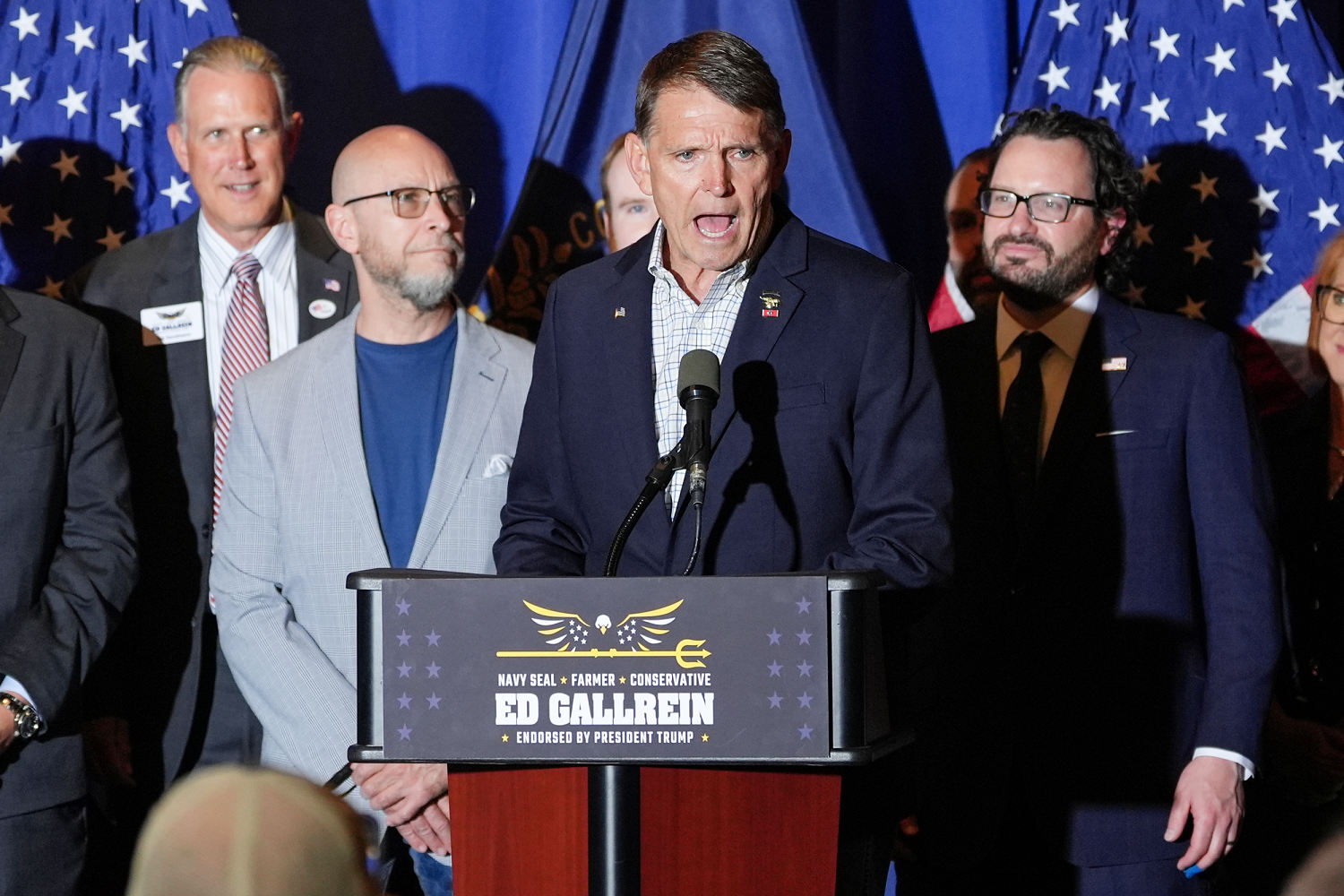
The primary race that followed did not just break spending records; it broke a man’s political life. More than $32 million poured into a single congressional district, much of it from national committees and pro-Israel interest groups determined to see him gone. When the final ballots were tallied, Massie had captured just over 45 percent of the vote. His challenger, a former Navy SEAL named Ed Gallrein, took the rest, propelled by a late-stage endorsement from Donald Trump and an explicit promise of total party discipline.
When Massie took the stage to concede, he did not offer a quick, practiced wave before slipping out the back door. He spoke for more than twenty minutes. The crowd chanted "no more wars," their voices echoing off the walls with the frantic energy of a movement that knows its walls are closing in.
"We stirred up something," Massie told them, his voice carrying the distinct, bitter exhaustion of someone who tried to play a game by rules that no longer exist. "There is a yearning in this country for someone who will vote for principles over party."
But the numbers on the screen did not care about yearnings. A few miles away in Covington, Gallrein’s victory party was shorter, quieter, and entirely focused on the mechanics of power. He thanked the president. He spoke of honor and uniform. The message was simple: the era of the rogue legislator is over. The machinery requires alignment, and those who do not line up will be replaced.
Consider the reality of that room in Covington. For years, voters had been told that independence was the highest American virtue. Now, they were learning that independence is a luxury the current political climate cannot afford. To witness an incumbent of fourteen years fall so decisively is to watch the hardening of an American political reality where the middle ground is not just shrinking—it is being actively paved over.
The Quiet Outside the Gate
While the political class in Kentucky was reckoning with the shifting architecture of national power, a far older, far more permanent kind of grief was settling over a neighborhood in southern California.
On Monday, the Islamic Center of San Diego was supposed to be a sanctuary of mid-day routine. There were children in the classrooms, teachers at the whiteboards, and staff moving through the halls of the sprawling complex. It is a place built for community, where people go to escape the relentless noise of the highway and the anxieties of a world that often views them with suspicion.
Then the gunfire started outside the gate.
When the emergency response teams finally cleared the asphalt, five people were dead. Two of them were the shooters—young men, aged 19 and 17, who had chosen to end their own lives in a vehicle parked in the middle of the street after executing three adult men. One of the victims was a security guard, a man whose entire job description was to stand between the vulnerabilities of a congregation and the madness of the outside world.
On Tuesday morning, the police chief stood before a bank of microphones to deliver the names of the dead to the public. He spoke in the practiced, rhythmic cadence of a law enforcement official who has had to give this exact press conference too many times before. He talked about "neutralized threats" and "self-inflicted wounds."
But if you look past the police tape, the true weight of the event reveals itself in what wasn't said. Imam Taha Hassane spoke to reporters later, his voice remarkably steady as he confirmed that the children and teachers inside were physically safe.
Physical safety, however, is a deceptive metric. How do you measure the damage done to a child who spent an hour huddled under a desk while a security guard died on the driveway outside? How do you calculate the invisible tax levied on a community that must now look at every passing car with a flicker of instinctual terror?
The standard news brief treats a mass shooting in San Diego and a primary upset in Kentucky as distinct data points belonging to different sections of the daily paper. One is a story of national politics; the other is a tragedy of local violence.
But they are connected by a profound and troubling undercurrent. Both events are expressions of a society where the traditional guardrails are losing their grip. Whether it is the destruction of an independent political career by the sheer force of national partisan machinery, or the sudden, catastrophic invasion of a sacred space by two heavily armed teenagers, the message is identical: the spaces we thought were secure are far more fragile than we care to admit.
The Weight of the Summary
We live in an age that prizes frictionless consumption. We want our news delivered in bullet points. We want the "Morning Rundown" to tell us who won, who lost, and who died before our coffee gets cold.
The danger is not that we will become uninformed. The danger is that we will become entirely numb to the human cost of the data we are collecting. A representative losing his seat after a multi-million-dollar onslaught is not just a shift in the House majority; it is the death of an entire philosophy of governance. A shooting at a mosque is not just a statistic for a crime ledger; it is a permanent tear in the fabric of a neighborhood that will take generations to mend.
The glass screen of a smartphone makes everything look small, distant, and manageable. It reduces the roar of a defiant crowd in Kentucky and the terrible silence of a San Diego parking lot into the same uniform, digital font.
But the world outside that glass remains heavy, loud, and painfully real.


