Walk into a Paris café on a Tuesday morning when trains aren't running, and you'll see something baffling to outsiders. Nobody panics. People shrug, sip their espresso, argue about government ministers, and check which boulevard is blocked next.
French protest culture isn't a side effect of bad politics in France. Honestly, it is the politics. When people ask why the French march so often—and why their history includes literal head-chopping during the Revolution—they usually treat the two ideas like a punchline. I think that misses the point completely. Street action in France has long functioned as a second ballot box, a bargaining chip, and occasionally, when institutions snap, a terrifying reset button.
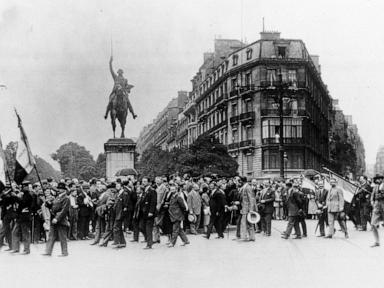
If you've ever stood near République or Bastille watching union banners roll past under gray skies, you feel the weight of centuries pressing down on the pavement. Strikes, blockades, slogans painted on shutters, tear gas drifting across wide avenues—it's loud, messy, and weirdly organized. And yes, the shadow of 1789 and the guillotine still hovers over how outsiders imagine French anger, even if modern demonstrators aren't building scaffolds in public squares.
How Street Mobilization Became a National Habit
Plenty of countries have labor unions and angry citizens. Few turn marching into a shared grammar the way France does.
Part of the reason comes down to how power is concentrated. France has historically favored a strong, centralized executive state—from royal courts to Napoleon's administrative machinery to the Fifth Republic's presidency. When decisions are made high up in Paris ministries and palaces, citizens often feel that waiting four or five years for the next election isn't enough leverage. So they take the argument into the street, where disruption forces ministers to negotiate right now rather than later.
Union structure plays a big role too. Unlike countries where a single massive labor federation speaks for almost everyone, French unions are fragmented along ideological and sector lines—think major confederations like the CGT, CFDT, and Force Ouvrière competing and sometimes cooperating on the same march route. Because membership rates in France are actually lower than many people assume, unions rely heavily on mobilizing broader public sympathy and calling journées d'action—days of action—that bring out students, retirees, civil servants, and everyday commuters.
I've watched plenty of observers outside France misread a march as a sign that the whole country is about to collapse. Usually it isn't. A strike might shut down rail lines or delay refuse collection for a few days while poll numbers shift and backroom compromises get drafted. It's friction built into the system, not a malfunction.
Why People Lose Their Heads in History and Metaphor
Let's talk about the literal heads first, because that's where the darker reputation starts.
During the French Revolution, starting in 1789 and peaking during the Reign of Terror in 1793–1794, radical political factions turned execution into state theater. King Louis XVI and Queen Marie Antoinette went to the guillotine in 1793, followed by thousands of others—aristocrats, priests, ordinary citizens accused of treason, and eventually revolutionary leaders like Georges Danton and Maximilien Robespierre themselves. Historians generally put the number of guillotined executions during the Terror at roughly 16,000 to 17,000, out of tens of thousands of deaths and arrests across the broader conflict.
That wasn't a cheerful national pastime. It was extreme political paranoia colliding with war, food shortages, and a revolution devouring its own children.
Yet over time, the imagery of toppled crowns and severed heads became shorthand in French political imagination. When protesters today carry satirical posters or use sharp, theatrical rhetoric against a president or finance minister, they're often playing with an old symbolic vocabulary. Nobody is bringing a blade to Place de la Concorde in 2026. Still, the memory of overthrowing entrenched authority gives French dissent a dramatic edge that makes politicians nervous.
There's also the everyday human side of losing your head—losing your temper, your patience, or your cool when a peaceful march turns into a clash. Anyone who has spent time around large demonstrations knows how quickly tension builds. A blocked intersection stretches into hours. Police kettles tighten. A handful of agitators or frustrated youths throw projectiles, canisters pop, and suddenly a march about pension rules or school budgets looks like a riot on evening television.
The Myth of the Perpetual Revolution
A common mistake outside France is assuming French people are constantly on the barricades. Most days, people are just trying to get kids to school, answer emails, and buy groceries. Even during huge waves of unrest—like the 2018–2019 gilets jaunes (yellow vest) protests over fuel taxes and cost-of-living pressures, or the 2023 pension reform clashes—most citizens aren't throwing paving stones. Many sympathize with the grievance without joining the street clashes, while others get fed up with ruined commutes and lost shop revenue.
Still, when mobilization does cross a threshold, it can stall entire sectors fast. Air traffic controllers, rail workers, port employees, and university students each hold distinct pressure points. That's why a seemingly narrow dispute can ripple across the economy within hours.
What Recent Clashes Reveal About Modern Protests
Modern French protest culture looks different from 19th-century barricades, even when the slogans echo old battles. Social media coordinates flash blockades and rallies faster than union leaflets ever could. At the same time, policing tactics, surveillance, and court fines have grown sharper, sparking fierce debates over civil liberties and the right to protest.
Cost-of-living strain, housing costs, public service funding, and trust in political institutions keep fueling waves of frustration. When people feel squeezed from every angle, anger spills out in predictable—and sometimes unpredictable—ways. A tax on diesel in rural areas can spark a nationwide movement that surprises Paris elites who barely noticed how isolated small-town drivers felt.
What strikes me most when looking at these movements is how quickly a specific policy fight turns into a broader referendum on fairness. In France, a dispute over a single law often becomes a question of who pays and who decides. That moral framing makes compromises harder to sell, because backing down can feel like surrendering a principle rather than splitting a difference.
Why Outsiders Misread French Anger
If you read coverage from abroad, you'll often see two extremes: romanticizing every protester as a pure heir to 1789, or dismissing every demonstration as lazy entitlement. Both are pretty lazy takes.
Plenty of French workers pay high taxes, value public services like healthcare and education, and worry deeply about keeping the economy competitive. When they push back against reforms, they're often arguing over how burdens are shared—asking why ordinary wages or retirement ages take the hit while high incomes or corporate perks seem untouched. Whether you agree with their economics or not, there's usually a real argument underneath the noise.
At the same time, it's fair to admit that habitual street veto power has real costs. Businesses lose momentum, small shops suffer during prolonged disruptions, and political gridlock can delay tough fixes until they become even more painful. France has wrestled with that tension for generations—wanting strong state protection without letting deadlock paralyze everything.
Practical Ways to Navigate France During Protests
If you're traveling to France, working with a French team, or following European news closely, a little preparation saves a lot of headaches.
- Check official transit and local alerts a day ahead. Before taking trains, metros, or regional buses during a strike day, check SNCF, RATP, and local prefecture advisories rather than assuming normal schedules.
- Build buffer time into tight itineraries. If you have a flight, train connection, or important meeting in a major city like Paris, Lyon, or Marseille, avoid cutting connections close when protests or transport walkouts are announced.
- Give demonstrations wide berth. Even when a march starts peacefully, crowds can shift suddenly and police cordons can trap bystanders. Don't linger near tense intersections or treat clashes like sightseeing.
- Separate the headline drama from daily reality. A fiery clip on social media rarely tells the whole story of a city. Most neighborhoods a few blocks away often stay calm, open, and completely normal.
- Look past slogans to the actual dispute. When a strike or protest hits the news, check what specific bill, budget line, or workplace rule sparked it—you'll understand the stakes far better than by watching smoke and banners alone.
Understanding French protest culture doesn't require memorizing every uprising since the Bastille. It just takes paying attention to how a country with a deep memory of upheaval argues when the stakes feel personal.