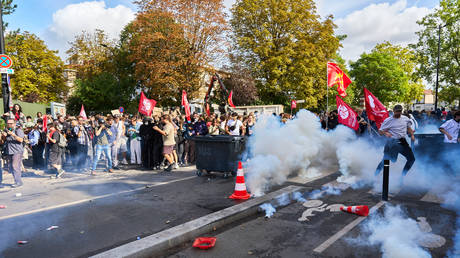
Tear gas outside Parisian gates rarely surprises anyone who spends time near French schools during political turmoil. When teenagers march out of classrooms and block streets with burning bins, foreign media usually runs the same predictable broadcast. They paint a picture of entitled kids throwing tantrums over minor school reforms, standardized testing adjustments, or timetable changes.
That framing misses the point entirely.
If you think French student strikes are just about education policy, you're missing how France actually works. These walkouts serve as an early warning system for the entire republic. When teenagers take over public squares, they act as the tip of a much larger societal spear.
The Classroom as a Political Laboratory
France has a long, messy tradition of political activism embedded in its youth culture. Students don't wait until university graduation to care about labor laws, pension reform, or economic inequality. High schools operate as political incubators.
Student unions like the FIDL or UNL organize quickly, mobilize networks through encrypted messaging apps, and coordinate national actions within hours. They study the tactics of older workers, union leaders, and historical protest movements. When the government proposes unpopular pension shifts or budget cuts that threaten public services, teenagers realize those changes directly impact their parents and their own futures.
They aren't just protecting a grade point average. They're defending a social model.
Why Foreign Coverage Gets It Wrong
International journalists often drop into Paris, film a line of riot police facing off against teenagers in hoodies, and file a story about youthful rebellion. They treat the unrest like a localized campus dispute.
That perspective ignores the sheer scale of solidarity across French society. When high schoolers strike, university students usually join them within days. Soon after, transit workers, teachers, and civil servants strike in sympathy. The teenagers provide the spark, but the fuel comes from deep-seated national anxiety over purchasing power, job security, and the erosion of the welfare state.
Police responses can be heavy-handed, which only escalates tensions. Images of young protesters pinned against brick walls circulate rapidly, transforming a localized grievance into a national debate about state authority and police violence. The core issue shifts from whatever policy triggered the walkout to the fundamental relationship between citizens and the government.
What Happens When the Smoke Clears
Governments in Paris know the stakes. A movement that starts with teenagers blocking high school entrances can rapidly paralyze the country. French presidents tread carefully when youth protests gain momentum because history shows how quickly student unrest can toppled political agendas. Think back to 1968, or more recent pension reform battles. The youth wing of public dissent packs a disproportionate punch.
Next time you see footage of French teenagers clashing with security forces outside a lycée, look past the burning debris. Listen to their slogans. They aren't shouting about homework. They're shouting about the cost of living, the climate crisis, and the kind of society they expect to inherit.
Dismiss them as rebellious kids at your own peril. They're giving you a preview of tomorrow's headlines.