The sea has a way of washing some things clean and swallowing others whole. For years, the events of May 31, 2010, seemed destined for the latter fate, dissolving into the gray expanse of international waters and bureaucratic stalemates. But memory is stubborn. It does not dissolve.
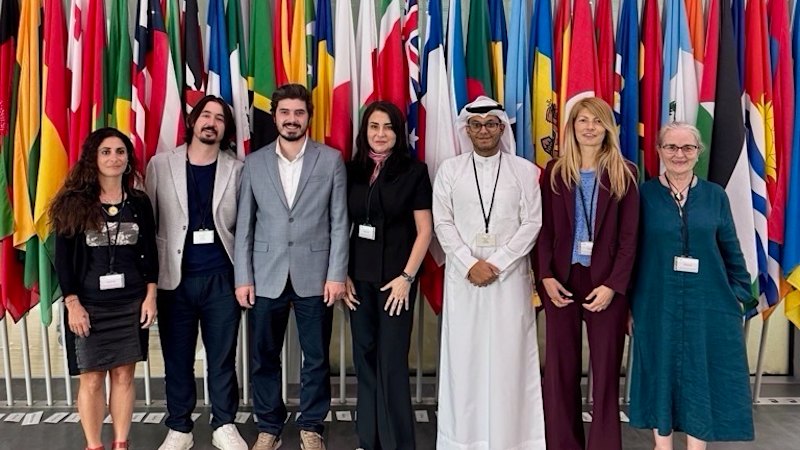
A group of activists recently walked up the steps of the International Criminal Court in The Hague. They carried no weapons, no banners, and no grand political declarations. Instead, they carried a heavy digital archive—a collection of hard drives, video files, and testimonies. These were the digital ghosts of the Mavi Marmara, the flagship of the Gaza Freedom Flotilla. Nearly a generation after Israeli commandos boarded the vessel in the darkness of the Mediterranean, leaving nine activists dead and dozens wounded, the survivors arrived at the world’s court of last resort. They came to hand over what they call definitive evidence of systematic abuse, unlawful detention, and willful killing.
This is not a story about geopolitical strategy. It is a story about what happens when the echoes of a midnight raid refuse to fall silent, and how a briefcase full of flash drives can challenge the armor of a sovereign state.
The Weight of the Hard Drives
To understand why a group of aging activists traveled to the Netherlands, you have to understand the sheer weight of what they brought with them.
The human mind forgets details to survive trauma. The camera, however, holds its breath. The newly submitted dossier contains hours of raw, unedited footage captured by journalists and passengers before their equipment was confiscated. It includes medical reports detailing the trajectories of bullets, sworn affidavits from eyewitnesses who spent years untangling their memories, and legal arguments meticulously compiled by international human rights lawyers.
For the survivors, this legal push is an act of defiance against time itself. They are fighting the creeping numbness of global attention spans. When the raid happened, the world watched in shock. Headlines screamed. United Nations committees convened. Investigations were launched, closed, reopened, and eventually archived.
Then, the world moved on. New crises erupted. The blood on the deck of the Mavi Marmara dried, the ship was sold, and the names of the dead became footnotes in a larger, seemingly endless conflict.
But the people who were on that ship never left it. Every loud noise still sounds like a flashbang grenade. Every sudden shadow still looks like a commando dropping from a helicopter. By bringing this evidence to The Hague, they are attempting to force a formal, judicial recognition of their reality. They want to turn raw, bleeding human experience into the cold, indelible currency of international law.
The Flotilla in the Dark
Let us strip away the legal terminology for a moment and look at the anatomy of the event that set this legal machinery in motion.
It is 4:00 AM on the Mediterranean. The sea is black. The Mavi Marmara, a passenger ferry carrying hundreds of people from dozens of countries, is cutting through international waters. On board are politicians, journalists, humanitarian workers, and religious leaders. Their stated goal is to break the naval blockade of the Gaza Strip and deliver tons of aid.
Then comes the sound. It starts as a low hum, a vibration in the soles of the passengers' feet, before escalating into the deafening roar of military helicopters. Speedboats emerge from the darkness, flanking the vessel.
What followed depends entirely on which side of the bulkhead you stood. The Israeli government maintained that its soldiers were ambushed with clubs, knives, and metal rods as they rappelled onto the deck—that they acted in self-defense against a crowd that had turned violent. The activists saw it differently. They experienced a terrifying assault by an elite military force against civilians on a ship that was still in international waters.
Imagine the chaos of that deck. The blinding searchlights. The stinging hiss of tear gas. The sharp, unmistakable crack of live ammunition shattering the night. In those frantic minutes, the high-minded ideals of international law evaporated. Survival became the only metric that mattered.
When the sun finally rose, nine men were dead. A tenth would die years later from his injuries. Hundreds were arrested, processed, and deported. The aid never reached Gaza through the flotilla. The blockade remained intact.
The Long Road to the Peace Palace
Why The Hague? Why now?
The International Criminal Court was established to ensure that the most severe crimes against humanity would not go unpunished, especially when national courts fail to act. It was built for the victims who have nowhere else to go.
Yet, the road to this courtyard has been a labyrinth of frustration for the flotilla survivors. The ICC has looked at this case before. Years ago, the court's prosecutors acknowledged that there was a reasonable basis to believe war crimes had been committed during the raid. It was a stunning admission. But then came the caveat, a piece of legal pragmatism that felt like a door slamming in the victims' faces: the prosecutor decided the case was not "of sufficient gravity" to justify further investigation by the court.
In the language of international law, "gravity" is a clinical term. It measures scale, nature, and manner of commission. But to the family of a man shot at close range on a ferry deck, the word feels like an insult. How many lives equal gravity? How much blood must be spilled before the scale tips?
The activists returned to The Hague because they refuse to accept that their suffering was deemed too small for global justice. The new evidence they submitted is designed to bridge that gap. It aims to prove that the abuse was not an isolated incident or a collection of split-second errors by frightened soldiers. The dossier argues that the treatment of the passengers—both during the raid and during their subsequent detention—was part of a deliberate, coordinated policy.
The Chemistry of Accountability
International justice moves at the speed of glaciers. It is a world of filings, jurisdictions, admissibility hearings, and diplomatic pressure. It can take a decade just to decide if a court has the right to decide.
This slow pace is by design. The law must be a shield, not a weapon. It must be insulated from the passions of the moment. But for those who carry the physical and psychological scars of violence, this deliberate speed can feel indistinguishable from denial.
The activists standing outside the ICC know the odds. They know that Israel is not a member of the Rome Statute, the treaty that created the court, and does not recognize its jurisdiction. They know that powerful nations routinely use their diplomatic weight to shield their allies from the court’s scrutiny. They know that a piece of paper signed by a judge in the Netherlands cannot rewrite the history of that terrible night in 2010.
They are there anyway.
There is a fundamental human need for a record. When an event is denied, minimized, or filed away as a minor diplomatic incident, it does a secondary violence to those who lived through it. It gaslights them. It tells them that their eyes lied, that their pain is politically inconvenient, and that their dead do not count.
The act of presenting evidence to the ICC is a refusal to be erased. It is an insistence that what happened on the sea matters, not just as a political talking point, but as a matter of law and human decency. It forces the international community to look at the photographs, to read the autopsies, and to acknowledge that beneath the grand chess game of Middle Eastern politics lies a human cost that cannot be negotiated away.
The prosecutors inside the building will now begin the slow process of reviewing the digital files. They will weigh the arguments, test the credibility of the testimonies, and measure the new submissions against the strict criteria of the court. The wheels of justice will turn, or they will stall again.
Outside, the Dutch rain falls on the pavement, cold and indifferent. The activists pack up their remaining bags and prepare for the journey home. They have left their memories in the safekeeping of the court. The digital archives are locked away in a vault, secure against the fading of memory and the washing of the tide, waiting for the day the world decides it is ready to look.