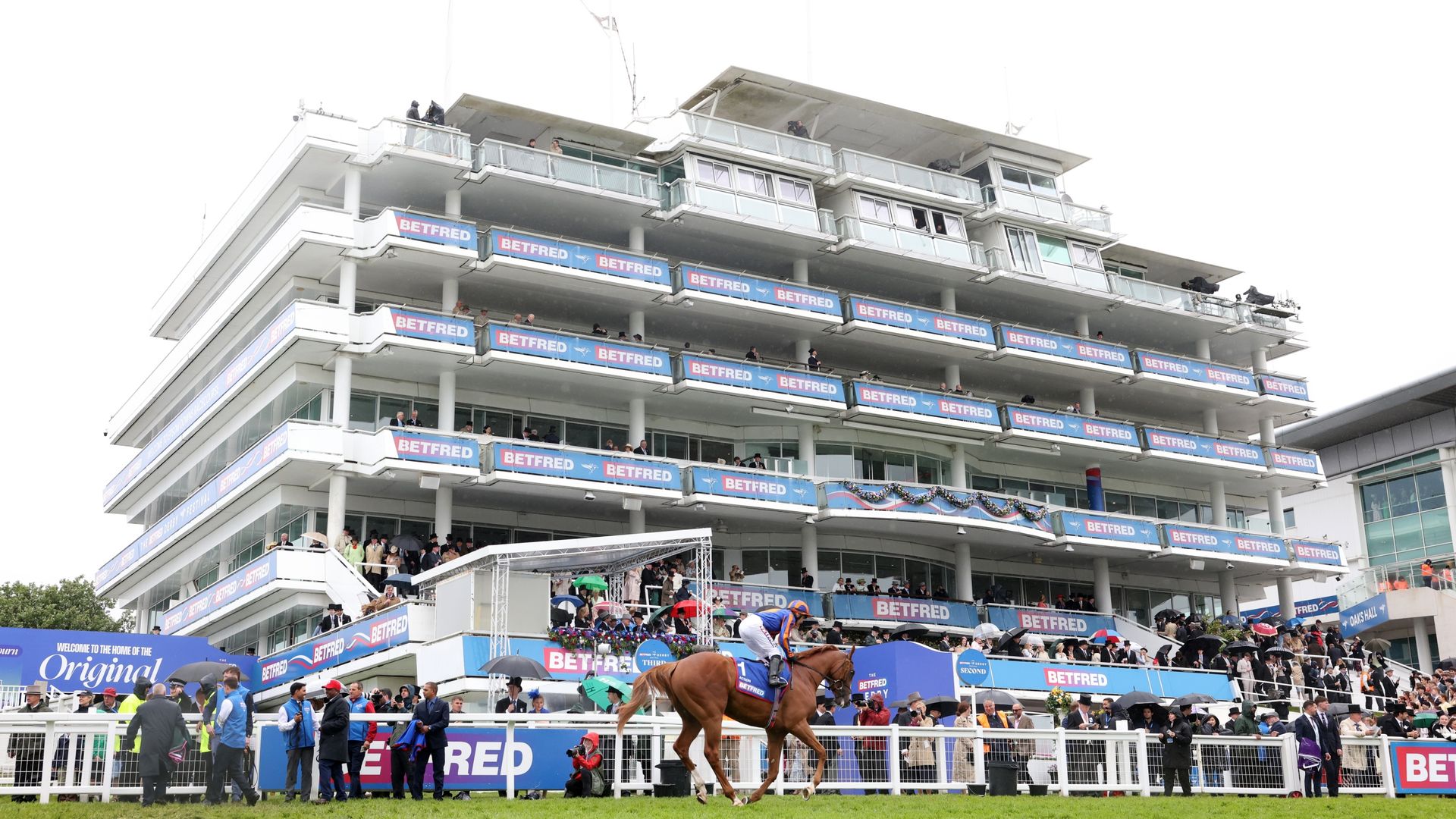
The grass at Epsom Downs carries a specific kind of scent on the first Saturday of June. It is a heady mix of crushed clover, expensive champagne, discarded betting slips, and the sharp, metallic tang of sweat—both human and equine. For over two centuries, this ridge in Surrey has played host to the Derby, an event that bills itself as the ultimate test of the thoroughbred racehorse. But beneath the surface of top hats, morning coats, and royal processions, there is a volatile energy. It is an intersection of rigid British class structure, high-stakes gambling, and unlimited alcohol. When those elements collide under a hot summer sun, the veneer of civilization can wear incredibly thin.
We tend to look at major sporting events as insulated bubbles. We watch them through the crisp lens of high-definition television or from the safe distance of grandstand hospitality boxes. We see the thundering hooves, the flashing silks, and the joyous celebrations in the winner's enclosure.
But step away from the rails. Walk past the champagne bars and head toward the open, untamed spaces of the Hill. That is where the narrative changes. That is where the reality of the crowd sets in.
Chaos does not arrive with a fanfare. It begins with a murmur, a sudden shift in the ambient noise of a crowd that signals the collective pivot from celebration to hostility.
The Anatomy of a Flashpoint
Consider the atmosphere just after the main race concludes. The tension that has been building all afternoon—fueled by wins, losses, and pints of lager consumed in the sweltering heat—needs somewhere to go. For most, it dissipates into the journey home or a final drink. For a specific few, it curdles.
On this particular Derby day, the flashpoint occurred near the temporary entertainment stalls, a vibrant zone designed to keep the party going long after the horses had returned to their stables. It started with an argument. Two voices raising themselves above the bassline of a distant sound system. In a matter of seconds, words morphed into motion. A push. A shoved shoulder. Then, the sickeningly familiar sound of glass shattering on tarmac.
To understand how a crowd reacts to violence, you have to understand fluid dynamics. People do not scatter instantly; they pull back in a sudden, concentric wave, creating a human ring around the epicenter. Within that ring, a brawl erupted involving multiple individuals. It was chaotic, fast-moving, and entirely detached from the supposed elegance of the racing festival taking place just a few hundred yards away.
Fists connected with flesh. The pristine outfits that had been carefully chosen weeks in advance were suddenly torn and stained with dirt and beer. Witnesses described the scene as an instantaneous descent into tribalism, a stark reminder of how quickly a celebration can transform into a public safety crisis.
The Response on the Ground
For the police officers stationed at Epsom, the shift from crowd management to active intervention requires split-second decision-making. Officers operating in heavy crowds face a logistical nightmare. They must navigate a dense, often intoxicated mass of people to isolate the aggressors without escalating the panic of the surrounding bystanders.
Public order policing is less about brute force and more about surgical extraction. As the fight intensified, officers moved in, utilizing tactical formations to cut through the crowd and separate the combatants.
The immediate aftermath of the intervention left an ugly footprint on the day's festivities. Officers arrested six individuals in connection with the disorder. The charges ranged from public order offenses to violent disorder and assault. Those arrested were taken into custody at nearby stations, transitioning instantly from a day out at the races to the bleak reality of a police cell.
The numbers tell a specific story, but they fail to capture the broader impact. A fight involving a dozen people effectively taints the experience for thousands of families, casual racegoers, and staff who came to witness a historic sporting event, only to leave with images of violence embedded in their memories.
The Invisible Stakes of Public Leisure
Why does a brawl at a horse race matter more than a standard weekend disturbance on a high street? The answer lies in the cultural weight we place on these shared national institutions. The Derby is not just a race; it is a mirror reflecting British society back at itself.
When violence erupts at an event with deep historical roots, it triggers an immediate conversation about safety, class, and the shifting nature of public behavior. There is a tangible cost to these disruptions. Security budgets skyrocket. Police presence must be dialed up, drawing valuable resources away from local communities. The racecourse management faces the daunting task of reassessing their alcohol policies, crowd control measures, and entry requirements for subsequent years.
The debate usually follows a predictable pattern. Critics point to the availability of alcohol and call for stricter controls, while traditionalists lament the perceived decline in public standards of dress and behavior. Yet the underlying issue is often far more complex, tied to the hyper-charged environment of high-stakes gambling environments where emotions are perpetually dialed up to ten.
The Quiet Reality Behind the Headlines
The next morning, the sun rose over an empty Epsom Downs. The crowds were gone, replaced by a small army of litter pickers clearing away tons of plastic cups, food wrappers, and broken glass from the hillsides. The grass, trampled flat by tens of thousands of feet, bore the physical scars of the weekend.
The six individuals awaiting interviews with detectives faced a reality completely divorced from the glamour of the Derby. Their names entered the judicial system, their actions destined to be parsed through CCTV footage and witness statements in a cold courtroom.
We look at the photographs of the event—the sweeping shots of the grandstand against a blue sky, the horses straining for the finish line—and we want to believe that is the whole truth. But the truth of any massive human gathering is always fragmented. It exists in the triumph of the winning jockey, the quiet despair of a punter who lost more than they could afford, and the sudden, violent outburst that breaks the peace of a summer evening.
The real story of Derby day is not found in a single moment. It is found in the friction between our desire for a refined, historic spectacle and the volatile, unpredictable reality of human nature when left out in the sun for too long.