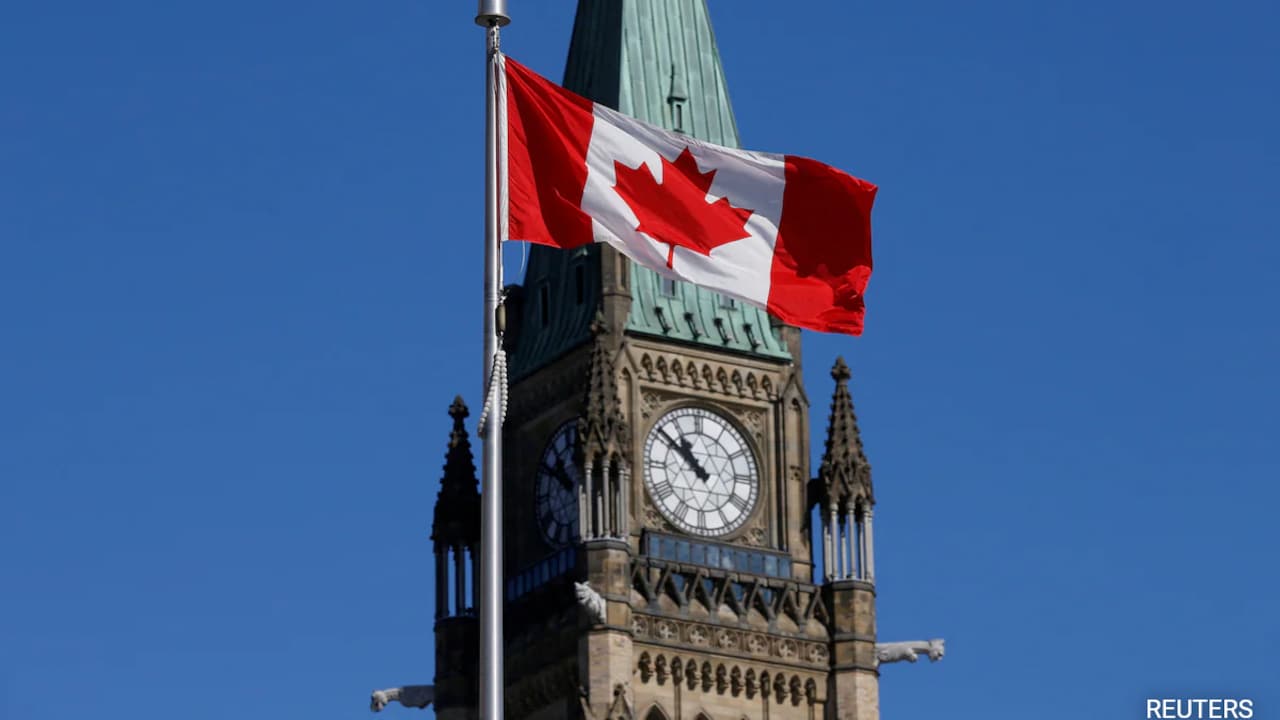
Canada will use the upcoming NATO summit in Turkey to announce around ten founding nations for the newly established Defence, Security and Resilience Bank. Lead negotiator Isabelle Hudon confirmed the target, aiming to operationalize a multilateral institution designed to raise up to 133 billion dollars in low-cost financing for military infrastructure and arms production. While the initiative represents an unprecedented attempt by middle powers to build a financial shield independent of Washington, deep structural cracks threaten its viability before the first loan is issued.
The initiative emerges at a moment of profound geopolitical anxiety. With traditional alliances strained by political shifts in the United States and escalating threats across eastern Europe and Asia, secondary global powers are discovering that traditional defense procurement is too slow and too expensive. Recently making news lately: Why the Latest Kyiv Barrage Changes Everything for Ukraine and Russia.
Shifting Alliances and the Rise of Middle Powers
Canadian Prime Minister Mark Carney has positioned this project as the cornerstone of a new strategic doctrine. The goal is simple on paper. By pooling sovereign capital, allied nations can create a financial vehicle capable of offering cheap, long-term loans to defense contractors and governments looking to upgrade their military infrastructure.
It is a direct response to a changing global architecture. For decades, the North Atlantic alliance relied on American financial and military might to guarantee security. That guarantee no longer feels absolute. European capitals, fresh from confrontations over spending targets and defensive commitments, are searching for structural alternatives. Further information into this topic are covered by NPR.
The institutional inertia of traditional banking has made this problem worse. For years, major commercial lenders treated defense spending as a compliance nightmare, often classifying weapons manufacturing under the same restrictive environmental and social governance criteria as tobacco or gambling. While Canada's "Big Six" commercial banks and global giants like JPMorgan Chase and Deutsche Bank have recently signed on to support this new framework, private capital remains hesitant to fund heavy artillery production without sovereign guarantees.
The Financial Architecture and the Credit Rating Trap
The mechanics of the institution reveal a massive hurdle that its architects are struggling to solve. To provide the "cheap finance" promised by Ottawa, the institution requires a triple-A credit rating.
Without that top-tier stamp of approval from ratings agencies, the bank will be forced to borrow money on international markets at higher interest rates. Those higher costs would then be passed down to borrowers, defeating the entire purpose of the initiative. To secure that rating, the bank needs heavy-hitting economic engines to anchor its balance sheet.
The current list of participants is missing that economic weight. While Luxembourg has agreed to act as the European base, and countries like Italy, Spain, Belgium, and Turkey are analyzing the proposals, the world's largest economies are notably absent. The United States is not participating. G7 members like Germany and France remain on the sidelines.
Initial financial models suggest that proportional contributions would require Canada to inject up to 1.5 billion euros in seed capital. Smaller founding nations would be expected to chip in between 500 million and 750 million euros. It is a substantial commitment for smaller economies, particularly when the benefits remain abstract.
A Quiet War Over Weapon Procurement Funds
The project does not exist in a vacuum. It faces direct competition from a rival financial club quietly being built in Western Europe.
The United Kingdom, the Netherlands, and Finland have bypassed the Canadian-led initiative entirely. They are pursuing their own specialized framework, known as the Multilateral Defence Mechanism. This competing initiative focuses heavily on joint stockpiling and immediate procurement rather than long-term industrial infrastructure.
This diplomatic split undermines the narrative of unified allied resilience. British officials have explored options to align or eventually merge their framework with the Canadian project, but their refusal to sign on as founding members speaks volumes. The Netherlands has been even more direct, stating publicly that its focus remains entirely on its immediate European partners.
This leaves Ottawa in a vulnerable position. By pushing ahead to meet the self-imposed deadline at the Ankara summit, Canada risks launching an institution that lacks the financial muscle of its largest allies. The rush to announce a list of ten founding members looks less like a strategic triumph and more like a hurried attempt to project momentum.
The High Stakes for Vulnerable Borders
For frontline nations, these bureaucratic and financial disputes are not academic. They are matters of national survival.
Ukraine has engaged in detailed discussions about joining the bank. For Kyiv, a specialized multilateral lender could provide a reliable pipeline of credit to rebuild its domestic defense industrial base, independent of the shifting political winds of Western legislatures. The current setup of international aid relies on volatile political packages that can be blocked by a single domestic dispute in Washington or Brussels. A bank operates on contracts and balance sheets, which are much harder for populist politicians to disrupt.
South Korea is also watching closely. Officials in Seoul have held productive talks with Canadian negotiators, though sources put the chance of them joining as a founding member at a coin-flip. South Korea possesses massive defense manufacturing capacity but faces its own severe security challenges in East Asia. Landing a major non-NATO industrial power like South Korea would give the institution a massive boost in credibility.
If negotiations stall, the bank risks becoming an empty political shell. An international financial institution without triple-A backing cannot outmuscle traditional commercial markets. It would become just another committee in an alliance already crowded with acronyms.
Industrial Realities Beyond the Balance Sheet
Building a bank is not the same as building a factory. Even if the capital is secured, the global defense industry faces severe physical bottlenecks that money alone cannot solve overnight.
Sovereign loans cannot instantly manufacture machine tools, train specialized engineers, or source rare earth minerals controlled by adversarial powers. The assumption that cheap credit will automatically trigger an industrial renaissance ignores the reality of supply chain degradation. Decades of post-Cold War disinvestment have left Western manufacturing lines brittle.
The true test of the initiative will not occur in the press rooms of the Ankara summit next week. It will occur in the years that follow, when the chosen host city—whether Toronto, Montreal, or Halifax—attempts to translate financial instruments into actual artillery shells, radar systems, and naval vessels. Until the economic heavyweights of the G7 put their capital on the line, Canada's ambitious project remains a high-stakes gamble on the willingness of middle powers to carry the financial burden of global security alone.