Money talks, and in Formula 1, it speaks louder than missile warnings. While tennis tours, soccer federations, and endurance racing series have spent 2026 scrubbing Middle Eastern stops off their calendars, Formula 1 is rolling its multi-million-dollar circus straight into Lusail and Yas Marina.
It’s a stark split. The regional war involving Iran, the United States, and Israel—alongside retaliatory Houthi strikes on Riyadh—has shattered the Gulf's carefully curated image as a friction-free playground for global sports. Yet as the 2026 F1 season hits its final stretch with the Qatar Grand Prix on November 29 and the Abu Dhabi finale on December 6, the championship is pushing forward.
The Real Reason F1 Won't Walk Away From the Gulf
If you want to understand why F1 is racing in Qatar while other sports flee, follow the wire transfers. Hosting a Formula 1 Grand Prix in the Middle East isn't a normal sports partnership; it's a massive financial pillar for Liberty Media.
Middle Eastern promoters pay between $40 million and $55 million per race just in hosting fees. Losing two races at the end of the year wouldn't just leave a hole in the broadcast schedule—it would blow an $80 million to $110 million crater straight through Liberty Media’s annual balance sheet. And because the local organizers in Qatar and Abu Dhabi refused to cancel on their own, F1 walking away unilaterally would have triggered massive breach-of-contract and damages claims.
F1 already took a hit earlier this year. Back in March 2026, as the conflict erupted and airspace closed across the Gulf, F1 had no choice but to pull the plug on its April double-header. The Saudi Arabian Grand Prix in Jeddah was flat-out canceled. Bahrain managed to salvage its event only by relocating the race thousands of miles away to Malaysia's Sepang International Circuit in October.
By November, F1 drew up backup plans to end the season at Imola in Italy, then quietly shelved them. The financial pain of canceling two more races was simply too steep, especially once Liberty Media ran a live test case with its other major motorsport property.
The MotoGP Guinea Pig Strategy
Three weeks before F1 arrived at Lusail, MotoGP—which Liberty Media also owns—staged its Qatar round at the exact same track on November 8.
It wasn't without friction. Yamaha boycotted the trip entirely over safety concerns. Still, the bikes ran, the weekend passed without a security incident, and Liberty Media got the proof of concept it wanted.
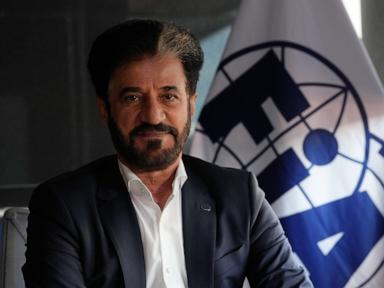
To F1 executives and FIA President Mohammed Ben Sulayem—himself an Emirati—that single weekend was enough to declare the region open for business. Ben Sulayem insisted the governing body was "fully prepared" and wouldn't send staff or drivers anywhere unsafe.
Behind the scenes, though, not everyone in the paddock buys the official optimism.
- Broadcasters and sponsors are staying home. Sky and several other television partners, along with multiple commercial sponsors, refused to send staff to Qatar, opting for remote operations instead.
- Drivers are walking a diplomatic tightrope. Mercedes team principal Toto Wolff told staff that anyone who didn't want to travel didn't have to, a rare admission of internal unease. Meanwhile, Williams driver Carlos Sainz publicly voiced doubts about racing in the region before abruptly backtracking—a move widely seen in the paddock as the result of team and series pressure.
- Sovereign wealth ties keep teams quiet. You can't separate F1 teams from Gulf money anymore. Bahraini and Emirati investors own McLaren. Qatar's sovereign wealth fund holds a major stake in Audi. Saudi money backs Aston Martin. Nobody on the grid wants to bite the hand funding their development budget.
The Sports That Actually Pulled the Plug
While F1 is muscling through, almost every other major sporting body looked at the exact same intelligence briefings and decided the risk wasn't worth it.
The casualty list across Middle Eastern sports in 2026 is huge, and it hits Saudi Arabia hardest. Following drone and missile strikes by Iran-backed Houthi rebels on Riyadh's international airport and business district, international federations started bailing out.
Look at what's been canceled, postponed, or yanked out of the region:
- Soccer's Asian Cup: Originally slated for January in Saudi Arabia, the monthlong tournament was pushed all the way back to late December 2027.
- WTA Finals: Women's tennis pulled its season-ending championship out of Saudi Arabia rather than gamble on player safety and airspace stability.
- The 2027 Dakar Rally: Organizers stripped Saudi Arabia of the iconic off-road race and relocated the entire event to Portugal and Morocco.
- World Endurance Championship (WEC): After canceling its March opener in Qatar, the FIA's top sports car series abandoned its planned October finales in Qatar and Bahrain, moving them to Barcelona and Monza instead.
- Formula E and Pro Cycling: Formula E pushed its December Saudi race to April, while both the AlUla Tour in Saudi Arabia and the Tour of Qatar were wiped off next year's cycling calendar.
Even events that stayed in the region haven't escaped intact. Just days before F1 landed in Doha, the United States pulled its national team out of the FIFA Under-17 World Cup hosted in Qatar—a massive public relations bruise for a country trying to convince the International Olympic Committee that it can safely host the 2036 Summer Olympics.
Soft Power Meets Hard Reality
For the past decade, Gulf states treated global sports like an insurance policy. The playbook was simple: spend billions to host the biggest events, buy stakes in premier teams, and build a reputation for stability and predictability.
Between 2019 and 2024 alone, Saudi Arabia hosted over 100 international sporting events and poured more than $6 billion into global sports between 2021 and 2023, according to research by Sebastian Sons at the German think tank CARPO. Kristian Coates Ulrichsen, a Middle East fellow at Rice University's Baker Institute, noted that long-term predictability was the Gulf's biggest selling point at a time when Western cities were balking at the cost of mega-events.
That predictability is gone.
Hard power has collided with soft power, and the economic fallout is already forcing Saudi Arabia to scale back its ambitions. With the Saudi economy contracting by 4.7% in the second quarter of 2026 and 3.8% in the third, Riyadh's blank-check era is hitting a wall.
The cracks were showing even before the war escalated—Saudi Arabia already handed back hosting rights for the 2029 Asian Winter Games—but the conflict accelerated the retreat. Plans for the 2034 FIFA World Cup have quietly shrunk from 15 stadiums across five cities down to 10 stadiums in four cities, and the futuristic NEOM Stadium project has been shelved indefinitely.
Qatar and the United Arab Emirates are desperately trying to separate their brand from Saudi Arabia's security headaches. Lusail circuit chief Abdulrahman Al Mannai insists life on the ground in Doha is normal, pointing to unchanged ticket prices and sold-out grandstands for this weekend's race. For Doha, keeping F1 on the track is existential—any sign of instability could hand the 2036 Olympic Games straight to rival bidder India.
What Fans and Travel Planners Should Watch For
If you're following global sports calendars—or holding tickets to an upcoming event in the Gulf—don't treat Formula 1's presence in Qatar and Abu Dhabi as proof that the region's sports disruption is over. F1 is the exception, not the rule.
Watch three specific pressure points over the next few months:
- Airspace and travel insurance fine print: Even when events go ahead, sudden airspace closures around the Persian Gulf have stranded athletes like tennis star Daniil Medvedev and badminton champion P.V. Sindhu earlier this year. If you're booking travel for 2027 Gulf events—like Qatar's FIBA Basketball World Cup in August—book refundable flights and verify whether your travel policy excludes "regional conflict" disruptions.
- Broadcaster and team boycotts: Watch who actually shows up, not just whether an event stays on the calendar. When major TV networks and manufacturers like Yamaha quietly pull personnel while the official broadcast goes on, it signals that corporate risk assessments disagree with sports executives.
- Venue swaps disguised as "host" events: Follow Bahrain's blueprint. Rather than canceling outright and forfeiting commercial rights, Gulf promoters are increasingly paying neutral circuits in Europe or Asia to host their branded events. Expect more "Middle Eastern" races and tournaments to pop up in Malaysia, Spain, and Italy until the regional security picture actually stabilizes.


