Most political obituaries read like a dry grocery list of committee assignments and bill numbers. That's a terrible way to remember Kevin Murray.
When the former California State Senator died at 66, Los Angeles didn't just lose another retired lawmaker. The city lost one of the rare politicians who understood that public policy only matters if you can actually walk on it, sleep under it, or breathe cleaner air because of it. You see his fingerprints every time you drive past Baldwin Hills Scenic Overlook or look at how Los Angeles approaches supportive housing today.
If you're trying to figure out who Kevin Murray really was—beyond the headlines about his passing—you have to look at two very different worlds. First, there's the sharp-dressed Sacramento power broker from a legendary California political dynasty. Second, there's the guy who left elected office and spent the next decade in the trenches running one of the toughest homeless service agencies in America.
The Baldwin Hills Gamble Nobody Wanted to Make
Back in the late 1990s and early 2000s, urban parks weren't exactly the sexiest topic in the California State Capitol. Politicians loved ribbon cuttings for highways and stadiums. Open space in predominantly Black and brown neighborhoods? That usually got pushed to the bottom of the budget pile.
Murray wouldn't let it happen.
Representing the 26th Senate District—which stretched across Culver City, Crenshaw, Koreatown, and parts of Hollywood—he saw something everyone else missed. Right in the middle of dense, concrete-heavy Los Angeles sat a massive oil field and scarred hillside in Baldwin Hills. Developers wanted to turn it into luxury housing and commercial sprawl.
Murray fought for a completely different vision. He pushed hard for the creation of the Baldwin Hills Conservancy and helped secure tens of millions of dollars in state bond money to buy up the land. Today, Kenneth Hahn State Recreation Area and the Baldwin Hills Scenic Overlook stand as the largest urban park expansion in Los Angeles in over a century.
Think about that for a second.
Without Murray's stubbornness in Sacramento, that hillside would be covered in gated condos right now. Instead, thousands of Angelenos climb those stairs every single weekend for free. That's not abstract legislation. You can literally feel it in your calves.
Growing Up Inside a Political Dynasty
You can't talk about Kevin Murray without mentioning his father, Willard Murray.
Willard was a towering figure in Southern California politics, a former State Assemblymember and longtime aide to Mervyn Dymally who helped build Black political power in Los Angeles from the ground up. Growing up in that house meant politics wasn't something you watched on the evening news. It was dinner table conversation.
Kevin took a slightly winding path before stepping into his father's shoes. He earned a business degree from Cal State Northridge, got an MBA from Loyola Marymount University, and picked up a law degree from Loyola Law School. Before ever running for office, he worked in the entertainment industry at the William Morris Agency.
That Hollywood background actually made him a better legislator. He understood contracts, leverage, and how to read a room faster than most career bureaucrats. When he won his State Assembly seat in 1994—and later moved up to the State Senate in 1998—he brought a pragmatic, deal-making energy that frustrated purists on both sides of the aisle.
He wasn't interested in giving viral speeches just to hear himself talk. He wanted votes.
What He Actually Passed in Sacramento
During his twelve years in the legislature, Murray racked up a legislative record that shaped modern California in ways people take for granted today:
- The Digital Divide and Privacy: Long before Big Tech dominated every headline, Murray pushed early consumer privacy protections and fought against predatory spam and telemarketing.
- Entertainment Industry Protections: Representing Hollywood meant protecting below-the-line workers, runaway production incentives, and intellectual property rights when file-sharing first disrupted the music and film industries.
- Transportation Infrastructure: He championed the expansion of the Expo Line—now the Metro E Line—connecting downtown Los Angeles to Culver City and eventually Santa Monica. Critics said nobody in LA would ride a train to the Westside. They were dead wrong.
- Foster Youth Support: He authored key bills aimed at helping young people aging out of the foster care system transition into adulthood with housing and job training instead of ending up on the street.
That last issue turned out to be a preview of his second act.
Trading the Capitol for Skid Row
Term limits forced Murray out of the State Senate in 2006. Most former senators follow a predictable script. They take a cushy lobbying gig in Sacramento, join a few corporate boards, cash big checks, and play golf.
Murray did something that shocked almost everyone who knew him. He took over as president and CEO of the Weingart Center Association.
If you've ever walked through Skid Row in downtown Los Angeles, you know the Weingart Center isn't a ceremonial charity. It's ground zero for the nation's most visible humanitarian crisis. Running a massive residential facility and service provider there means dealing with severe mental illness, addiction, chronic poverty, and endless red tape every single morning.
Honestly, it's a thankless job. When things go right, nobody notices. When things go wrong, the local press is outside your door with cameras.
Murray didn't treat the Weingart Center like a retirement hobby. He brought his legislative Rolodex and real estate knowledge straight into the fight for permanent supportive housing. Under his leadership, the organization stopped relying solely on temporary shelter beds—which basically just put a Band-Aid on a bullet wound—and started building actual apartments with on-site medical and behavioral health support.
Why His Approach to Homelessness Worked
A lot of politicians talk about homelessness like it's a simple math problem. Just build more beds, or just sweep the encampments. Murray knew both extremes failed.
He understood that taking someone who has lived on concrete for ten years and sticking them in an empty apartment without wraparound services sets them up to fail. At the same time, he knew shelter beds without a permanent exit strategy just trap people in an endless loop.
So he pushed massive, multi-story supportive housing developments right in the heart of downtown Los Angeles, proving you could use public-private financing to get units built faster. Even as construction costs skyrocketed and neighborhood opposition stalled projects across the city, Murray kept pushing dirt around and opening doors.
What Critics Got Wrong About Him
Nobody survives decades in Los Angeles politics and homeless services without taking heat. Murray certainly had his share of critics.
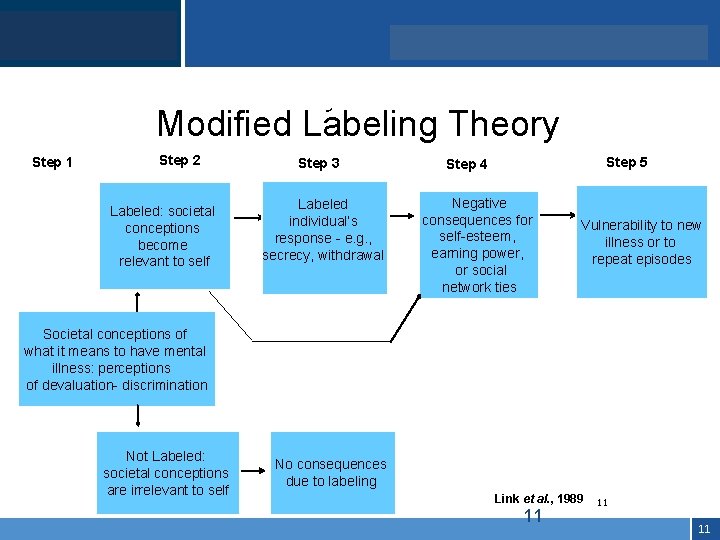
During his Senate years, some progressive activists felt he was too cozy with business interests and Hollywood studios. Later, at the Weingart Center, critics of the "Housing First" model argued that expensive supportive housing projects took too long to build while street encampments exploded across the city.
Here's the thing those critics usually missed. Murray was operating inside the real world, not a theoretical policy paper. You don't get fifty miles of urban parkland or hundreds of supportive housing units built by shouting slogans from the sidelines. You get them built by knowing how state bond financing works, how to appease local neighborhood councils, and how to get developers and union leaders to sign the same piece of paper.
He was a builder in a city that desperately needed builders.
How to Honor a Legacy Like Kevin Murray's
When a public figure like Murray dies at 66—far too young—people naturally want to know how his work continues. The best way to pay respect isn't just sharing a headline on social media. Look at the actual infrastructure he left behind in Los Angeles and support the work that keeps it alive:
- Use the public spaces he fought to save. Go hike the Baldwin Hills Scenic Overlook or spend a Saturday afternoon at Kenneth Hahn State Recreation Area. Public parks only stay funded and protected when communities actively show up and use them.
- Support permanent supportive housing over quick fixes. Whether you live in California or anywhere else dealing with a housing crisis, pay attention to local zoning votes and supportive housing bonds. Temporary shelters save lives tonight, but permanent housing with mental health care actually ends homelessness.
- Back organizations doing the unglamorous work. Groups like the Weingart Center rely on sustained community backing, volunteer hours, and local advocacy to keep wraparound services running long after the news cameras leave.
Kevin Murray spent his life proving that government and nonprofits don't have to be slow, timid, or purely symbolic. He left behind cleaner hills, better transit, and real roofs over the heads of people the rest of the city had written off.