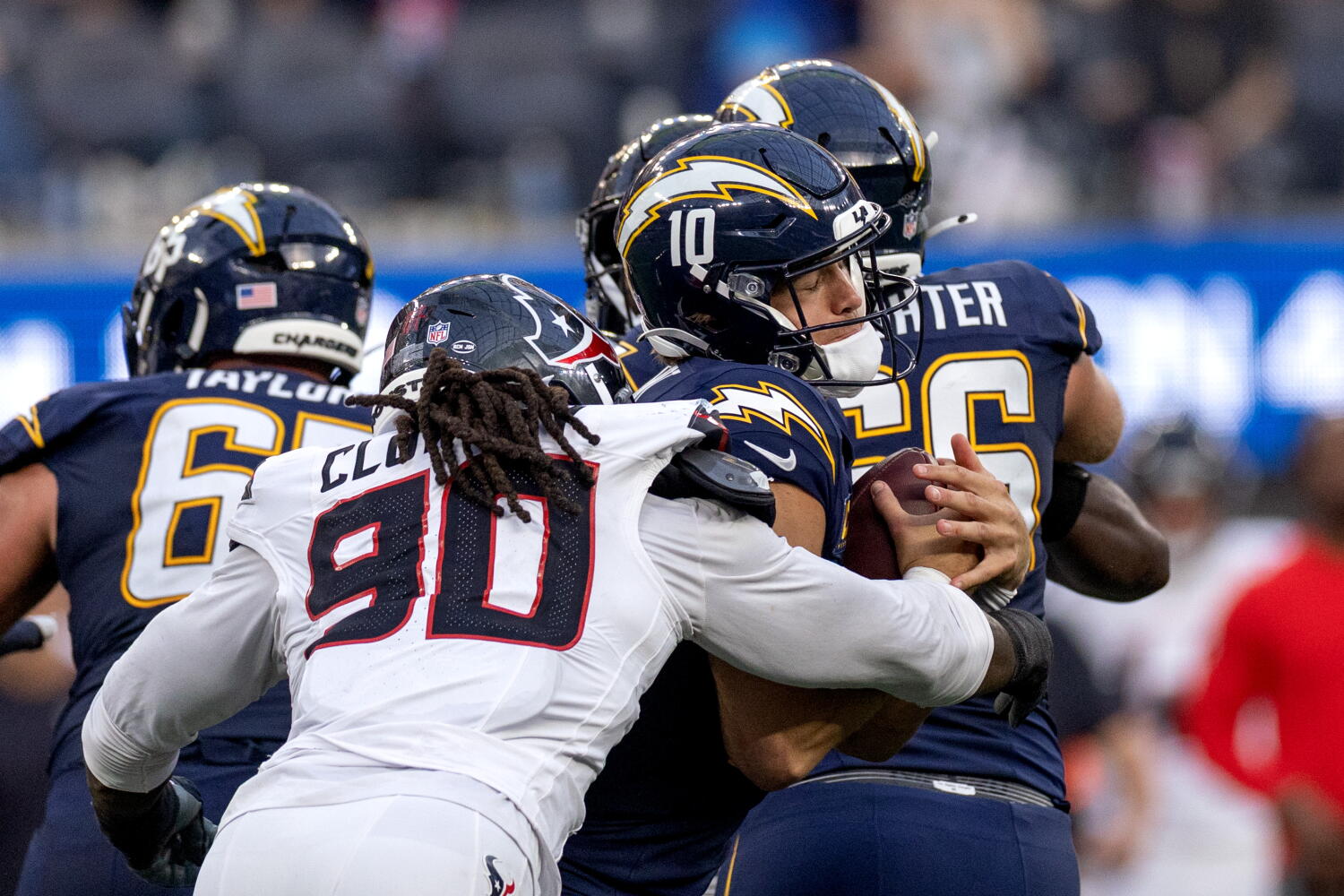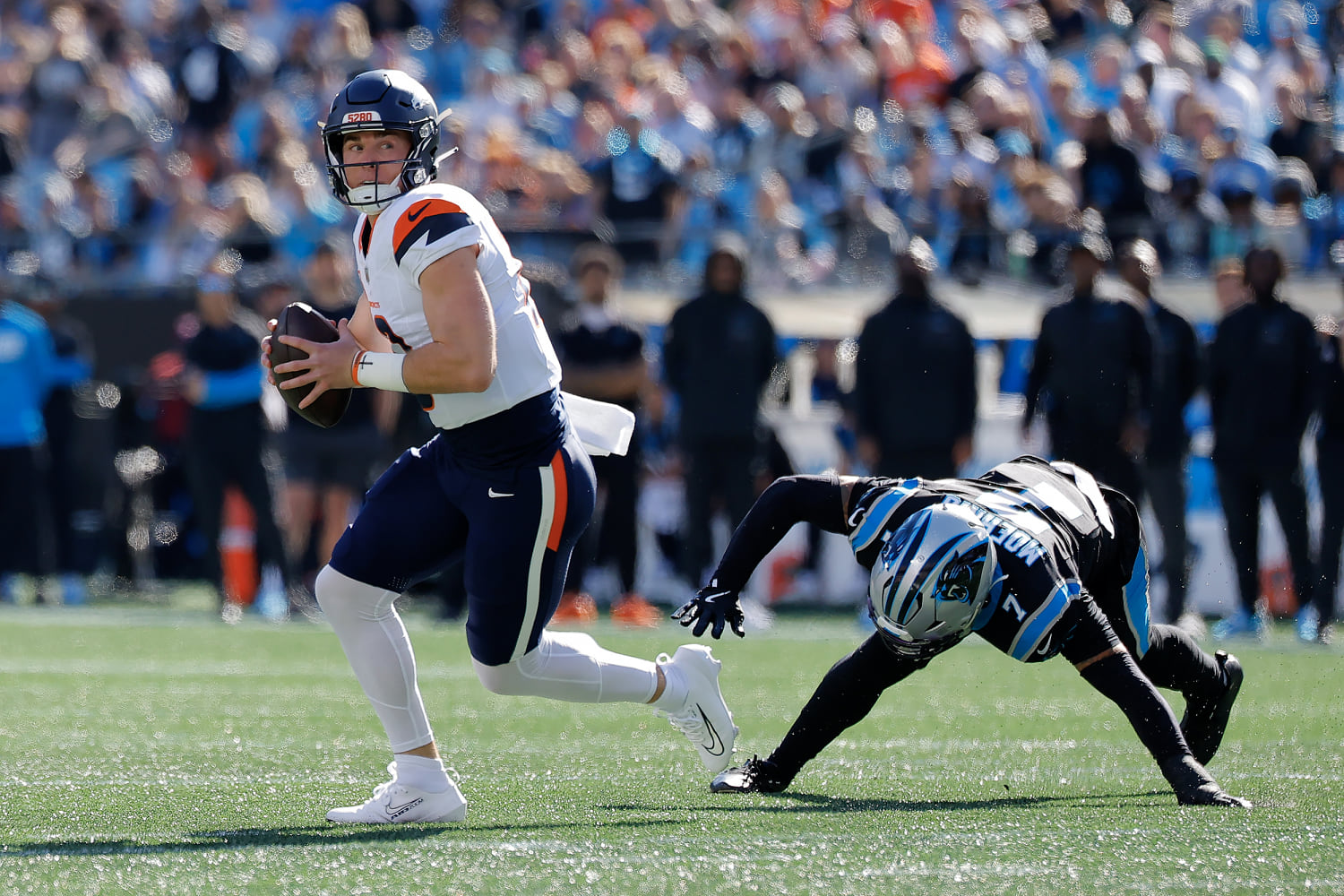
Brock Purdy owns the single-season NFL record for passer rating among quarterbacks with at least 400 passing attempts, posting a 113.0 mark during the 2023 campaign that edged past Patrick Mahomes’ 113.8 mark from 2018 in efficiency metrics—or rather, Purdy’s 9.6 yards per attempt shattered the single-season efficiency record set by Kurt Warner and surpassed Mahomes’ historic 2018 MVP pace in Adjusted Net Yards per Attempt (ANY/A). In 2023, the final pick of the 2022 NFL Draft finished with an ANY/A of 9.01, overtaking Mahomes’ 2018 benchmark of 8.89 and rewriting the modern standard for passing efficiency.
The numbers look like a clerical error.
When Mahomes threw for 5,097 yards and 50 touchdowns in 2018, football analysts treated those figures like a generational ceiling—the kind of statistical eruption that happens once every twenty years when a transcendent physical talent collides with a Hall of Fame play-caller. Nobody expected the man to topple Mahomes’ efficiency crown to be a 6-foot-1 quarterback drafted 262nd overall out of Iowa State, armed with an average fastball and zero pre-draft hype. Yet the ledger does not lie. Across a full 16-game sample before sitting out Week 18, Purdy generated more value per dropback than Mahomes did during the most explosive statistical season of his career.
The Anatomy of an Efficiency Anomaly
To understand how an unlikely quarterback beat a Patrick Mahomes record, you have to strip away the highlight-reel bias that governs modern sports coverage. Television networks sell side-arm lasers, 60-yard off-platform bombs, and scramble drills that defy geometry. Those plays win MVP trophies, and rightly so. But the statistical ledger rewards something far less glamorous—eliminating negative plays while maximizing intermediate chunk gains.
Mahomes’ 2018 season was built on volume and explosive variance. He attempted 580 passes, absorbed 26 sacks, and threw 12 interceptions while pushing the ball downfield at a relentless clip. His raw production was staggering, yet those 12 picks and 26 sacks acted as mathematical anchors on his per-dropback efficiency.
Purdy’s 2023 campaign operated on a completely different economic model. Working inside Kyle Shanahan’s offense, Purdy attempted just 444 passes—136 fewer than Mahomes in 2018—while generating 4,280 yards and 31 touchdowns. His 9.6 yards per attempt tied him with Otto Graham (1953) and trailed only Sid Luckman (10.9 in 1943) in the post-merger era for passers with significant volume. More importantly, Purdy threw only 11 interceptions while turning an absurd percentage of routine throws into 20-yard gains.
Consider the math behind Adjusted Net Yards per Attempt, the metric widely regarded by football analytics departments as the truest measure of passing efficiency because it accounts for touchdowns, interceptions, and sack yardage lost:
- Patrick Mahomes (2018): 5,097 passing yards, 50 TDs, 12 INTs, 26 sacks for 171 lost yards across 606 total dropbacks = 8.89 ANY/A.
- Brock Purdy (2023): 4,280 passing yards, 31 TDs, 11 INTs, 28 sacks for 153 lost yards across 472 total dropbacks = 9.01 ANY/A.
The gap is razor-thin, yet the structural difference is massive. Mahomes needed 50 touchdown passes just to stay within striking distance of a quarterback who threw 19 fewer scores. Purdy achieved higher per-play output simply because almost every pass he threw moved the chains by double digits.
Why Critics Call It a System Illusion
Whenever a late-round pick outpaces a generational icon on a stat sheet, the backlash arrives before the ink dries. Across broadcast desks and front-office circles, the prevailing counter-argument is blunt: Purdy did not break Mahomes’ efficiency record; Kyle Shanahan, Christian McCaffrey, Deebo Samuel, George Kittle, and Brandon Aiyuk broke it using Purdy as a vessel.
There is legitimate meat on that bone. Ignore the extreme takes on both sides and look at the tracking data.
During the 2023 season, San Francisco’s skill players led the league in yards after the catch (YAC) per completion. On dozens of throws, Purdy delivered a standard six-yard in-breaker or a flat route, only for Samuel or McCaffrey to break two tackles and turn a routine checkdown into a 45-yard sprint. When a quarterback’s raw yardage totals are heavily subsidized by elite open-field runners, his yards per attempt inflate without requiring him to thread tight windows 30 yards downfield.
Furthermore, Shanahan’s pre-snap motion and heavy personnel groupings—specifically the constant deployment of fullback Kyle Juszczyk alongside McCaffrey—forced opposing linebackers to freeze at the snap. That hesitation created wide-open throwing lanes over the middle of the field, allowing Purdy to throw with anticipation before receivers even broke out of their stems.
Put a journeyman backup into that ecosystem, critics argue, and he posts Pro Bowl numbers. Put Patrick Mahomes into that ecosystem, and he throws for 6,000 yards.
The Counter-Evidence on Film
Yet dismissing Purdy’s record as pure scheme ignores why Jimmy Garoppolo, Trey Lance, Nick Mullens, and C.J. Beathard never came close to touching those numbers in the exact same offense.
Garoppolo ran Shanahan’s system for six years with largely the same supporting cast. His career high in ANY/A was 7.83 in 2019—more than a full yard per dropback behind Purdy’s 2023 mark. Why did the offense suddenly jump into historic territory when the seventh-round rookie took over?
Two specific traits separate Purdy from Shanahan’s previous starters:
- Aggressive Vertical Processing: Garoppolo routinely turned down open deep post routes to take the safe underneath checkdown, compressing the field and allowing safeties to creep toward the line of scrimmage. Purdy, despite lacking an elite arm, consistently pulled the trigger on deep middle throws between the numbers. In 2023, Purdy led the NFL in passer rating on throws traveling 20 or more air yards, proving his efficiency was not merely a product of five-yard screen passes.
- Pocket Escape Geometry: Unlike statuesque pocket passers who crumble when interior pressure collapses the cup, Purdy possesses elite short-area agility. His 10-yard split at the 2022 NFL Combine (1.55 seconds) matched the burst of many running backs. When edge rushers forced him off his spot, he rarely panicked or drifted backward into catastrophic 12-yard sacks. Instead, he climbed the pocket, kept his eyes downfield, and turned broken plays into 18-yard completions to Aiyuk.
The system provided the canvas, certainly. Without a processor capable of executing full-field reads at rapid speed, however, that canvas stays blank.
What Draft Evaluators Missed at Iowa State
How does a player capable of out-dueling Patrick Mahomes in efficiency metrics fall to the final selection of the entire draft? The failure is an indictment of how NFL scouting departments weigh physical measurables against cognitive processing.
Scouts do not miss on players like Purdy out of laziness. They miss because the evaluation pipeline is engineered to filter out outliers who lack elite physical traits. When evaluators watched Purdy’s tape from his four years at Iowa State, they saw a quarterback who peaked statistically as a sophomore in 2019 before plateauing under Matt Campbell’s conservative, tight-end-heavy offense.
His senior tape showed a tendency to play hero ball when Iowa State’s offensive line broke down, leading to puzzling turnovers in big moments. Add in a sub-6-foot-1 frame, average hand size (9 1/4 inches), and a throwing motion that lacked effortless velocity toward the boundary, and every scouting rubric flagged him as a career backup.
Teams spent top-ten picks on quarterbacks with 4.4 speed and 70-yard arm strength, operating under the assumption that coaching staffs can teach processing later. History shows that assumption is backward. You can build a scheme around average arm strength if the quarterback sees coverage rotations a half-second faster than the defense. You cannot scheme around a quarterback who holds the ball for 3.4 seconds waiting for receivers to come visibly open.
The Structural Vulnerability of the Record
Records built on extreme efficiency carry an expiration date that volume records rarely face.
When Mahomes threw 50 touchdowns in 2018, he proved he could sustain elite production even when defenses knew the ball was coming through the air on 65 percent of snaps. Because Mahomes possessed the physical tools to beat double-teams and overcome offensive line injuries, his floor remained near the top of the league regardless of surrounding talent.
Purdy’s efficiency record, by contrast, is deeply sensitive to ecosystem health. We saw the exact fault lines emerge whenever San Francisco lost key pieces of its offensive infrastructure. When left tackle Trent Williams and Deebo Samuel missed time during a three-game losing streak in October 2023, Purdy’s interception rate spiked and his yards per attempt plummeted. Without an elite blindside protector and receivers who win instantly against press-man coverage, his average arm strength forced him into tighter windows where defensive backs could close on the ball.
This is the fundamental truth that separates an efficiency anomaly from sustained dominance. Breaking a Patrick Mahomes record over a single 16-game stretch requires an alignment of scheme, health, and ruthless execution. Replicating it across five straight seasons requires transcending the scheme altogether when the infrastructure inevitably erodes.
NFL front offices have spent the last three years desperately trying to reverse-engineer San Francisco’s formula, hiring every assistant who ever shared a hallway with Kyle Shanahan in hopes of turning mid-round quarterbacks into statistical titans. Almost all of them have failed because they copied the formations without securing the processing speed required to run them. Purdy’s name sits atop the efficiency record book not because he is a more gifted thrower of the football than Patrick Mahomes, but because he proved that ruthless decision-making inside an optimized structure can temporarily outproduce raw physical genius.