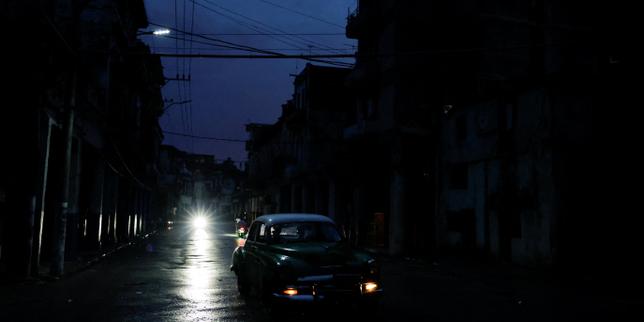
Every single headline about Cuba follows the exact same lazy script. Grid goes dark. Millions plunge into the pitch black. Technicians work frantically around the clock. Power flickers back on. Everyone breathes a sigh of relief, pats themselves on the back, and pretends the structural rot has magically vanished alongside the outage.
It is a comforting illusion. And it is completely wrong.
Focusing on the restoration of the Cuban electrical system misses the actual crisis. The obsession with getting the juice flowing again treats a terminal cancer like a common cold. When a power grid collapses with the frequency of a faulty light switch, the act of fixing it is not a victory. It is merely resetting the timer on the next catastrophe.
I have spent years analyzing fragile infrastructure frameworks in isolated economies. I have watched billions of dollars in emergency patches evaporate into thin air because decision-makers refuse to look past the immediate horizon of turning the lights back on.
Let us dismantle the comfortable narrative everyone keeps buying.
The Myth of the Quick Fix
The standard media framing treats Cuba's blackouts as acute emergencies. A sudden storm rolls in, an aging thermal plant trips offline, fuel shortages bite hard, and darkness descends. The narrative implies that if you just inject enough capital, ship enough replacement parts, and squeeze a bit harder, the system will return to a stable baseline.
That baseline does not exist.
The Cuban electrical grid is a relic of a mid-twentieth-century industrial model that relies on centralized, high-capacity thermal power plants fueled by imported hydrocarbons. These plants are ancient. They suffer from chronic maintenance starvation, corrosive marine environments, and a desperate lack of spare parts due to punishing geopolitical blockades and severe currency crutches.
When a plant fails—which happens routinely—the remaining nodes of the grid take the brunt of the load. They trip. Then the next one trips. It is a cascading failure loop.
Restoring power in this environment means firing up ancient steam turbines that are operating on borrowed time. Pumping electricity back into the wires without addressing the underlying generation deficit is like bailing out a sinking ship with a teaspoon while ignoring the gaping hole in the hull. You are not solving the problem. You are just managing the rate of your own drowning.
Why Centralization is a Suicide Pact
The lazy consensus among mainstream energy analysts is that Cuba simply needs a massive injection of foreign investment to rebuild its centralized mega-plants. Pour billions into national grid modernization, upgrade the transmission lines, and centralize control even further.
This is a disastrous strategy.
Centralized grids are brilliant for efficient distribution under ideal, high-resource conditions. They are absolute death traps for resource-constrained, isolated island nations facing systemic economic and logistical bottlenecks.
Imagine a scenario where a single mega-plant provides thirty percent of a nation's baseline power. When that single facility suffers a catastrophic boiler failure, nearly a third of the country goes dark instantly. The remaining plants cannot absorb the sudden impedance mismatch. The transmission network destabilizes. Protection relays trip to prevent physical destruction of the hardware. The whole architecture collapses like a house of cards.
Larger, wealthier nations absorb these shocks because they have massive interconnected grids, deep strategic petroleum reserves, and redundant private markets. Cuba has none of those safety nets. Continuing to chase the centralized grid dream is an exercise in repeating past failures with higher stakes.
The Unspoken Trade-off of Decentralization
If centralization is a trap, the obvious counter-argument points toward radical decentralization. Microgrids. Solar arrays. Wind farms distributed across every province. Localized energy autonomy.
Let us be brutally honest about the downsides of this approach, because contrarianism without risk assessment is just fantasy.
Decentralization is messy, expensive upfront, and difficult to coordinate. A distributed network of solar panels and localized biomass generators requires advanced power electronics, microgrid controllers, and skilled technicians in every municipality. It strips away top-down centralized control—something political structures historically resist. Furthermore, solar power without massive battery storage is useless at midnight. Batteries degrade, require rare earth minerals, and introduce their own supply chain vulnerabilities.
Yet, despite these steep hurdles, a distributed architecture offers something centralized grids never can: fault tolerance.
If a localized microgrid in a specific province fails, the blackout stays localized. The rest of the island keeps humming. A shock is contained rather than amplified. By abandoning the obsession with a single, national electrical heartbeat, the system gains the resilience of a biological organism rather than the fragility of a glass statue.
The Real Question Nobody is Asking
People love to ask: "When will Cuba's power grid finally be fully repaired?"
It is the wrong question. It accepts the premise that the current architecture is salvageable. It assumes that "repair" means returning to what was there before.
The better question is: "How fast can Cuba uncouple its economic survival from centralized fossil-fuel combustion before the next total system collapse permanently cripples its productivity?"
The answer requires abandoning the romanticized imagery of heroic linesmen working through the night to revive dying nineteenth-century technology. Heroes are great for photo-ops, but they are a terrible substitute for sound structural engineering.
Stop celebrating the restoration of a broken machine. Break the machine down, scatter its pieces, and build something that cannot fall all at once.


