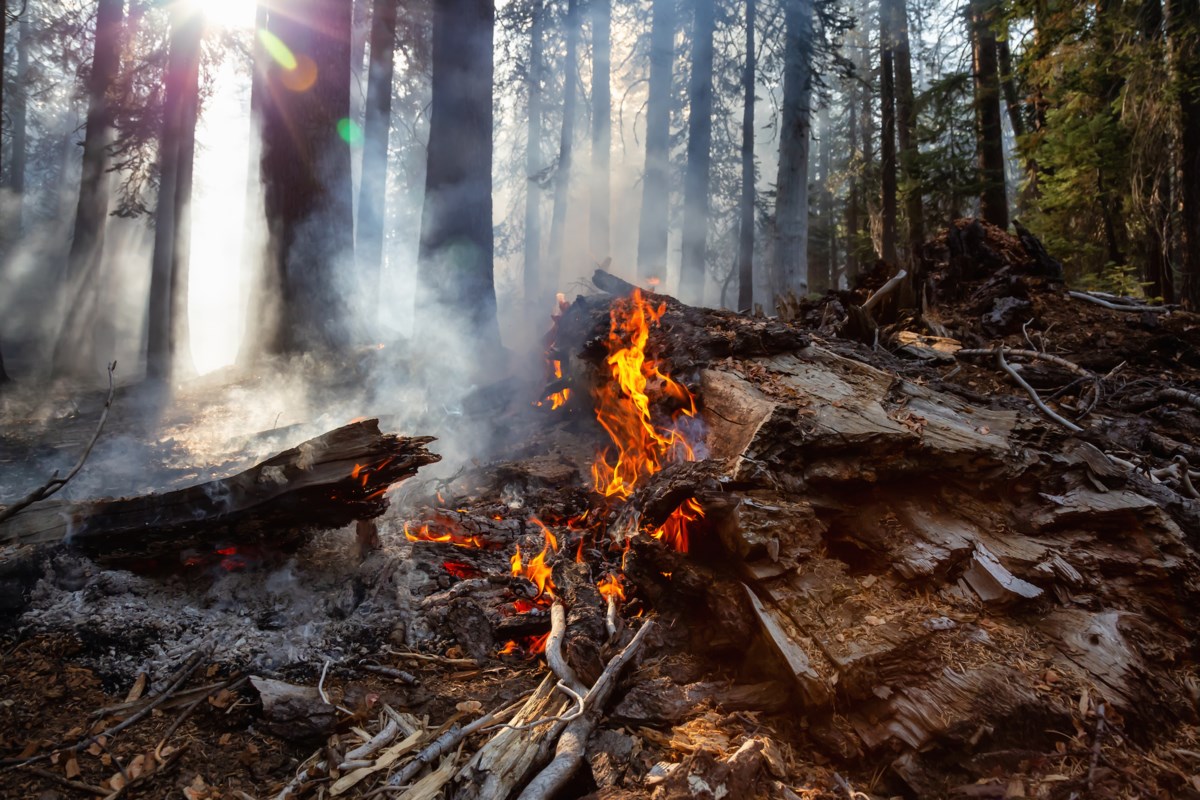
The bombardment of Qeshm Island by nearly a dozen Western projectiles marks a catastrophic breakdown of deterrence in the Persian Gulf. This is not a standard diplomatic flare-up. When American precision-guided ordnance slammed into military installations across the largest island in the strait on Sunday, it signaled that the fragile interim ceasefire between Washington and Tehran has completely collapsed. The Islamic Revolutionary Guard Corps responded by declaring the world's most critical oil chokepoint shut. Wars often start with a miscalculation, and the smoke rising from the southern port cities of Iran suggests the window for a quiet exit closed hours ago.
What the public sees as a sudden burst of violence is actually the logical end to a failed strategy. For months, international mediators attempted to patch together a workable understanding that would keep commercial shipping safe while allowing Iran to test the limits of its regional influence. That fiction is gone. The latest escalation, which began when an Iranian strike targeted a container ship transiting the waterway, provoked an overwhelming response from US Central Command. Over 140 targets were struck in a single night, hitting everything from drone launch sites to coastal surveillance networks. Yet, instead of backing down, Tehran expanded the battlefield, demonstrating that its defensive doctrine relies on making the entire region unlivable for Western interests. Recently making waves lately: The Geopolitical Calculus Behind New Delhi's Shift on Yemen Travel Rules.
The Smoking Ruins of the Interim Truce
The weekend's events shattered a diplomatic arrangement that was doomed from its inception. Last month, backchannel talks in Switzerland produced an interim deal aimed at keeping the shipping lanes open. It was a band-aid on a bullet wound. Washington wanted cheap oil and quiet seas during a volatile political calendar. Tehran wanted economic relief and a pause to rebuild its domestic stockpiles. Neither side actually intended to compromise on their long-term strategic objectives.
The immediate catalyst for the collapse was the attack on the container ship M/V GFS Galaxy. Iranian forces allegedly targeted the vessel after it disabled its tracking systems, a move the Revolutionary Guard claimed endangered maritime safety. That excuse fooled no one in Washington. The American response was swift and exceptionally heavy, utilizing a mix of carrier-based aircraft, long-range drones, and naval surface ships to hammer coastal installations. Further insights regarding the matter are explored by Al Jazeera.
It was an old playbook. Western planners assumed that a massive show of force would compel the clerical regime to recalculate its options. They were wrong. Instead of retreating, Iranian commanders ordered a coordinated counter-strike that targeted American logistical footprints across five separate nations simultaneously. Missile batteries and suicide drones targeted positions in Jordan, Kuwait, Bahrain, Qatar, and Oman, proving that Tehran can reach any target in the region at a moment's notice.
Why Qeshm Island Matters to Tehran
To understand why the strikes on Qeshm Island are so significant, one must understand the geography of the Persian Gulf. Qeshm is not just a piece of land. It is an unsinkable aircraft carrier parked directly at the throat of global energy transit. For decades, the Iranian military has transformed this island into a subterranean fortress, packing its limestone caverns with anti-ship missiles, fast attack boats, and sophisticated radar arrays.
When the governor of Qeshm confirmed that ten to eleven projectiles had struck military sites on the island, he was acknowledging a direct hit on the crown jewel of Iran's coastal defense network. Consider a hypothetical scenario where an adversary wants to completely blind a coastal defense network. They would target the exact nodes hit on Sunday afternoon: early-warning radars, missile storage bays hidden in the hills, and the hardened communications centers that link the island to the main naval base at Bandar Abbas.
The strikes were precise, but they leave Iran with a dangerous choice. If Tehran accepts the destruction of its forward assets on Qeshm without a massive response, its ability to project power in the strait is permanently diminished. If it retaliates with the full weight of its remaining arsenal, it risks an all-out conventional war with a superpower. Early indications suggest the regime is leaning toward escalation, viewing any retreat as a form of political suicide.
The Regional Retaliation Matrix
The sheer scale of the Iranian counter-offensive reveals a level of preparation that cannot be achieved overnight. This was a pre-planned contingencies package. Within hours of the initial American bombardment, the Revolutionary Guard struck the Prince Hassan Air Base in Jordan, claims stating they wiped out drone hangars and command facilities. The message to Amman was clear. Hosting Western assets carries an immediate, lethal cost.
Simultaneously, the Al Udeid Air Base in Qatar, which serves as the logistical nerve center for American air operations in the Middle East, came under ballistic missile fire. In Kuwait, drones successfully evaded defensive screens to strike an offshore drilling platform and multiple northern border centers. Even Oman, traditionally the neutral mediator of the Gulf, saw its logistical support facilities at the Port of Duqm targeted by surprise strikes.
This regional barrage serves a specific strategic purpose. Iran is trying to break the coalition of Arab states that tolerate or support the American military presence. By inflicting immediate economic and physical damage on Kuwait and Oman, Tehran is forcing these governments to reconsider their security arrangements with Washington. It is a brutal but effective form of leverage. The activation of missile sirens in Bahrain and the interception of warheads over Qatari airspace show that no one is safe from the fallout.
The Domestic Pressure on the Regime
Inside Iran, the political situation is highly volatile. The recent death of high-ranking officials and the ongoing mourning period have left the leadership exposed and defensive. The speaker of the Iranian parliament openly declared that the era of one-sided deals is finished. This rhetoric is designed for a domestic audience that expects a harsh response to Western actions.
The state cannot afford to look weak. For the ruling clerics, survival is directly tied to their projection of resistance. If the population perceives that the military cannot even defend Qeshm Island or its telecommunications networks, the internal cracks in the regime could widen rapidly. Therefore, the hardliners are pushing for a sustained conflict, believing that a state of war will unify a fractured public behind the flag.
The Logistics of a Closed Strait
The economic consequences of this campaign are immediate. The Persian Gulf Shipping Association has already announced that passage through the Strait of Hormuz is currently impossible. This is not an empty declaration. Insurance underwriters have suspended coverage for commercial vessels entering the Gulf, effectively halting the flow of crude oil from the region's largest producers.
While the United States insists that the waterway remains open, the reality on the water is very different. A lane is not open if a container ship risks being struck by a drone or caught in the crossfire of an air defense battle. The global economy relies on predictability, and predictability died on Sunday afternoon when the projectiles hit Qeshm.
The Illusion of Freedom of Navigation
The United States has long maintained that its presence in the Gulf is intended to protect the global commons. Freedom of navigation is the bedrock of this policy. However, the weekend's strikes reveal the fundamental flaw in this approach. You cannot protect a shipping lane by turning the surrounding coastline into a shooting gallery.
Every time a Western warship launches a missile to intercept a drone, it spends a multi-million-dollar asset to defeat a cheap piece of commercial technology. This asymmetry is unsustainable over the long term. Iran knows this. By forcing the United States into a continuous cycle of bombardment and defense, Tehran is draining Western military readiness while driving global energy prices to levels that threaten international economic stability.
The strikes on Qeshm Island did not solve the problem. They merely advanced the timeline toward a broader conflict that neither side can truly afford, yet neither side knows how to avoid. The assumptions that guided Western policy in the Gulf for forty years have been burned away in the fires of Bandar Abbas and Farur. Washington is now facing a choice between a humiliating withdrawal or an open-ended campaign against a deeply entrenched adversary that has nothing left to lose.