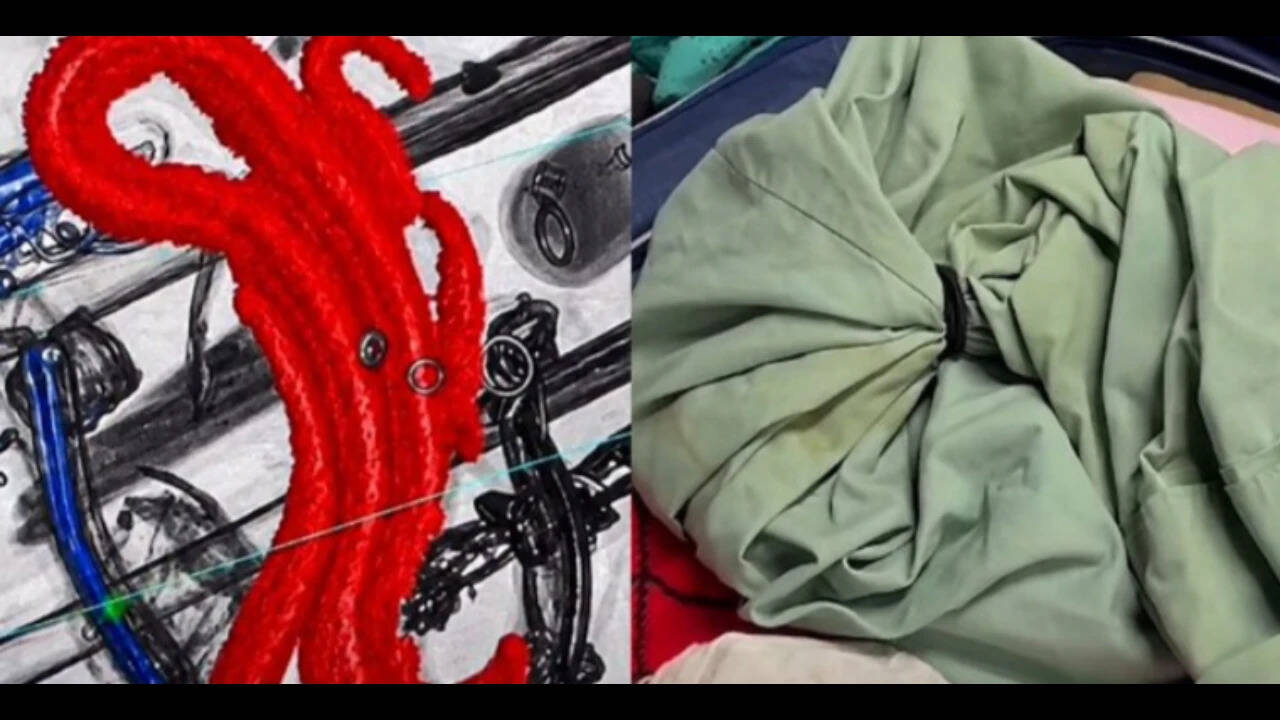
Every few months, a local news station runs the exact same story. A Transportation Security Administration (TSA) agent reaches into a checked bag at a California airport—usually LAX, SFO, or SAN—and pulls out a knotted pillowcase or a taped-up Tupperware container writhing with live reptiles. The headline writes itself. The internet laughs at the "Snakes on a Plane" jokes. The TSA posts a witty pun on Instagram. Everybody moves on.
That collective chuckle is a massive blind spot.
When a passenger successfully walks up to a ticket counter, checks a bag stuffed with live animals, and only gets caught because an X-ray operator happened to spot a suspicious organic mass, you aren't witnessing a triumph of aviation security. You are witnessing the exposure of a system designed entirely around catching 20th-century threats while leaving the door wide open for biological smuggling, ecological devastation, and biosecurity nightmares.
Mainstream travel coverage treats these incidents like quirky human-interest anomalies—isolated moments where a weirdo tried to sneak a pet onto a flight. That framing is dangerously lazy. The reality of wildlife trafficking through commercial aviation is far darker, vastly more systemic, and propped up by an airline industry that prioritizes boarding speed over basic cargo accountability.
The Myth of the "Clueless Pet Owner"
Let’s dismantle the first lazy assumption: that the person packing live snakes into a Samsonite is just an eccentric traveler who didn't want to pay a pet fee.
Sometimes, sure, it’s a kid trying to bring a ball python home from college. More often, especially at major international gateways in California, you are looking at the lowest rung of the illicit wildlife trade. California is a global epicenter for exotic reptile breeding and trafficking. According to data from the U.S. Fish and Wildlife Service (USFWS) and global monitoring networks like TRAFFIC, the illegal trade in live reptiles is a multi-billion-dollar shadow economy.
Why put them in checked luggage? Because the profit margins on rare morphs, protected species, and venomous specimens dwarf the risk of a misdemeanor fine. A single rare Indonesian pit viper or a leucistic Burmese python can fetch thousands of dollars on the black market.
When media outlets frame this as a goofy airport anecdote, they sanitize a criminal enterprise. They obscure the fact that commercial passenger flights are the primary logistics network for illegal wildlife traffickers. FedEx and UPS have spent decades hardening their supply chains against live-animal smuggling, implementing strict biological screening and account verification. Meanwhile, commercial airlines allow millions of anonymous, unverified cardboard boxes and hard-shell suitcases into their cargo holds every single day with virtually zero biological screening.
What X-Ray Machines Actually See (And What They Miss)
To understand why the current security apparatus is failing at this, you have to understand the physics of airport screening.
The TSA is not an agricultural protection agency. They are not wildlife conservationists. Their statutory mandate, established under the Aviation and Transportation Security Act of 2001, is narrow: prevent catastrophic terrorist attacks on aircraft.
When your checked bag goes down the belt, it passes through an Explosives Detection System (EDS). These machines use computed tomography (CT) to measure the density and atomic number of the objects inside your luggage. The software is calibrated to flag specific threat profiles:
- High-density metals: Gun barrels, knife blades, detonator caps.
- Specific organic densities: C-4, Semtex, ammonium nitrate, and liquid explosives.
- Wiring and battery configurations: Improvised explosive devices (IEDs).
Notice what isn't on that list? Cold-blooded vertebrates.
A snake has roughly the same radiological density as a rolled-up pair of damp jeans, a thick leather belt, or a bag of gummy worms. Because reptiles are ectothermic, they don't even show up on thermal imaging if a facility happens to use it. The only reason the TSA agent in California caught those snakes is because the human operator staring at the screen noticed an unusual shape—likely a tightly coiled silhouette or an unexplained container—and decided to trigger a manual bag search.
In the industry, we call this "incidental interdiction." It means the system didn't catch the contraband; a bored human got lucky. For every suitcase full of snakes that makes the local evening news in Los Angeles, dozens more clear the EDS machines without triggering an alarm, get loaded into a pressurized, climate-controlled cargo hold, and land thousands of miles away without a single official ever knowing they were on board.
The Biosecurity Blind Spot Nobody Wants to Pay For
If you think a few escaped snakes in a cargo hold is just a gross-out problem for baggage handlers, you aren't thinking big enough. The real threat isn't a cobra biting a ramp agent in San Diego; it’s biological contamination.
Commercial aviation has compressed global travel times from months to hours. A pathogen, parasite, or invasive species packed into a suitcase in Southeast Asia or South America can be sitting in a suburban California backyard before a single quarantine officer has even clocked in for their shift.
Consider the precedent. The brown tree snake (Boiga irregularis) was accidentally introduced to Guam via military cargo planes after World War II. Within a few decades, it wiped out 10 of the 12 native forest bird species on the island, caused thousands of power outages by climbing electrical lines, and devastated the local ecosystem.
Now, apply that biological reality to commercial luggage. Wild-caught reptiles smuggled in carry-ons and checked bags are routinely infested with exotic ticks, mites, and internal parasites. In 2000, researchers discovered that imported exotic reptiles entering Florida were carrying African ticks (Amblyomma species) capable of transmitting heartwater disease—a fatal bacterial illness that can wipe out entire herds of cattle and white-tailed deer.
The U.S. Customs and Border Protection (CBP) deploys "Beagle Brigades" at international arrivals to sniff out smuggled agricultural products like mangoes, pork, and soil. Those dogs are phenomenal at what they do. However, they are trained to detect specific agricultural scents, not cold-blooded reptiles sealed inside vapor-barrier bags or PVC pipes. And on domestic flights—like a hop from LAX to JFK—there is zero agricultural or wildlife screening whatsoever. Once a smuggler gets a live animal past the domestic TSA checkpoint, they have unfettered access to the entire continental United States.
The Airline Industry's Silent Complicity
Why haven't airlines fixed this? Follow the money.
Airlines operate on razor-thin margins and live or die by turnaround times. Every minute a Boeing 737 sits at the gate costs the carrier roughly $100 to $150 in fixed operating expenses, crew time, and airport fees. The entire modern baggage-handling infrastructure is engineered for one metric: velocity.
If airlines were required to implement genuine biological screening—or even enforce strict, verifiable declarations on checked baggage—turnaround times would implode. Ticket counters would back up into the parking garages.
Instead, airlines rely on the "honor system" backed by fine print. When you check a bag on Delta, United, or American, you tap a screen agreeing that you aren't packing lithium batteries, fireworks, or live animals. That digital checkbox is a legal shield, not a security measure. It transfers liability from the carrier to the passenger while allowing the airline to maintain maximum throughput.
I’ve watched logistics executives and aviation consultants spend hundreds of millions of dollars shaving 90 seconds off baggage load times while treating cargo biosecurity as someone else's problem. When a live snake is found, the airline acts shocked, issues a boilerplate statement about passenger safety, and lets the TSA take the PR credit (or blame) while changing nothing about their own acceptance protocols.
How to Actually Fix Airport Wildlife Smuggling
If we want to stop commercial flights from acting as Uber for illegal wildlife traffickers, we have to stop relying on lucky X-ray reads and PR-friendly TSA press releases. The solution requires shifting the burden of screening and changing the incentives for both carriers and smugglers.
1. Deploy Dual-Energy and Spectral CT Algorithms for Biologicals
Modern Smiths Detection and Analogic CT scanners already possess the hardware capability to differentiate atomic numbers with extreme precision. The bottleneck is software. Security agencies need to fund and deploy machine-learning algorithms specifically trained to flag biological anomalies—the distinct bone structures of vertebrates, eggs, and liquid-filled containers used to transport aquatic species. If the machine flags it automatically, you remove human fatigue from the equation.
2. Mandate Pre-Screening Declarations for Oversized and Hard-Shell Containers
Smugglers rarely use standard soft-sided luggage; they use Pelican cases, coolers, and heavy-duty plastic bins to protect their high-value cargo from crushing. Airlines should treat any non-standard luggage—coolers, crates, and hard cases—as high-risk cargo requiring mandatory physical inspection or specialized screening at the ticket counter, just like firearms. If you check a gun in the U.S., you have to declare it, unlock the case in front of an agent, and place an inspection card inside. Do the exact same thing for coolers and hard-shell cases.
3. Shift Liability Directly to the Carriers
As long as airlines pay zero financial penalty when contraband is found in their cargo holds, they will do the bare minimum to prevent it. Regulators need to implement strict carrier fines—similar to the penalties airlines face when they transport passengers without valid visas—whenever an undeclared live animal is intercepted in their baggage system. Make it more expensive for an airline to ignore a smuggler than it is to delay a flight by ten minutes, and watch how fast they magically invent better screening protocols.
4. Expand K9 Imprinting to Include High-Risk Reptile and Avian Scents
Biological detection dogs remain the fastest, most accurate mobile sensors on earth. Expanding federal K9 training programs to imprint on the distinct pheromones and skin oils of high-trafficked reptiles (pythons, boas, monitors, and tortoises) would allow roving teams to sweep baggage carousels and cargo staging areas without slowing down a single conveyor belt.
The Real Cost of Friction
There is an obvious downside to every single one of these fixes: your flight experience gets worse.
If we force hard-shell cases through manual inspection, ticket counter lines get longer. If we tune CT scanners to flag organic densities that look like snakes or turtles, false-positive alarm rates will spike, meaning more TSA agents rifling through your dirty laundry because your rolled-up wet towel looked like a ball python on a monitor. If we fine airlines for biosecurity breaches, they will pass those compliance costs directly onto you in the form of higher baggage fees.
Security is always a trade-off between friction and vulnerability. Right now, the aviation industry has decided that zero friction at the bag drop is worth leaving a gaping hole in our national biosecurity.
The next time you see a viral headline about a TSA agent pulling a live boa constrictor out of a carry-on in California, don't laugh at the stupid passenger. Look at the system that let them walk all the way to the security belt before anyone noticed they were carrying a live predator in their luggage. And ask yourself what got through on the flight before yours.