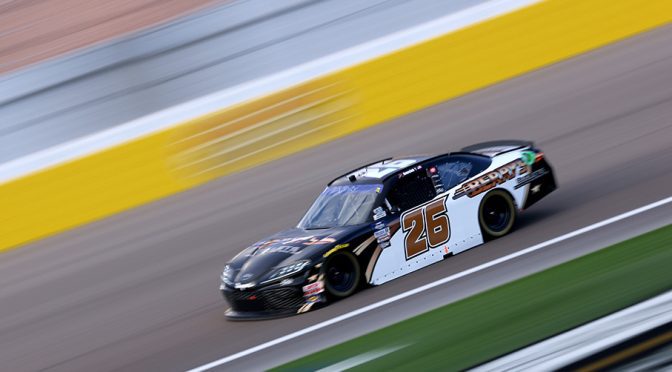
Two-time NASCAR Cup Series champion Kyle Busch died on May 21, 2026, at the age of 41, following a sudden and severe illness. The staggering loss was confirmed in a joint statement by the Busch family, Richard Childress Racing, and NASCAR management. Hospitalized just hours before his scheduled appearance at the Charlotte Motor Speedway for the Coca-Cola 600, Busch leaves behind a monumental legacy that fundamentally altered the stock car racing scene.
Behind the statistics and the standard promotional tributes lies a deeper, raw truth. Busch was the ultimate disruptor in a sport that deeply values tradition. His departure leaves a massive void in the garage, marking the end of an era defined by unparalleled hostility, relentless brilliance, and a competitive drive that could not be duplicated.
The Raw Genius of Rowdy
To truly evaluate what the racing world lost, one must look past the standard corporate obituaries. Busch did not just win races. He dominated the asphalt in a way that made purists uncomfortable.
With 234 combined victories across NASCAR's top three national series, he stands alone at the summit of the sport's modern era. His record includes 63 Cup Series victories, 102 Xfinity Series wins, and 69 Truck Series trophies, the final one earned just days before his death at Dover Motor Speedway.
The mechanism behind this dominance was an extraordinary, instinctual feedback loop between driver and machine. While modern racing relies heavily on engineering data and simulation software, Busch operated on pure sensory input. He could feel a microscopic loss of right-rear traction before the telemetry software even registered the slip. This allowed him to run the "rim-riding" high line at tracks like Homestead-Miami Speedway with zero margin for error, brushing the concrete wall lap after lap without lifting off the throttle.
The Engine of Polarization
American motorsports spent decades searching for a definitive anti-hero, and Busch filled that vacancy perfectly. He entered the national spotlight as the brash younger brother of 2004 champion Kurt Busch, but he quickly carved out a reputation that eclipsed his sibling.
The garage area has always been a political arena. Most drivers treat post-race interviews as safe exercises in sponsor appreciation. Busch did the exact opposite. He threw microphones, criticized his own engine manufacturers on live television, and famously bowed to crowds that were actively booing him into oblivion.
This antagonism was not an act designed for television cameras. It was the natural byproduct of an obsessive winner trapped in an era of corporate sanitization. When he was released from Hendrick Motorsports early in his career, it was whispered that his temperament would destroy his commercial viability. Instead, Joe Gibbs Racing harnessed that volatility, resulting in two Cup championships in 2015 and 2019.
The 2015 title remains one of the most controversial and gritty achievements in modern sports history. After breaking his right leg and left foot in a brutal crash at Daytona during the season opener, he missed 11 races. He returned to the seat with titanium rods in his limbs, climbed into the top 30 in points to qualify for the playoffs, and won the season finale to take the crown. It defied medical logic and mechanical precedent.
The Cost of Corporate Evolution
The modern NASCAR landscape operates under immense corporate scrutiny, which makes the latter portion of Busch's career a fascinating study in industry economics. The defining fracture occurred at the end of 2022 when his long-term partnership with Mars Inc. came to an end. For over a decade, the brightly colored No. 18 M&M's Toyota was a marketing powerhouse.
When that sponsorship left, the reality of modern race team economics became glaringly clear. Even a two-time champion with a guaranteed first-ballot Hall of Fame resume could find himself priced out of his own seat. Joe Gibbs Racing could not secure the multi-million dollar corporate backing required to sustain Busch’s salary, leading to a highly publicized and tense separation.
His subsequent move to Richard Childress Racing in 2023 to drive the No. 8 Chevrolet was a marriage of convenience that shocked the industry. A decade prior, team owner Richard Childress had physically assaulted Busch in a garage alleyway after a Truck Series race, uttering the infamous phrase, "Hold my watch."
While the two men publicly mended fences with a humorous exchange of timepieces, the performance on the track told a more complicated story. After a fiery start in 2023 that yielded three quick victories, the team hit a wall. Busch was mired in the longest winless drought of his Cup career at the time of his passing, sitting 24th in the 2026 point standings.
The struggles highlighted a structural shift in the sport. The current Next Gen race car, introduced to level the playing field through standardized parts, severely limits the ability of an elite driver to overcome mechanical mediocrity through sheer talent.
The Unseen Warning Signs
Looking back at the final weeks of Busch’s life reveals small clues that something was wrong. Only eleven days before his sudden passing, during the Cup Series event at Watkins Glen, Busch uncharacteristically radioed his crew to request medical assistance immediately upon crossing the finish line.
Television broadcasts attributed his physical distress to a severe sinus cold aggravated by the extreme G-forces and elevation changes of the New York road course. Yet, true to his stubborn nature, Busch drove through the illness to finish eighth. He then traveled to Dover, where he secured his final career victory in the Truck Series.
The relentless schedule of a modern racer offers zero time for recovery. Drivers routinely ignore physical ailments that would sideline athletes in other major sports, hidden behind the shield of a full-face helmet and the protective carbon-fiber cockpit.
The Legacy Beyond the Wheel
The long-term impact of Busch’s career will be felt through his work as an evaluator of young talent. Through Kyle Busch Motorsports, he financed and directed the early careers of several drivers who now occupy top-tier rides in the Cup Series.
His management style was notoriously demanding. He expected teenage prospects to drive with the same technical precision he possessed, often leading to blunt public criticism when they fell short. Yet, his team provided the best equipment and the sharpest technical feedback in the pit lane, forcing young drivers to mature or get out of the way.
The sport now faces a critical transition period. NASCAR has spent years trying to cultivate young, media-friendly personalities to appeal to a broader demographic. However, the loss of its most authentic villain leaves a gaping narrative deficit that cannot be easily filled by public relations strategies. You cannot manufacture the organic theater that Busch brought to the racetrack every Sunday.
The garage will move forward because the schedule demands it. Austin Hill will step into the No. 8 Chevrolet at Charlotte, engines will fire, and the green flag will drop. But the garage area will be noticeably quieter, stripped of the sharp wit, the uncomfortable honesty, and the intimidating presence of a man who refused to be anything less than a force of nature.