Cold.
That is the first sensation that registers when you stand at the edge of the world. Not metaphorically. Literally. The air bites at your exposed skin, turning your breath into immediate white smoke. Far out across the frozen expanse of the European Union's northernmost latitudes, the horizon dissolves into a pale, blinding white. It is a quiet place. Or at least, it used to be.
For decades, the Arctic was treated as a frozen museum piece. A postcard of pristine isolation. But maps are changing. The ice is thinning, and beneath those vanishing sheets lies a scramble for rare earth minerals, shipping lanes, and geopolitical dominance that will define the rest of this century.
Brussels has noticed.
When European policymakers released their updated Arctic strategy, skeptics immediately dismissed it. They called it a pipe dream of EU hawks. They argued that a bloc famous for endless bureaucratic debates and cautious consensus-building had no business playing hardball in a harsh polar theater dominated by heavy military powers and vast, unforgiving distances.
They might be wrong.
Consider what happens when the ice melts. Distances shrink. Maritime shortcuts open up, shaving weeks off the journey between Asian manufacturing hubs and European ports. Suddenly, the North Pole is no longer a barrier. It is a highway. And highways need traffic rules, security, and infrastructure.
To understand why Brussels cares so much about a region most citizens will never visit, you have to look at a map of supply chains. Europe relies heavily on external partners for critical raw materials—the minerals required to power everything from electric vehicles to advanced defense systems. Much of that wealth sits locked beneath the permafrost or just beyond it. When access to global markets becomes volatile, nations look inward, or toward their immediate borders.
The strategy document itself is thick with policy jargon, but behind the diplomatic phrasing lies a simple, urgent question: Who gets to write the rules for the top of the world?
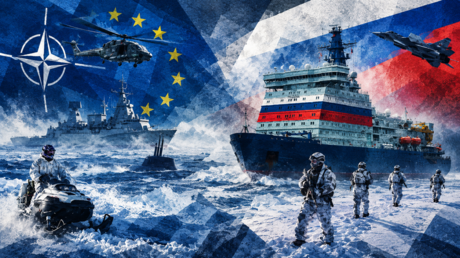
Right now, the region is tense. Russia has steadily militarized its northern coastline, reopening Soviet-era bases and deploying specialized cold-weather forces. China has labeled itself a near-Arctic state, investing heavily in infrastructure and research stations. Meanwhile, local communities—indigenous populations whose ancestors survived these brutal conditions for millennia—watch as outsiders draw lines across their traditional hunting grounds.
Where does Europe fit into this high-stakes chess match?
Not with aircraft carriers and nuclear submarines. That is not the European way. Instead, the strategy leans on economic weight, scientific diplomacy, and environmental regulation. Brussels wants to set the standard for sustainable development in a region that cannot handle industrial recklessness. It is a quieter kind of power, but it is potent.
Imagine a cargo vessel navigating the Northern Sea Route. Under European proposals, that vessel would have to meet rigorous environmental standards to protect fragile marine ecosystems. It sounds bureaucratic until you realize that a single oil spill in the Arctic Ocean would take generations to clean up, if it could be cleaned up at all. The stakes are absolute.
There is a vulnerability here that politicians rarely admit out loud. Europe is attempting to project influence into a region where it lacks direct territorial sovereignty, save for a few northern member states like Finland and Sweden. Critics argue that writing guidelines from comfortable offices in Belgium does little to deter a rival power operating heavy icebreakers just miles off the coast.
Yet, ignoring the Arctic is no longer an option. The climate crisis is rewriting the physical geography of the planet at a terrifying speed. Temperatures in the far north are rising faster than almost anywhere else on Earth. As the permafrost thaws, releasing ancient gases and destabilizing infrastructure, the consequences ripple outward, altering global weather patterns and raising sea levels.
This is the invisible thread connecting a heated debate in a Brussels conference room to the cracking of an ice shelf thousands of miles away.
We are standing at a threshold. The choices made today by policymakers, scientists, and industry leaders will determine whether the far north becomes another arena for destructive conflict or a rare model of international cooperation.
The wind picks up outside the research station, howling against the reinforced glass. Out there, the dark waters of the polar sea push quietly against the remaining ice. The storm is coming, whether we are ready for it or not.


