Dust settles differently on cardboard boxes that have sat untouched since the Ford administration. It forms a gray, velvety crust that smells of old paper, dried glue, and the slow decay of human memory. For half a century, inside the basement storage rooms of Utah police departments, those boxes held the fragments of stolen lives. A pair of faded jeans. A broken watch. A single strand of hair sealed in glassine.
To an outsider, a cold case file is just ink on yellowing bond paper. To a family waiting by a telephone that never rings, it is a life sentence served in installments of unanswered questions.
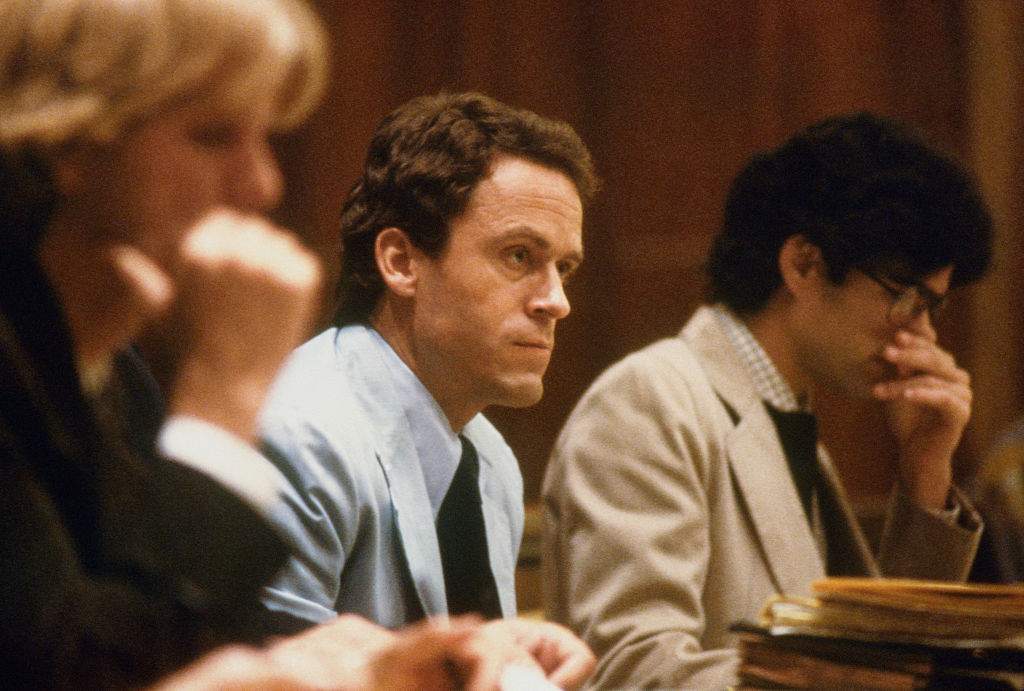
Recently, detectives in Utah announced a breakthrough that pierced fifty years of static. Through modern forensic work and painstaking archival cross-referencing, investigators officially linked Ted Bundy to yet another unsolved 1970s homicide. The headlines were brisk, clinical, and predictable. They treated the news like an accounting update—adding one more tally mark to a ledger of terror we thought was closed in a Florida electric chair in 1989.
They missed the point entirely.
When police connect a monster to a fifty-year-old murder, the story isn't about the killer. He is dust. The story is about the architecture of grief, the quiet heroism of detectives who refuse to let the dead stay anonymous, and the haunting realization that our history books are still missing chapters.
The Ghost in the Station Wagon
To understand what happened in the valleys of Utah between 1974 and 1975, you have to strip away the Hollywood mythmaking. Forget the charismatic, hyper-intelligent mastermind portrayed in modern documentaries. Look instead at what was actually prowling the suburban streets of Salt Lake City, Midvale, and Provo.
He was an ordinary-looking law student driving a tan Volkswagen Beetle.
Consider a hypothetical evening in October 1974. A young woman walks home from a high school football game or a late shift at a local diner. The air smells of woodsmoke and the first sharp frost coming down off the Wasatch Front. A man approaches on crutches, dropping a stack of books. He asks for help carrying them to his car. Nothing about the scene triggers an alarm. In 1974, helping a stranger with a cast on his arm wasn't a risk; it was basic decency.
That was the trap. Bundy weaponized social trust.
When he moved to Utah in the autumn of 1974 to attend the University of Utah College of Law, he didn't arrive as an amateur. He came from the Pacific Northwest having already perfected a method of predation that relied entirely on human kindness. Between October 1974 and his arrest in August 1975, Utah became his hunting ground.
We know the names that made the news back then. Melissa Smith. Laura Aime. Caryn Campbell. Debi Kent. We know about Carol DaRonch, the eighteen-year-old who fought him off in a Murray parking lot and survived to testify against him.
What we didn't know—what we are only now beginning to comprehend—is how many others vanished into the gaps between jurisdictions.
Why It Took Fifty Years to See the Pattern
People often ask how a single man could move through a relatively small metropolitan corridor and leave bodies behind without being caught immediately. The answer lies in the analog blindness of 1970s law enforcement.
Think of policing in 1974 as a series of isolated islands. If a girl disappeared in Salt Lake County, the sheriff’s office opened a paper folder. If a body was found three weeks later across a county line in Utah County or up in Summit County, another agency opened a completely different folder. There were no shared digital databases. There was no national missing persons clearinghouse. Teletypes hummed slowly in back offices, spitting out blurry ribbons of text that required a human being to read, remember, and manually match against a hunch.
Bundy understood those borders intuitively. He exploited the seams between cities.
I have spent years studying archival police records and sitting in the quiet offices of cold case investigators, and the pattern is always the same. In the 1970s, runaway teenagers were routinely dismissed by authorities. If a seventeen-year-old girl didn't come home on a Friday night, the default assumption was that she had caught a ride to California with a boyfriend. Precious days—sometimes weeks—evaporated before anyone treated the disappearance as a crime. By the time a search party formed, snow had already buried the mountain canyons.
Then there is the physical evidence itself.
In 1974, DNA profiling didn't exist. Forensics meant blood typing—broad categories like Type A or Type O that could include half the population of a city—and microscopic hair comparisons that were closer to educated guesswork than hard science. Investigators collected evidence with the best intentions, sealing items in paper bags and storing them in non-climate-controlled basements.
They were saving puzzle pieces for a picture nobody knew how to assemble yet.
The Anatomy of a Modern Breakthrough
So how do you solve a murder when the suspect has been dead for nearly four decades, the witnesses have faded away, and the original detectives have long since retired?
You change the lens.
Modern cold case breakthroughs rarely happen because of a sudden dramatic confession or a newly discovered eyewitness. They happen through a quiet, relentless convergence of two things: advanced molecular science and obsessive human detective work.
First comes the biological revolution. Over the past decade, forensic laboratories have developed techniques like touch DNA and single-nucleotide polymorphism (SNP) profiling. Where 1970s technicians needed a dime-sized stain of fresh blood to run a basic test, today’s geneticists can extract a complete profile from a few skin cells left on a coat collar or the rootless shaft of a single hair. Even when a killer’s specific profile isn't sitting in a criminal database, forensic genetic genealogy allows investigators to build family trees backward through public ancestry records, narrowing a pool of millions down to a single household.
Second—and far more underrated—is the paper trail.
In the case of Ted Bundy, investigators have spent years reconstructing his physical movements across the Mountain West down to the hour. They have mapped his credit card receipts for Chevron gas stations. They have plotted the locations where he bought groceries, checked out library books, and registered at motels.
When detectives reopened this latest 1970s Utah homicide, they weren't starting from zero. They were overlaying a fifty-year-old crime scene onto a timeline that has grown sharper with every passing decade.
Look at the geography. Look at the victimology. Look at the specific, chilling signatures of the crime scene—the blunt force trauma, the positioning of the remains, the choice of remote canyon terrain to conceal the body. When a modern forensic team re-examines preserved physical evidence alongside those geographical receipts, the coincidence evaporates. What looked like an isolated tragedy in the 1970s suddenly snaps into focus as part of a known predator’s path.
The Lie of Closure
Whenever news breaks that a notorious serial killer has been tied to another cold case, commentators love to use the word closure. It is a tidy, comforting word. It suggests a door clicking shut, a lock turning, a heavy burden finally set down on the floor.
Talk to a family member who has waited fifty years for an answer, and they will tell you that closure is a myth invented by people who have never lost someone to violence.
Grief does not evaporate when a detective makes a phone call. If anything, the truth brings its own sharp, fresh pain. For decades, a family lives in a gray purgatory—suspended between hope and dread, wondering if their sister or daughter is somehow alive, wondering if she suffered, wondering if the person who took her is still walking past them in the grocery store.
When the answer finally arrives, and the answer is Ted Bundy, the ambiguity dies. You no longer have to wonder if she ran away. You know she didn't abandon you. You know she was taken.
That distinction matters more than most people realize.
In the 1970s, countless families carried a quiet, suffocating shame alongside their sorrow. Because police often labeled missing young women as runaways, parents were left to wonder what they had done wrong at home to drive their child away. Neighbors whispered. Friends drifted off. Reclaiming a victim’s name—and proving beyond doubt that she was the victim of a predatory monster—restores her dignity. It rewrites her final chapter from an act of rebellion into an act of survival cut short.
How Many More Boxes Are Waiting?
Before his execution in January 1989, Bundy embarked on a frantic, manipulative series of death-row confessions. He offered up names and locations like bargaining chips, hoping to buy himself a few more months of life. He confessed to thirty homicides across seven states.
Nobody who actually investigated him believed that number was complete.
During those final interviews, Bundy hinted at dozens more victims. He spoke in oblique, third-person riddles about bodies buried in places nobody would ever look, casually remarking that when you add one more to the total, "what's one more?"
Utah was never just a stopover for him. It was a central theater of his crimes. Between his enrollment at the University of Utah in September 1974 and his final departure from the state, there were dozens of weekends, holidays, and unrecorded gaps in his schedule. He knew the canyons around Salt Lake City. He knew the back roads leading toward Provo, Ogden, and the Idaho border.
Every time a Utah police department pulls a dusty box off a shelf and applies modern science to an unsolved 1970s murder, they aren't just solving one case. They are testing the boundaries of how much darkness we missed the first time around.
And it raises an uncomfortable question for every law enforcement agency across the American West: how many other victims are sitting in evidence lockers right now, waiting for someone to look again?
The machinery of justice moves slowly. Sometimes it moves half a century behind the crime. Detectives retire, labs run out of funding, and witnesses pass away in nursing homes with crucial details locked inside their memories. Yet every once in a while, a box is opened, a microscope is focused, and a name is spoken aloud in a press conference room fifty years after the world stopped looking.
Up in the canyons above Salt Lake City, the scrub oak and pine needles cover the ground just as they did in the autumn of 1974. The mountains don't remember who walked beneath them, or who never came back down. Only the paper files remember—waiting in the dark for someone patient enough to read them.