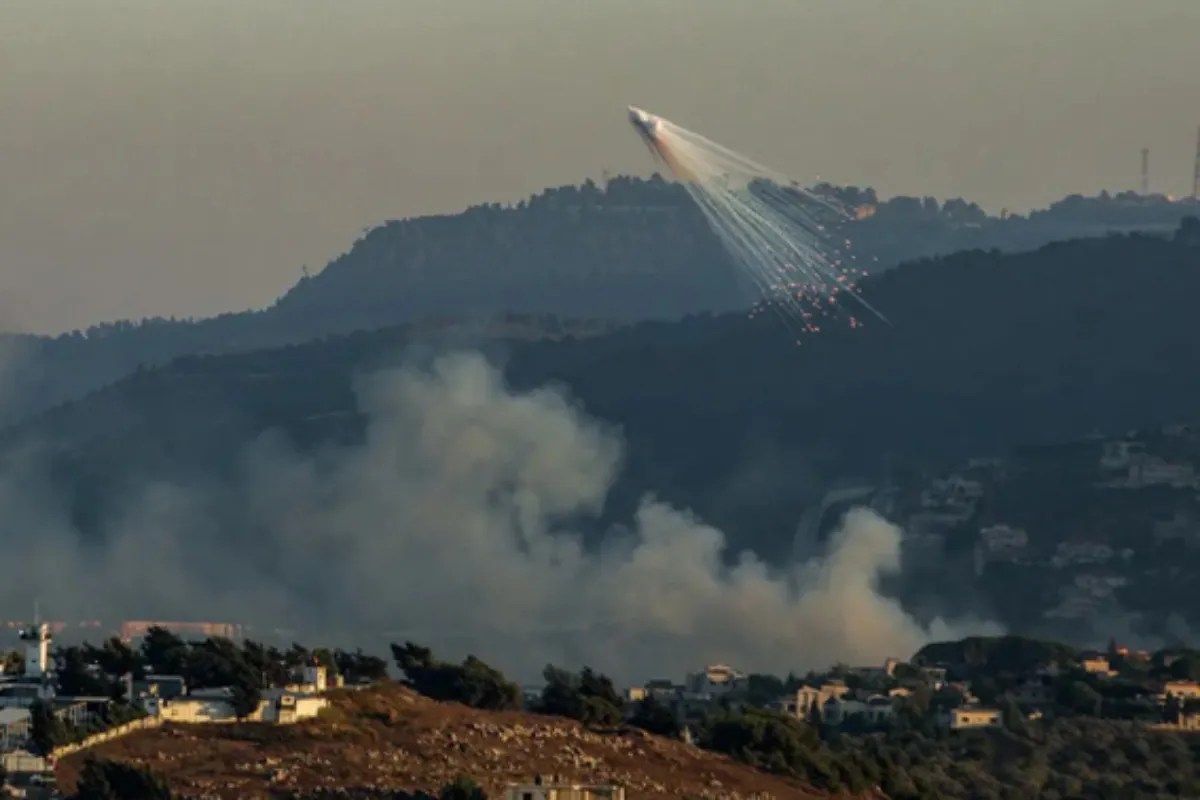
The siren does not invite contemplation. It is a sharp, mechanical shriek that tears through the ordinary rhythm of a morning, demanding an immediate surrender to gravity. In those seconds, breakfast is left steaming on a counter. A half-written email stays frozen on a screen. The human mind, normally preoccupied with deadlines, grocery lists, or unpaid bills, narrows down to a single, primal question: where is the nearest concrete wall?
When fifteen rockets are launched across a border, the world records it as a data point. A headline. A brief scroll on a social media feed. But on the ground, those fifteen rockets are not a statistic. They are fifteen distinct trajectories of potential ruin, each one carrying enough force to erase a home, a family, or a lifetime of quiet memories.
The recent exchange between Hezbollah and the Israeli military follows a pattern that global observers have grown accustomed to reading in cold, detached prose. The facts are straightforward. Rockets were fired from Lebanon. Air defense systems engaged. A counter-strike targeted the source, neutralizing a launcher. Yet, reducing this event to a mechanical sequence of action and reaction misses the entire gravity of what it means to live under a sky that can suddenly turn hostile.
The Geography of Anxiety
Imagine a family sitting in a living room in northern Israel. This is a hypothetical scenario, but it plays out in reality with exhausting frequency. The father is tying his daughter’s shoes. The mother is pouring coffee. When the alert sounds, they do not discuss politics. They do not analyze regional strategies. They run.
They have less than a minute. In some areas close to the border, they have mere seconds.
The physical toll of this reality is visible in shattered glass and cratered asphalt, but the psychological toll is invisible. It is a quiet, eroding stress that settles into the bones. It alters how children play, how adults sleep, and how communities function. Every loud noise—a motorcycle backfiring, a sudden thunderclap—becomes a false alarm that triggers the same adrenaline spike as a real attack.
On the other side of the line, in southern Lebanon, the reality is mirrored in a different shade of terror. When a rocket launcher is embedded within or near civilian infrastructure, the subsequent counter-strike is inevitable. The Israeli military tracks the trajectory, calculates the source, and deploys ordnance to eliminate the threat. For the residents living nearby, the sound of an approaching drone or the distant thud of an incoming airstrike carries the exact same weight of dread.
This is the dual tragedy of modern border conflicts. The combatants fire weapons from calculated positions, but the civilians on both sides are the ones who breathe the smoke.
The Iron and the Sky
The mechanics of modern warfare often sound like science fiction to those who have never witnessed them. Air defense systems, like Israel's Iron Dome, are marvels of engineering. They track incoming projectiles, calculate their landing zones in milliseconds, and fire interceptors to destroy them in mid-air.
To watch an interception is to witness a terrifying ballet. A streak of light rises from the ground, twisting and turning until it meets an incoming rocket with a blinding flash and a boom that rattles windows miles away.
But reliance on technology creates a false sense of security. No system is absolute. A fragment of an intercepted rocket can still fall through a roof. The shrapnel from an explosion in the sky must land somewhere. More importantly, the existence of a shield does not lessen the terror of the arrow. The fact that a missile might be intercepted does not stop the heart from racing when the sirens wail.
When the Israeli military announced that it had successfully targeted and destroyed the specific launcher responsible for the fifteen-rocket barrage, it was framed as a tactical success. From a military standpoint, it was. One less asset capable of firing into civilian areas.
Consider what happens next, though. The destruction of a single piece of hardware rarely signals the end of a conflict. It is a temporary pause. A brief intake of breath before the cycle resets. The infrastructure of hostility runs deeper than a metal tube hidden in a valley. It is sustained by decades of grievance, political maneuvering, and a steady supply of weaponry that ensures when one launcher falls, another is waiting to take its place.
The Language of the Unseen
We often talk about these events in the language of international relations. We use terms like deterrence, escalation management, and strategic depth. These words are clean. They are professional. They allow analysts in distant studios to discuss life-and-death situations without ever having to acknowledge the smell of burning cordite or the sound of a child crying in a bomb shelter.
If we look past the geopolitical jargon, the true cost of these skirmishes becomes clear. It is found in the economic stagnation of border towns where businesses cannot survive under the constant threat of closure. It is found in the displacement of thousands of people who are forced to become refugees within their own countries, living in temporary hotels or crowded community centers because their homes are too close to the line of fire.
The human element is often lost in the rush to declare who won the day. Did the barrage penetrate the defenses? Did the counter-strike eliminate the target? These are the questions that dominate the news cycle.
But the real questions are different. How does a community heal when its daily existence is dictated by the threat of sudden violence? How do children grow up with a healthy worldview when their earliest memories are defined by the walls of a bunker?
The fifteen rockets fired across the border were not just weapons. They were disruptions of peace, however fragile that peace might have been. The response from the Israeli air force was not just a military operation; it was a stark reminder of the lethal precision that characterizes modern conflict.
As the smoke clears over the ridges of the borderland, the silence that returns is not peaceful. It is an expectant, tense quiet. The residents step out of their shelters, sweep up the dust, and attempt to resume the lives they were leading before the sirens interrupted them. They know, with a certainty born of long experience, that the quiet is temporary. The stakes remain invisible, the tensions remain high, and the human cost continues to accumulate, one fifteen-second warning at a time.